
Featured Philosop-her: Neera Badhwar

Neera Badhwar

Neera K. Badhwar is Professor Emerita in the Department of Philosophy at the University of Oklahoma and affiliated with the Departments of Philosophy and Economics at George Mason University. Her work to date has been primarily in the areas of normative ethics and moral psychology, with occasional excursions into social-political philosophy. Her most recent major work is her book, Well-Being: Happiness in a Worthwhile Life (Oxford University Press, 2014), but she continues to write on virtue, happiness, and related issues.

Well-Being: Happiness in a Worthwhile Life: An Overview

Thanks, Meena, for being such an entrepreneur and starting this blog – and for inviting me to contribute to it! I’d like to give an overview of my recent book on well-being and virtue.

It took me a long time to get started on the book, because I had the feeling that “no one” would agree with my thesis that virtue is essential to well-being (flourishing, eudaimonia) – even worse, I wasn’t sure that I always agreed with it. I overcame the first hurdle by reminding myself that “no one” agrees with anyone anyway. This is somewhat exaggerated, of course, but something close to it is a common phenomenon in philosophy. (But why? I’m coming to the conclusion that we sometimes disagree only because we categorize things differently, and don’t realize that nothing very much hangs on the categorization.) The more difficult hurdle to overcome was within: I swung perilously between doubting my own thesis – and doubting its negation. I envied Buridan’s ass, who only had to choose between two bundles of hay and could have resolved the issue easily by tossing a coin – had it not been an ass. I finally managed to unite my divided inner being by progressively weakening my thesis to a shadow of its former version.

My thesis, briefly, is that if we understand well-being as the individual’s highest prudential good (HPG), it entails both happiness and objective worth, and that objective worth entails a life of the central moral virtues, such as justice, integrity, kindness, and the practical wisdom implicit in these (Ch. 1). Virtue and virtuous actions are, thus, partly constitutive of well-being; they are also, of course, a means to well-being. Aspiring to and achieving virtue and well-being is, therefore, both desirable and admirable. But the plausibility of my thesis depends on the plausibility of my neo-Aristotelian conceptions of well-being as the HPG and of virtue. Well-being as the HPG is a life that is most choice-worthy because it contains both fundamental human goods: happiness and objective worth. This conception of well-being is internally coherent and one that, I argue, many, if not most, people hold (Ch. 2). Indeed, even those philosophers who deny that objective worth is an essential constituent of well-being typically smuggle objective normative concerns into their theories (Ch. 3).

I further argue that someone who leads an objectively worthwhile life must be realistic, that is, she must have a grasp of important practical matters in a human life and her own life, and the ability to act on this grasp when circumstances permit. Such an understanding cannot be gained by imitation or rote, but must stem from the disposition to be autonomous and reality-oriented. To the extent that someone is realistic in this sense, she is also virtuous. Unfortunately, too many people believe that the psychologists, Taylor and Brown, have shown that mild delusions about our abilities and prospects are important for both happiness and virtue. I examine their work in detail, and conclude that their evidence is weak and their arguments fallacious. Although ignorance is sometimes better for us than the truth, being a realistic and, thus, virtuous person is better for us than being a deluded person.

My requirement of autonomy is sure to set off some alarms, given the long association of autonomy with high-level, self-conscious, articulable reasoning. But my conception of autonomy does not require such reasoning. An autonomous person, on my view, is someone who is disposed to think for herself about matters that are important to her life as a human being and individual. This requires that she be disposed to face facts and seek understanding of important matters, with others’ help if necessary. In other words, it requires that she have a stance of openness towards herself and others. Thus autonomy entails reality-orientation (actually, I think that autonomy and reality-orientation are two sides of the same coin – see Ch. 4 if interested!).

I defend the Aristotelian conception of virtue as an intellectual-emotional disposition to do the right thing for the right reason, in the right manner, at the right time, on both psychological and normative grounds, and show how it “fits” my conception of well-being both structurally and substantively (Ch. 6). Nevertheless, I argue that the demanding nature of Aristotelian virtue, in conjunction with our cognitive and emotional limitations, makes it psychologically impossible for human beings to be virtuous across the board and in all circumstances. Both social and cognitive psychology and everyday experience provide evidence of our limitations. Like theoretical wisdom, our practical wisdom tends to be compartmentalized (this is why my conception of virtue is neo-Aristotelian). This is one reason why complete well-being as the HPG is impossible. I proceed to consider and reject both the claim that villains can have the HPG, and the Stoic claim that virtue is sufficient for the HPG (Ch. 7).

I conclude by addressing common sources of skepticism about the thesis that well-being requires virtue (Ch. 8). One is the belief that it entails, contrary to the evidence, that the wicked must suffer and that the virtuous never suffer. But both conjuncts are based on a misunderstanding. All that my thesis claims is that, to the extent that people are vicious, they cannot have the HPG, and that to the extent that people have it, they must have virtue. Those whose vice is due to inherently unpleasant emotions, such as rage, jealousy, envy, or hatred, are condemned to suffer by the very nature of their vices. But those whose vice is due to indifference towards certain groups or individuals escape this fate. External sanctions are the only sanctions that can inflict pain on them. The costs of their wick­edness in pain and suffering—psychic, physical, and material—might be borne entirely by their victims. A further source of skepticism is the belief that my thesis contradicts what is only too obvious: that sometimes an act of injus­tice might be necessary for preserving the very things that make one’s life both happy and objectively worthwhile. However, my thesis does not contradict this. Sometimes a minor act of injustice is necessary in order to escape disaster, and depending on the details, such an act might be excusable, or even justified.

One thing I would like to explore further is the way one’s society or social organization can make acting virtuously costly. This is obvious in the case of dictatorships, where doing the right thing by violating some unjust edict is apt to be dangerous. But membership in certain organizations, especially those with great power over others and little moral or legal accountability, such as the police in our society, also makes virtue difficult. Every day we hear stories of unarmed, non-violent people being beaten up, broken, or even killed by policemen with impunity. In 2006, policewoman Carol Horne did the right thing by trying to stop a colleague from punching and choking a handcuffed civilian. She paid dearly for it. While the brutal colleague escaped all punishment, Horne lost her job as well as her entire pension. The fate of whistle blowers, especially in politics, is similar (think Edward Snowden). While these facts don’t refute my thesis that well-being entails virtue, and while both Horne and Snowden are glad they did the right thing, their examples do show that, in many sorts of situations, acting virtuously can harm us – even though failing to act virtuously can harm us even more.



Featured Philosop-her: Devonya N. Havis

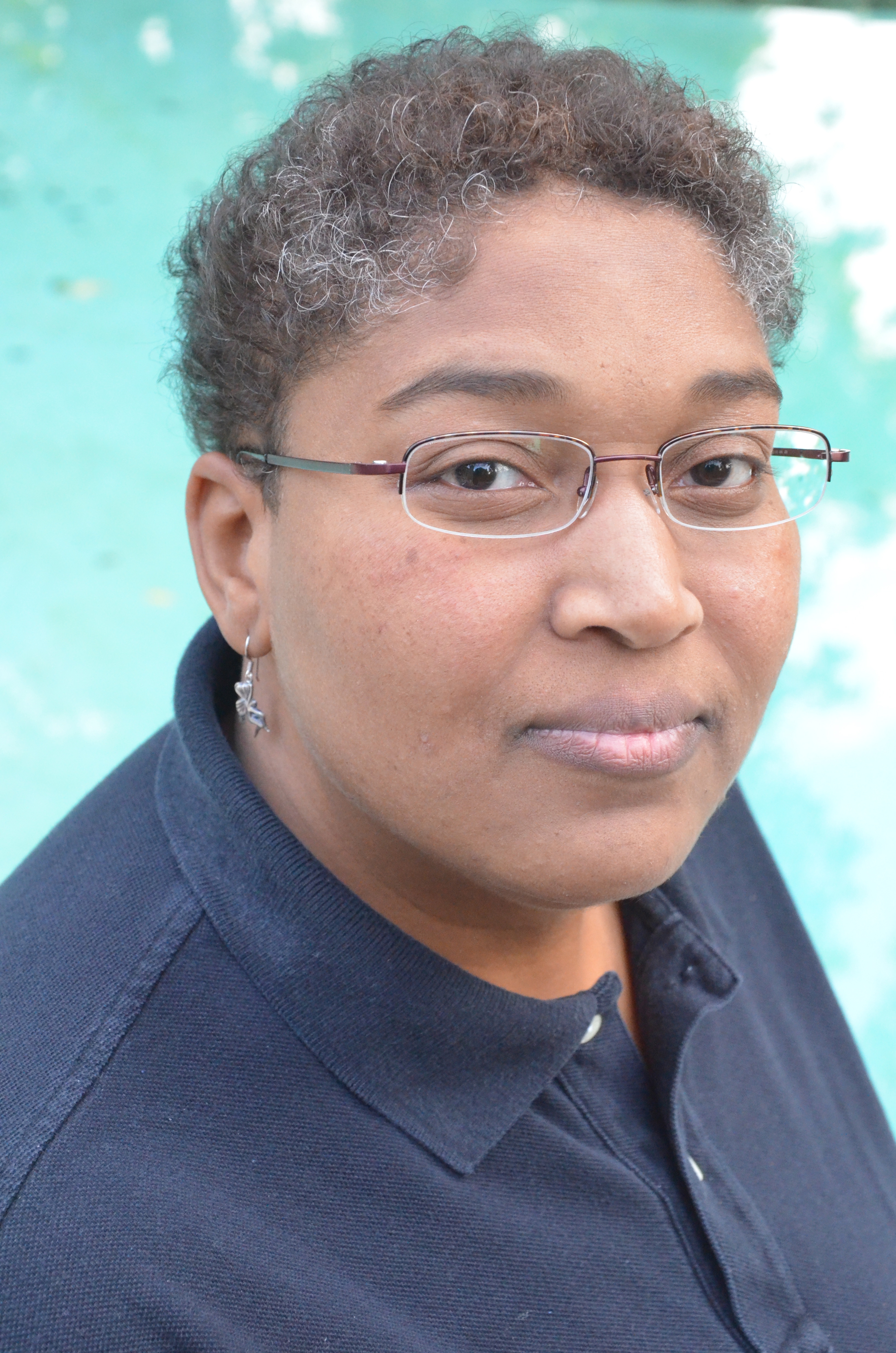
Havis head shot

Devonya N. Havis, is an Associate Professor of Philosophy at Canisius College in Buffalo, NY. She has taught courses in Ethics, Contemporary Continental Philosophy, Critical Philosophy of Race, and Black Women’s thought at Boston College, Harvard University, and Virginia Union University. Her writings include “Blackness Beyond Witnessin Philosophy and Social Criticism and “Discipline” in the Cambridge Foucault Lexicon. She has a longstanding concern with utilizing philosophy to enhance awareness and promote counter-oppressive practices. Her chapter, “‘Seeing Black’ through Michel Foucault’s Eyes: ‘Stand Your Ground’ Laws as an Anchorage Point for State-Sponsored Racism,” is included in, Pursuing Trayvon Martin: Historical Contexts and Contemporary Manifestations of Racial Dynamics.

Philosophical Interventions and Resistance

Devonya N. Havis

I would like to thank Dr. Krishnamurthy for cultivating this Blog and giving me an opportunity to share a few ideas about my work and experience.

Growing up in Jackson, Mississippi, I was deeply influenced by Black ancestral discourses, activists who organized for SNCC, and intellectual traditions that prized education for its liberatory possibilities. I earned a B.A. in Religion from Williams College with concentrations (minors) in Asian Studies and Philosophy. After graduating, I pursued several professional tracks before graduate school: working as a staff reporter for a black-owned, Boston-based news weekly; writing copy for a fair housing advertising campaign; and serving as a press aid to a Boston City Councilor. My experiences led me to graduate school at Boston College where I earned a Ph.D. and pursued ways of utilizing philosophy to enhance awareness and promote counter-oppressive practices. Currently I am an Associate Philosophy Professor at Canisius College, a Jesuit institution with a strong social justice tradition.

Working as a teacher-scholar continues to facilitate my long-standing commitments to social justice. In particular, my focus has been not simply the ways Blacks have survived oppressive conditions but also how, in the crucible of these conditions, there is a survival aesthetic that fosters creation even in the midst of the desert. This aesthetic is not merely artistic but fosters ethico-political philosophical interventions that contest oppressive circumstances, provide strategies and tactics for resistance, and occasions for celebration.

As marginalized people are primarily characterized only by their oppression, what is left out are the unique rites, rituals, practices, and methods of critique that form different cultural repositories that give rise not only to survival but also innovative forms of resistance. Much of my philosophical work has been devoted to articulating the philosophical practices cultivated within Black ancestral discourses.

The questions at the forefront of my research and teaching have prompted me to explore what might constitute Black Women’s Philosophies, how the French philosopher Michel Foucault can be used to illustrate state-sponsored racisms embedded in “Stand Your Ground Laws,” and ways of using parhessia as an index for liberatory practice. My current book project’s working title is Creating a Black Vernacular Philosophy. I have also co-developed an academic seminar that immerses Canisius College students in the context of Buffalo’s predominantly Black East Side communities.

As an illustration of my assertions, I offer the following tale about a ten-year-old little girl coming of age in the Deep South. “She arrives at school on the first day, primped, pinned, hair coifed, shoes polished, and in new, crisply ironed clothes. A fifth grader, she is attending a new school learning the different rites and rituals. Following morning announcements, the children stand next to their seats with their hands on their hearts to say the pledge. Only this is a classroom in Mississippi where students – all races of students – pledge first to the Mississippi state flag and then to the U.S. flag. It is not a segregated classroom – even though most of the children are black. The time is closer to the millennium than the 1960s. Yet, it is still a time when the State of Mississippi preserves its southern heritage with a flag that bears the “stars and bars,” an image of the Confederate flag and all that it symbolizes featured prominently in the left corner of the Mississippi state flag. The meaning of the Confederacy and its flag are apparent to the little girl. She looks around the classroom to see if any of her classmates register shock or even outrage. Her classmates, standing poised to pledge in unison, stare at the flag for the brief seconds it takes for everyone to gather themselves for collective speech. There is no outrage, no reflection on the flag’s meaning. Everyone but the little Black girl is bound to this ritual. She stands, hands at her sides, outraged by the Confederate flag, and confused by the teacher’s inaction. Her gut tells her that open questioning will not be tolerated but she has decided that she cannot, will not consent – let alone pledge allegiance – to a flag that symbolizes unfairness and inequality. The little girl remains standing but she does not raise her right hand or her voice in salute to either flag. She understands that she is not unified with those who could make this pledge and she is willing to be different.

The little girl is critically aware that the flag represents a system in which she becomes an object for use. More important than recognition, she grasps the symbolic meaning of the flag. Aware of this meaning and its connection to race and gender, the little girl has an awareness of her context, a child’s awareness of the particular historical, material, economic, political and social circumstances in which she is standing. She is shocked that other people in the room are not more activist, or apparently, do not register the meaning and that they have buried their critical attitude in conformity. And yet, the little girl is not wholly a resistant non-conformist. After all, she arrives at school properly attired demonstrating her “hometraining.” Nonetheless, the little girl has been taught to operate not only according to the principle of belonging but in the interest of ethical demands. The flag symbolizes an injustice with which she cannot align herself. This awareness prompts her desire to act. Understanding the power dynamics evident in the classroom, the little girl is aware that direct confrontation will not be the most effective tactic. She ponders what to do. She is not troubled by the fact that in this classroom she may stand alone because she takes an unpopular stance. In spite of the physical absence, she is nurtured by a Black community that values difference and accepts the creativity generated by such difference. The little girl ponders the best tactic for engaging her strategy of opposition to the type of oppression symbolized in the flag. She determines that refusal will be the most potent form of protest and affirms her active being not only in the refusal but in her creative use of her communities’ epistemological repository.”[1]

The little girl’s narrative signifies a different register from which one might hear. She offers a counter-narrative forged within Black Vernacular discourses. Despite existing within structurally oppressive conditions, the little girl is not merely an oppressed subject. She is also an actor who invokes critique to perform an ethico-political philosophical intervention – a resistant disruption that becomes possible because of her engagement with Black Vernacular ancestral discourses.

In closing, it is worth noting that the little girl’s narrative took place decades before the recent demands that South Carolina and now Mississippi alter their relationship to the Confederate flag.[2] Listening to this alternative register also raises questions about the wealth of innovative Black Vernacular tools that could expand philosophical practices even in the academy.

[1] Excerpted from Devonya N. Havis, “‘Now, How You Sound’: Considering a Different Philosophical Praxis,” Hypatia 29, no. 1 (February 1, 2014): 237–52, doi:10.1111/hypa.12069.

[2] “Grisham, Morgan Freeman, Call for Change to Mississippi Flag – CNN.com,” CNN, accessed August 25, 2015, http://www.cnn.com/2015/08/17/us/grisham-freeman-mississippi-confederate-flag/index.html.

Featured Philosop-her: Talia Bettcher

Talia Bettcher

Talia Mae Bettcher is a Professor of Philosophy at California State University, Los Angeles where she serves as Chair. She is currently working on a monograph entitled Reality Mare: Philosophical Reflections on Transphobia, Trans Feminism, and the Politics of Personhood. Some of her articles include “Evil Deceivers and Make-Believers: Transphobic Violence and the Politics of Illusion” (Hypatia, summer 2007), “Trapped in the Wrong Theory: Re-Thinking Trans Oppression and Resistance (Signs, winter 2014), and “When Selves Have Sex: What the Phenomenology of Trans Sexuality Can Teach about Sexual Orientation” (Journal of Homosexuality, April 2014). She is also guest editor (with Susan Stryker) of “Trans/Feminisms”, the forthcoming special double issue of Transgender Studies Quarterly (April 2016).

Other “Worldly” Philosophy[1]

Talia Mae Bettcher

Although I theorize at the intersections of philosophy and trans studies, for me the former must serve the latter. Trans studies–still young, fragile, and in search of institutional support– is a crucial intervention in the historical relegation of trans* people to mere curious objects of investigation. Theories about trans* people have advanced the careers of non-trans* scholars for decades, while they’ve had serious consequences in the lives of trans* people. Academically-validated views about trans* people matter in terms of how we’re perceived, if/how we gain access to medical resources, to what degree interventions in transphobic violence are taken seriously. That’s why trans studies, characterized by the coming to academic voice of trans* people, is absolutely critical.

In aiming to contribute to trans studies, however, I’ve come to wonder about the nature of my contribution: Is it philosophical? How? The question arises, I suppose, because I remain a professional philosopher, and because there was something that originally seduced me, something I fell in love with called ‘philosophy.’ To ask “Is what I’m doing philosophy, and if so, why?” isn’t to ask the traditional, perplexing meta-philosophical question “What is Philosophy?” Nor is it to ask “Yes, but is it philosophy?” of my own work in trans studies– a question that often gets asked of diverse practitioners in what Kristie Dotson has aptly called a culture of justification.

The question, for me, has been formed in the crucible of multi- and interdisciplinary trans studies itself. For example, I’ve found myself submitting work to journals that have nothing to do with philosophy. Doing so has made me think about what I’m doing, my methodology and its limitations. Thinking about such things is usually not required when speaking to other philosophers, of course. But they’re really good things to think about – they bring out into the open that which is merely presupposed.

My own reply, admittedly provisional and idiosyncratic, starts with some key features that’re in the ballpark of a characterization of philosophy (or at least the philosophy I fell in love with). It ends, however, with a departure. This might suggest a way in which my work is only partly philosophical. Or perhaps it suggests the kind of hybrid one might expect at the intersection of philosophy and something else. Or maybe it just suggests another way of being philosophical, an “other-worldly” way.

***

Philosophy’s often characterized by ‘depth.’ If a sociologist, a psychologist, and philosopher (Is the beginning of a joke?) all put their minds to investigate sex work, say, one would feel disappointed if the philosopher didn’t have something especially deep to say. To be sure, not all philosophy’s deep. But depth’s often considered a desideratum. And even those philosophers who aim to deflate “the deep” are nonetheless concerned with the deep, if only to make it go away. Philosophy also has an important relation to common sense and the everyday which runs in two directions. On the one hand, philosophy is thought to challenge everyday assumptions about the world. It’s not the only discipline that does that, but perhaps it’s supposed to do it in a deeper way. On the other hand, philosophy seems uniquely beholden to common sense. Most traditional philosophical investigation doesn’t use data (except those investigations that piggy-back on other disciplines). All philosophers have to go on is argumentation, the literature, and intuitions about what makes sense in the world. If philosophy has any grounding at all, it must surely be thanks to the latter. Finally, philosophy has the unique reputation of asking questions far too difficult to answer. It’s characterized by an intractable kind of perplexity. Getting deep leads to getting lost. Sometimes it leads to drowning.

So far so good. But it’s also thought the philosophical questions themselves bring the perplexity. Consider Graham Priest’s account of philosophy which, as Dotson notes, is primarily negative or critical in nature: The positive answers arise only as a consequence of the philosopher’s endless questions, and they serve the mere role of making a negative assessment of a rival theory weightier.

The perplexity that vexes me, however, wasn’t revealed by the questions of some philosopher. My entire life has already been saturated with perplexity. As a trans woman, my life and experiences haven’t conformed to the common sense that’s been accepted for much of my life. What on earth could it mean to say that I’m a woman, I’ve wondered? And why does so much appear to hinge on it? How do I make sense, for example, of having my genitals grabbed in the middle of Santa Monica Boulevard by someone who wanted to prove I was really a man? Where’s the theory that explains that and the subsequent shattering of the reality that left me reeling?

To be sure, there have been theories to draw on. There’re always theories to draw on. “Trans* phenomena,” it seems, demand explanation, demand theory. But what we want from a theory depends on who we are, what “side” of the theory we’re on. To some, the theory may simply do the work of explaining a curious phenomenon. But from the perspective of trans* people, there’re many things we could want from it – validation, access to resources, an account of oppression/resistance. And one of the deepest, most personal questions, it seems to me, is simply this: “What the fuck is going on here?” How on earth do I make sense of my life as a trans* person?

While “WTF”, as I shall call it, is admittedly vague, I do think it’s very deep. It arises for many people, trans* people, for example, whose lives don’t jive with common sense. One of the things that makes it decidedly philosophical is its arising from such a personal place, from its growing from and then shaping one’s life. Philosophy, yes. But perhaps in that “homiest” sense. What drives it isn’t the desire for a new puzzle, but the desire for an answer and if not an answer, then at least some provisional, partial illumination.

For my own part, when I’ve turned to the few trans-affirmative theories, I’ve found myself dissatisfied – dissatisfied not merely because they’ve not met the standards of critical investigation, but because at a very basic level, they’ve seemed not to answer “WTF.” For this reason, among others, I decided to abandon my other philosophical research, devoting my efforts to trans studies alone. “I’m a smart woman,” I thought to myself. “I’ve been trained to think deeply and rigorously. I have a Ph.D. Why not try to figure out what the fuck is going on for myself?” That’s what I’ve been trying to do.

But philosophy needs to connect with reality in some way and the everyday world I started with was too disorientating. So I needed another world as a starting point. That’s why my experiences living in some of the trans* subcultures of Los Angeles have been so important to my philosophizing (never mind to my well-being!). And it’s one of the reasons why María Lugones’ notion of multiple worlds has become so crucial to the way I’ve come to philosophize.

Philosophizing from other worlds raises important methodological questions. When philosophers analyze concepts, for instance, they often rely on linguistic intuitions. What happens when we perform such an analysis from a subcultural space that has a different common sense, different linguistic intuitions? Furthermore, inhabiting a subcultural space allows one to perceive a dominant common sense in a more penetrating way. One can better see the taken-for-granted from a place where it’s not taken for granted. Indeed, one can better see the underpinnings of one’s own cultural home by contrast. I think this deserves to be called a kind of philosophical insight of the most critical variety. And because that insight is shaped by the specifics of one’s cultural location, it also has the good fortune of clipping the wings of pretensions to the universal. Nice.

Beyond that, one’s experiences of a world, one’s intuitions, one’s insights, are surely partially derived from one’s journeys, one’s engagements. For me, working with other trans* people on specific, local needs, in struggling against transphobia, has ensured that the things I care about, the things I look for and attend to, primarily concern lived realities. I like to think this means my attempts to illuminate are geared towards social challenges, and that consequently they have some actual traction there. After all, those disorienting conditions giving rise to the quest for illumination are precisely the same conditions giving rise to the need for resistant action. If the philosophy doesn’t connect with the latter, it’s simply not a philosophy I want to practice. Sometimes philosophy’s not about amusement. Sometimes it’s about survival. That’s how I understand philosophy, at any rate – philosophy as a contribution to something worth struggling for.


References

Dotson, Kristie. 2012. “How is this Paper Philosophy?” Comparative Philosophy 3 (1): 3-29.

Lugones, María. 2003. Pilgrimages/Peregrinajes: Theorizing Coalition Against Multiple

Oppressions, Rowman and Littlefield: New York.

Priest, Graham. 2006. “What is Philosophy?” Philosophy 81 (316): 189-207.

[1] I am grateful to Kristie Dotson whose own work has helped me think more deeply about meta-philosophical issues.

Featured Philosop-her: Marina Oshana

Marina Oshana

Marina Oshana is Professor of Philosophy at the University of California, Davis. Her publications include Personal Autonomy in Society (Ashgate, 2006) and The Importance of How We See Ourselves: Self-Identity and Responsible Agency (Rowman and Littlefield, 2010). She is the editor of Personal Autonomy and Social Oppression: Philosophical Perspectives, (Routledge, 2014).

I want to thank Meena for starting this wonderful blog—a venue for all philosophers to learn about the important work being done by women in the discipline—and for inviting me to contribute to it. Mentoring women in philosophy, particularly undergraduate women, has become a project dear to me. In 2013, I founded u-POW (Undergraduate Philosophically Oriented Women) at the University of California, Davis. I was moved to begin the group after it became woefully apparent that the women in my classes felt isolated and silenced in most of their philosophy classes. They attributed this to their underrepresentation in the classroom, to the paucity of philosophical scholarship by women in the curriculum, and to the culture of our discipline, one that encourages and rewards aggressive interlocution and that is, too frequently, disparaging of what is deemed a “female” perspective. I am happy to report that u-POW has been a phenomenal success. Our numbers have grown, and the young women have developed heightened confidence and become a presence to reckon with in the department. I’m telling you this because I attribute our success in part to forums such as this one. Philosop-her makes visible to my students the presence of a diverse group of strong, vibrant, and successful professional women philosophers whose research and vision reflects the richness, depth and variety of our field.

My research interests are centered in moral philosophy, with an emphasis on issues in personal autonomy, responsible agency, and self-identity. Of late, my research has been inspired by classes I have taught on the self, in philosophy of law, and in analytic feminism. Most recently, I have been absorbed by issues centering on the social dimensions of responsibility. (I am co-editing a book on the topic with Catriona Mackenzie of Macquarie University and Katrina Hutchison of Monash University.) In “A Feminist Approach to Moral Responsibility,” (forthcoming in the Routledge Companion to Free Will, ed. Meghan Griffiths, Neil Levy, and Kevin Timpe, New York: Routledge, June 2016), I suggest that a feminist theory of responsibility would be relational and contextualized in its treatment of the conditions for accountability and answerability, and in its assessment of what agents bear responsibility for. Drawing on work in feminist ethics (by Maggie Little) as well as work in feminist social epistemology (by Miranda Fricker) and feminist jurisprudence (by Martha Minow and Mary Shanley), I argue that a feminist account would broaden the foci of responsibility beyond concerns about the independence and free will of the actor or concerns about the psychological control conditions for responsible agency. I begin by asking two basic questions: “What does it take to be a responsible agent?” and “What is involved in holding a person responsible?” My belief is that a feminist answer to these questions would attend more closely than is typical to the socio-relational circumstances that shape the aretaic profile—the character and the values—of a potential responsible party. A feminist approach might, moreover, be less apt to stress the deployment of principles of rationality in moral reasoning. In addition, a feminist approach would likely question the usefulness (as well as feasibility) of impartiality of perspective in calculating desert, assigning fault, and in pressing for an explanation from the responsible actor. Perhaps the language of rights would play a diminished role in such an account.

In earlier work I have focused on what we can expect from the putative responsible agent, having determined that specific conditions requisite to being held accountable have been met. My focus was on the ability of the agent to account for her actions. Like the majority of contemporary analyses of responsibility, attention was directed on criteria that the presumed responsible agent must satisfy. This focus has left a lacuna in the literature, for little attention has been paid to the dynamics of power and of social status that operate between the presumed responsible party and those who judge her responsible. I am presently spending my sabbatical year (the first one ever!) completing a paper in which I expand the analysis of moral responsibility as a form of accountability to attend to these dynamics of power. While I do not plan on revising my view that ascriptions of responsibility are essentially expectations that an account be forthcoming from the actor, I do believe this is too myopic a picture and one that blithely assumes that the power dynamic involved in ascriptions of responsibility is symmetrical. I examine scenarios in which the power had by interlocutors and those held accountable is relativized to their gendered, economic, and ethnic social status, and is frequently asymmetric because of gender, class, and ethnicity. The paper will form a chapter in the volume I am editing with Katrina and Catriona.

My recent work on the self can be found in “Memory, self-understanding, and agency,” (in The Philosophy of Autobiography, ed. Christopher Cowley, University of Chicago Press, 2015). In the paper, I discuss the aspects of a person’s identity or “selfhood” that must be available to the person, and the manner in which these must be available, in order for the person to function as a self-governing agent. I argue that one functions as a self-governing agent when one anticipates one’s intentions as leading to action by way of self-monitoring behavior. This requires access to a subset of the beliefs, values, dispositional traits, skills and experiences that undergird one’s motivational psychology and that make possible recognition of oneself as a temporally-extended being. Absent such access, a person lacks an adequate psychic connection with her past activity, and is ill-equipped to think of herself, to treat herself, and to be treated by others as a being whose life stretches to the future. In addition, the relevant material must be subject to reflexive direction, and must be material for which a person is disposed to answer. It is, in short, material that supplies reasons for what the person does—material the person can draw on to make sense of what she does as activity that is owing to her agency. In order for self-recognition on this level to transpire, the standard manoeuvres of self-monitoring and self-representation must be operational. These manoeuvres heavily involve autobiographical episodic memory. By drawing on several case studies, I argue that self-governing agency is largely absent in the lives of persons beset by certain disorders of memory and of senility.

I remain strongly interested in the subject of personal autonomy. In a recent paper, “Is Social-Relational Autonomy a Plausible Ideal?” (in Personal Autonomy and Social Oppression), I defend a relational account of autonomy against certain objections that have been levied against it and that have not been adequately answered by proponents of such accounts, myself included. The account I defend maintains that autonomy is constituted by a person’s possession of influence and authority of a form and to an extent sufficient for a person to own her choices, actions, and goals, and to oversee undertakings of import to her agency. The presence of social roles and relations that afford a person this influence and authority are mandatory if the person is to count as genuinely self-determining, whatever her choices are for and however laudable they appear to be. There are three concerns that form part of a more general objection to my account. These are that the strongly substantive account denies the oppressed a voice in public deliberation; that the account denies social reformers status as autonomous; and that the account is empirically untenable. The general objection is that the substantive account is too strong to be realized in this world. My hope is that I have been modestly successful in quieting these concerns, and that I have demonstrated that the characterization of autonomous agency I favor is aligned with liberal values and is congruent with common sense.

Featured Philosop-her: Carol Hay

Carol Hay

Carol Hay is an Associate Professor of Philosophy and Director of Gender Studies at the University of Massachusetts Lowell. Her work focuses primarily on issues in analytic feminism, liberal social and political philosophy, oppression studies, and Kantian ethics. She received the 2015 Gregory Kavka/UC Irvine Prize in Political Philosophy for “The Obligation to Resist Oppression,” chapter 4 of her 2013 book Kantianism, Liberalism, and Feminism: Resisting Oppression. She’s the Secretary/Treasurer of the Society for Analytical Feminism.

Contrarian Resistance

Carol Hay

I’d like to thank to Meena for maintaining this blog for the philosophical community and for offering me the opportunity to contribute to it.

If I had to characterize my general philosophical approach in the broadest terms, I’d say it’s basically been to try to see what we can do with the philosophical canon that we’re not supposed to be able to. In some ways, my work is the antithesis of Audre Lorde’s admonition about not being able to dismantle the Master’s house with the Master’s tools.  I want to see just how much dismantling we can do with these tools. I think the description I like best was when Charles Mills called my work “contrarian.”

I became a philosopher and a feminist simultaneously—I was a first generation college student so I didn’t really come across any of this stuff until my formative twenties, when I was introduced to it all at once—and so a part of me has always resented feeling like I was supposed to choose one over the other.  I love the canon of analytic philosophy, especially the social contract tradition, but I also take seriously the feminist criticisms of how this tradition can and has been misused for regressive social purposes. Analytical feminism has given me a community of like-minded folks who think we should criticize this philosophical canon without throwing the baby out with the bathwater.

My grad school advisor, Louise Antony, used to say that just as the bullies on playground take the good toys for themselves and won’t let anyone else play with them, people with power have tried to take all the good philosophical toys—the best ideas and conceptual frameworks—for themselves. So we see, for example, the historical claim made by many mainstream philosophers that women are less rational than men and thus less suited to philosophical thinking. Some feminists respond to these bullies by rejecting ideals like rationality and autonomy as masculinist and individualist and abstract, advocating that we replace them with concepts that are more relational or embodied or particular. I’m drawn to a different strategy, arguing that there’s a radical liberatory potential in both Kantianism and liberalism, even though other feminists have written these philosophical frameworks off as irredeemable.

My biggest project to date culminated in my 2013 book Kantianism, Liberalism, & Feminism: Resisting Oppression, where I argued that people who are oppressed have an obligation to themselves to resist. The project started when I came across an anecdote in an essay by David Foster Wallace, where he describes an incident when a friend is sexually harassed on a carnival ride and then disagrees with him afterward about whether she should complain to the management. It was one of those light bulb moments where you stumble across a lacuna in what’s being theorized, and I spent years putting together an account of how a Kantian duty of self-respect can be used to think about the duties that exist in contexts of oppression. Rather than rehashing the details of those arguments for you here, I’ll point you to an op-ed I wrote for The New York Times’ Stone column where I present the central arguments of this project.

Sometimes my contrarianism leads me to areas of philosophy outside feminism. So, for example, I have a forthcoming paper where I pull a similar move with Kant’s views on animals as I do for his views on women, arguing that he’s not nearly as retrograde as we’re used to thinking he is.  Basically, the argument here is that even on a Kantian constructivist account we can still get fairly robust proscriptions on the permissible treatment of non-intrinsically valuable things and we can build an account of what we owe to animals out of this.  And I’ve published a few other papers in the subfield of American philosophy, arguing that there are more similarities between liberalism and pragmatism than many contemporary pragmatists want to acknowledge.

But most of my work remains squarely within feminist philosophy. In some of my more recent works-in-progress I’ve started branching out to analyze kinds of oppression other than sexism. I’ve been a bit tentative about this, not because I think these other kinds of oppression aren’t important, but because I think one needs to be careful when speaking to oppressions she doesn’t herself experience. Also, I don’t want to pretend that having an area of expertise in feminist philosophy automatically entitles me to make claims about other kinds of oppression, and I’m still in the process of immersing myself in these other literatures. I’d intended my earlier arguments about resisting sexist oppression to apply, mutatis mutandis, to other oppressions, but I’m now actually starting to explore the details of this. One thing I’ve started looking at is the potential conflicts that can arise in oppressive contexts between the duty of self-respect and the duties of solidarity. As feminists at least as old as J.S. Mill have argued, solidarity simply doesn’t exist between many women, at least not in any straightforward way. Women often have more in common with the men who share their race or class than they do with women across race and class lines. This means that individual women often share stronger bonds of solidarity with other men than they do with other women. But attending to contexts of multiple oppression makes questions of solidarity more clearly relevant.

Most of us are familiar with Marilyn Frye’s description of the experience of oppression as akin to being caught in a birdcage, as being trapped, constrained, closed in on all sides. What I want to suggest is that another experience of oppression can be to be pulled in different (competing, incompatible) directions—pulled this way by one’s commitments of solidarity to one group, another way by commitments of solidarity to another group, and perhaps another way by the commitments of self-respect. Instead of a birdcage, then, oppression might sometimes be better thought of as a rack—a torture device that rips its victims apart by pulling their limbs in opposite directions. Just as Frye’s metaphor has us think of the harms of oppression as bars in a cage that function in concert to restrict the options of its inhabitant, this metaphor encourages us to think of the harms of oppression as forces that pull a victim to and fro, undermining her quality of life by preventing her from pursuing her chosen projects, living up to her chosen ideals, or fulfilling her chosen obligations.

Frye’s metaphor has stuck with us, I think, because it’s so good at illuminating some of the harms of oppression—helping us understand as harms things we might otherwise be inclined to write off as minor inconveniences or annoyances or problems that are unconnected to larger systemic and structural forces. My hope here is that the rack metaphor can do the same for other oppressive harms. And while any oppressed person can be subject to harms that result from conflicting commitments (or even any non-oppressed person, just not in virtue of their membership in a group), a multiply oppressed person is more likely to face these harms. It’s especially when thinking about the commitments of solidarity that this metaphor seems apt, then, because the more oppressed groups an individual is a member of, the greater the likelihood will be that her commitments will conflict. (Of course, being multiply oppressed can also provide opportunities for some of the most inspiring and creative activism.)

I recently received tenure, and one of the things I want to do with the freedom that comes with it is to spend more time making philosophy accessible to non-experts. There’s a growing movement in public philosophy that I think is important for both crass practical reasons and also for more lofty reasons. The crass reasons are that, even though it isn’t fair, philosophy, like the rest of the humanities, needs to be worried about justifying its existence in response to the growing corporatization of academia. The more lofty reasons are that I think there’s an important role for philosophers as public intellectuals who can provide important perspectives on social issues, and who can give people conceptual tools to think more clearly about what’s going on in the world around them. This has always been what we do in our teaching, but I think there’s now a growing recognition that there’s a place for this outside conventional classrooms. So I’ve slowly started writing op-eds in places like Aeon Magazine and the above-mentioned piece in the Times, and I’m also working with Macmillan on a handbook of feminist philosophy for a new series they have that’s pitched at making philosophy accessible to undergrads with no previous experience.

Featured Philosop-her: Ásta Kristjana Sveinsdóttir

Ásta Sveinsdóttir

Ásta Kristjana Sveinsdóttir is an associate professor of philosophy at San Francisco State University. She holds a BA in mathematics and philosophy from Brandeis, AM in philosophy from Harvard, and a PhD in philosophy from MIT. Recent papers include “The Social Construction of Human Kinds” (Hypatia), “Knowledge of Essence” (Philosophical Studies), “Who’s Afraid of Feminist Metaphysics?” (APA Newsletter on Feminism and Philosophy), and “Social Construction” (Philosophy Compass). She is at work on a monograph entitled Categories We Live By: the construction of gender, sex, race, and other social categories, which is under contract with Oxford UP. Her website: online.sfsu.edu/asta

Metaphysics of the Social

Ásta Kristjana Sveinsdóttir

Thank you, Meena, for inviting me to contribute to your blog and to say a little bit about what I am working on and how I have come to work on it.

I am writing a monograph on the metaphysics of social categories, entitled Categories We Live By: the construction of gender, sex, race, and other social categories. This is a project at the intersection of metaphysics, social philosophy, social ontology, and feminist theory. Camping out at that intersection can be a lonely and cold endeavor: your metaphysics friends think their job is to describe the fundamental structure of reality and the social cannot be fundamental; your social ontology friends simply want to describe social reality in an entirely value-neutral way, unhindered by any political commitments; and your feminist and social philosophy friends either think metaphysics is an ideological part of the oppressive regimes we are fighting against or simply unnecessary baggage. I have my work cut out for me.

I believe that there are social harms that are distinct from individual moral harms on the one hand and institutional, political harms on the other. Theorizing those harms requires theorizing the landscape those harms occur in and the entities and agents involved. Social categories are a big part of that landscape.

While social categories can be a positive source of identity and belonging, often they are oppressive and membership in them can put serious constraints on a person’s life options. So, in offering a theory of social categories, the aim is to reveal the cogs and belts and arrangements of parts in machines that often are oppressive. Doing so also serves to support work done in the humanities and social sciences on the role of social construction in generating and upholding oppressive practices and institutions.

What kinds of creatures are social categories? How do they come into being and how are they sustained? A metaphysics of social categories aims to take on those questions.

In Categories I give an account of social categories by offering a framework that can account for social properties, like being a woman or being a waiter. A social category is then the collection of things that share that property, the collection of women, or waiters, in this case. The framework I offer to make sense of this I call a “conferralist” framework, and I think that social properties are conferred properties; they are conferred by subjects under certain conditions. I then use the conferralist framework in two ways: by articulating a certain conception of social construction, which I call social construction as social significance; and by giving specific accounts of certain social categories like gender, sex, race, and disability.

How did I get to work on those topics?

Sometime when I was in graduate school I was asked by a friend who had observed that all our friends who were pursuing a PhD abroad had chosen topics they had some special affinity or relationship to: they had chosen some topic that was related to our native Iceland or to their personal circumstances. Why was I studying philosophy in a foreign language in a country where the political values were alien to me? Did I have some special affinity or relation to what I was studying?

Although psychological motivations don’t always translate into philosophical projects, I can see a clear trajectory from being a child who grew up in the theater, obsessed with what couldn’t be spun around with a clever maneuver, to the adolescent focused both on mathematics and poetry, to the budding young philosopher writing her BA thesis on the possible, and now to the tenured philosopher writing on the metaphysics of social categories. To put it broadly, I have always wanted to understand what is the case and whether and how it could be different. There is much in our social and material reality that is harmful and unjust. We need to see it for what it is, we need to understand how it works, and change it.

Featured Philosop-her: Alison Simmons

Alison Simmons

Alison Simmons is Samuel H. Wolcott Professor of Philosophy at Harvard University. Alison’s research focuses on early modern theories of mind and perception. Recent papers include “Cartesian Consciousness Reconsidered,” “Re-Humanizing Descartes,” “Leibnizian Consciousness Re-Considered,” “Sensation in the Malebranchean Mind,” and “Guarding the Body:  A Cartesian Phenomenology of Perception.” She is editing the volume, Consciousness, for the Oxford Philosophical Concepts series.

Beyond Dualism: Descartes on Human Nature

Alison Simmons

My interest in mind-body problems started when I got my first pair of glasses at the age of six. Nothing like trying to walk across a floor that looks tilted but feels flat to get you thinking about the way your experience of the world is mediated by all sorts of bodily contingencies. I was a budding perceptual psychologist. Until the autumn of 1987. A first-year graduate student in psychology, I had the experience of driving down the road near Ithaca, NY only to have the beautiful 3D landscape around me flatten into a world of 2D visual distance cues. I also couldn’t shake the kinesthetic and proprioceptive feeling of my looking eyes or my awareness of the limits they placed on my peripheral vision. Yes, I pulled the car over. When the world returned, I drove straight home and applied to transfer to a graduate program in philosophy. Safer to think about this stuff at another level of abstraction.

My philosophical interests fall in three nested categories: changing conceptions of (a) the relation between the human mind and body; (b) the nature of the mind and thought; and (c) the nature of sensory perception. As the “changing conceptions of” suggests, I work in the history of philosophy. I’m interested in what people today are saying about these things, but it helps to know how we got here, and to unearth assumptions we’re making without even noticing. Since Descartes is a pivotal figure in the history of thinking of all three topics, it’s probably not surprising that the bulk of my work has focused on him.

It’s not easy to be a Descartes scholar. Everyone loves to hate Descartes. If an idea is described as “Cartesian” you can be pretty sure you don’t want to be associated with it. Cases in point: mind-body dualism; the quest for intellectual Objectivity; mental transparency; a skepticism that leaves the senses and passions in the dust. It’s not just that people find these views false. They seem to find them offensive. (People say “Cartesian” as if they’ve just eaten a bad clam.) Why? I think the problem is that Cartesianism, as people typically understand it, sounds profoundly de-humanizing. Together, the aforementioned themes suggest a goal of disembodied minds seeking to understand the world from no particular point of view, and doing so with no hidden motives or assumptions. This is nothing like our own human experience. We are not, we want to say, minds that wear our bodies like an uncomfortable pair of jeans; we are bodily through and through. We can’t (and shouldn’t try to) attain an objective view of the world from nowhere; we are decidedly somewhere (namely, where our bodies are), and where we are matters to what we believe and do. We do not have transparent self-knowledge, but have hidden prejudices, lost memories, and repressed desires. Cartesian philosophy, it seems, is not a human philosophy.

Much of my work on Descartes restores the human in his philosophy. Dualism and intellectualism form only a part and they are distorted by our taking the part for the whole. Descartes insists that his intellectualist metaphysics is something we should undertake only “once in a lifetime” or at most “a few hours a year.” (!) Doing Cartesian metaphysics, by his own account, pulls us away from our human nature. For human nature, as Descartes himself understands it, is sensory and imaginative and passionate. What is more, human experience, as Descartes himself understands it, is at its core an embodied experience. Much of his work is devoted to these topics. The problem is that Descartes was too successful in his metaphysics. His once-in-a-lifetime reflections have captured our attention and we have mistaken his metaphysical meditator for the Cartesian human being. Alongside the much-maligned themes mentioned above, however, we find companion themes in the texts: mind-body union, a quest for self-preservation, a multilayered cognitive psychology, and a championing of the senses and passions. I hope my work helps to redirect us to these latter, more human, parts of Descartes’ philosophy, and that this will help us rethink his more familiar metaphysical and epistemological theses.

My work in this area has included a series of papers devoted to the nature of sensory perception and sensory representation that highlight Descartes’ depiction of the senses as representing the world in a way that is especially conducive to our survival in the world as embodied minds. Yes, believe it or not, Descartes was an early adopter of embodied (sensory) cognition. (And, yes, Merleau-Ponty knew that). In short, the Cartesian senses represent the bodily world narcissistically, to borrow a phrase from Kathleen Akins. That includes showing us which body is ours, informing us whether it is healthy or sick, in need of food or sated and the like, representing its needs as our needs, telling us where other bodies are in spatial relation to our own (nearby, off to the right, within arm’s reach), indicating whether those bodies might be pleasant to eat or disgusting to eat, and so on. There is a division of labor in the Cartesian human mind: the intellect has the job of doing metaphysics; the senses and passions have the job of getting us around safely in the world. (It’s not that the two don’t work together in some of their endeavors, but which takes the lead changes depending on the cognitive task at hand.)

I’m currently finishing a paper on the mind-body union that Descartes takes to constitute the human being. When we start with dualism, it’s easy to suppose that a Cartesian human being is something like an angel in a machine (de-humanizing for sure!). In fact, Descartes emphatically rejects such a view as falling short of a human being. The human being involves a “union” of mind and body of some sort. In the end, I argue that Descartes’ own view is that we cannot have an intellectual grasp of the union; we can only sense and feel it. While that means the human being falls outside the domain of Cartesian metaphysics, it provides unexpectedly rich materials for an insightful phenomenology of embodiment.

I’m also trying to figure out what the Cartesian mind itself is supposed to be, and what its relation is to previous conceptions of the mind. It’s often said that Descartes invented the modern mind. But what sort of mind did he invent? After 20 years of working on Descartes I’m still puzzled about how to answer that question. While consciousness is, of course, an important part of the Cartesian mind, it’s not the very stuff of thought. Nor are all the magical epistemic properties that are supposed to come along with consciousness (indubitability, incorrigibility, infallibility, transparency, and so on). Thought, for Descartes, is what we are conscious of. While I do not think that the Cartesian mind is quite as revolutionary as it is sometime portrayed as being (the fully mechanized Cartesian body is perhaps more revolutionary), I do think his inclusion of sensing and imagining in the human mind helped to steer us away from a strict faculty psychology and toward more general features of the mind, such as intentionality, representation and consciousness. This turn launched heated debates in its own day (e.g., the Arnauld-Malebranche debate over the nature of the mind’s intentionality). And they continue into our own.

Why spend so much time on Descartes? Because he was a critical force in changing the concepts through which we think about ourselves. In the 17th century, the soul (the principle of life) became mind (the principle of thought); and life (formerly explained by the soul) was outsourced to the machinery of the body. We still live in a world of Cartesian concepts: we distinguish mental health from somatic health; psychiatry itself gives us the option of talk therapy or meds; mind-body classes are held at the local gym. I want to understand how and why we came to think of ourselves in these terms.

Another conceptual change I’m interested in occurs in the 19th century (though it was anticipated by Leibniz): the inclusion of unconscious mental states in the human mind by the emerging fields of psychophysics, experimental psychology, physiological psychiatry and, of course, psychoanalysis. This move didn’t simply add more content to the mind; it invited vigorous debate once again over the very concept of mind, its relation to the body, and our nature as embodied minds.   What could it mean that much of our mental life is automated and unconscious? Is there no line between biology and psychology? And what’s at stake in our thinking there should be?

Featured Philosop-her: Alice MacLachlan

AliceMacLachlan

Alice MacLachlan is Associate Professor of Philosophy at York University, where she teaches and writes about issues in moral, political and feminist philosophy, focusing primarily on agency in the aftermath of conflict. She is co-editor of Justice, Responsibility and Reconciliation in the Wake of Conflict (Springer 2013) and her other recent publications include “Trust Me, I’m Sorry: The Paradox of Public Apologies” (forthcoming, The Monist), “Gender and the Public Apology” (Transitional Justice Review 2013) and “Closet Doors and Stage Lights: On the Goods of Out” (Social Theory and Practice 2012). She is also co-editor of a new, open-access, peer-reviewed journal, Feminist Philosophy Quarterly, along with Samantha Brennan, Carla Fehr, and Kathryn Norlock. More information can be found at www.alicemaclachlan.com.

Reparative Civility?

Alice MacLachlan

Much of my philosophical writing and research concentrates on moral and political agency in the aftermath of conflict and wrongdoing. For the most part, I’ve focused on moral practices of apology and forgiveness. I’ve also written about the moral and political role for emotions like anger and resentment, and I’ve examined a few of the (many!) philosophical questions that surround concepts of reconciliation.

Lately, though, I’ve shifted focus. Apologies, forgiveness, reconciliation: these tend to represent big ‘moments’ in an ongoing project of post-conflict repair and, often, they are distant fantasies. Inspired by some conversations with repair practitioners (mediators, facilitators, peace-activists and those working in conflict resolution), I’ve come to recognize that substantive repair to moral relationships happens before and in between such milestones, in the gestures, responses, and imperceptible gestalt shifts that ultimately make meaningful apologies and forgiveness possible. Sometimes these gestures are nothing more than small, polite, courtesies: a willingness to make eye contact or to listen to an adversary’s story without interruption, the use of appropriate honorifics, or some other ceremonial acknowledgement. And so, I’ve started to wonder what place an ethics of civility holds in the project of moral repair.

It might seem obvious that civility and courtesy (indeed, and plain and simple good manners) are valuable tools for conflict resolution. Rudeness – the absence of civility – expresses and cultivates disrespect for others and can add insult to injury; it shuts down dialogue, alienates participants, and exacerbates feelings of defensive anger, contempt, and hatred. Whether eventual apologies or expressions of forgiveness gain traction and eventual uptake will depend, at least partly, on interpretive openness and the possibility of charitable interpretation by their recipients: I need to believe you are capable of sincere remorse before I can hear your words as an apology, and not as an excuse. If I consistently treat you as deserving my disrespect, I am likely to continue believing this is what you deserve. Moreover, as Amy Olberding has convincingly argued, the harms of rudeness are often distributed along the fault lines of social power, reinforcing the political importance of mannered constraint.

At the same time, practices of civility, i.e., manners or etiquette, are social conventions; they do not reflect a critical moral-political viewpoint. The very need for repair may give us reason to be suspicious of any blanket demand for civility, especially when such calls are most often made by and benefit those with disproportionate power and privilege. Demands that interlocutors “adjust their tone” or “be reasonable” often mask ongoing forms of domination, and calls for civility are increasingly associated with an institutional politics of silencing and censorship. If we take seriously the importance of truth telling in the aftermath of conflict, and if we recognize the need to include formerly excluded and alienated voices in any project of post-conflict repair, then the moral risk of enforcing codes or practices of civility intensifies. Violence, exploitation, injustice, betrayal – the causes of disrepair leave us with moral obligations to bear witness (especially for those who can no longer speak), to articulate and understand significant pain, and to tell painful stories. Such obligations cannot always be discharged while remaining polite, and politeness may become an effective way of blocking them.

So, you might say this new direction in my research has awoken an old, familiar, problem for my psyche. At its simplest, it is this: I believe, as much as I believe anything, that there are things in this world – and in this society – that need to be yelled about, and yelled very loudly. And I believe, almost as fervently, that things generally go better when people do not yell. I am struck equally by the need for an ethics of civility and the moral dangers of adopting one. Articulating this tension (and, I hope, developing a framework for navigating it) requires careful attention to each of the moral risks of civility: I call these Bad Manners, Disproportionate Burdens, and Civil Gatekeepers.

The first risk, Bad Manners, emerges because civility expresses social and not purely moral conventions. Codes of civility reflect prevailing social attitudes, and thus prevailing forms of inequality, injustice, and oppression. In politically imperfect societies, some people incur more respect than others for non-deserved reasons (i.e. along axes of age, race, class, ability, gender identity, religion and so on) and so habits of manners will conform to imperfect habits of respect. When conventional expressions of respect and consideration do not match the respect and consideration that is actually due persons, they express disrespect and a refusal to consider others appropriately.

The second risk, Disproportionate Burdens, is related to the first. Practices of manners developed under asymmetrical and unjust power relationships will most likely come to resemble the habits and practices that are most familiar and comfortable to those with power (i.e. how to behave like ‘one of us’). This places a disproportionate burden on outsiders and subordinate persons to learn and assume alien – and sometimes hostile – modes of interacting, reinforcing the extent to which interactions become effortful and arduous.

The problem of Civil Gatekeepers arises because even norms of civility that are supposed to express equal respect and concern for persons, (e.g. that the rules of polite debate exclude shouting or ad hominem attacks) can still be wielded by those with privilege and power to assert control over the situation, silencing or excluding outsiders. Voices and messages that question or reject the normative status quo are most likely to seem rude, as Audre Lorde reminds us. Subordinate persons are more likely to hold and express reactive attitudes that cannot be wholly articulated while meeting standards of politeness. Moreover, those most likely to wield power in articulating and enforcing norms of civility (Gatekeepers) are also those whose interests are heavily invested in the existing order. Gatekeepers can even use concerns over civility to limit conversation to only and exactly those topics that can be discussed politely. I believe this risk is the most serious, since it applies to morally adequate as well as to morally problematic norms of civility.

So, what’s an advocate of civility to do? Previous work on the topic has tended to treat this as a matter of determining where the limits of civility are: the point at which the gloves come off, and the insults let fly. Some see this question as a variation of the familiar liberal refrain: the extent to which we must tolerate the intolerable, and whether the limit is determined by social consensus or the moral reprehensibility of the view in question. I find this unsatisfying, as the moral risks of civility range beyond the question of which views are ‘outside’ the boundaries of polite discourse. After all, conflict and harm arises between people with relatively similar views. Moreover, the need for civility may depend on contextual features (where the conflict takes place, and the relationships and power dynamics among those involved) as much as it does the content of the dispute.

Alternatively, there has been recent support for an approach (crudely) known as “Punch Up, Kiss Down.” This somewhat blunt model concludes that the civility someone is owed (when speaking or behaving in a way that others find objectionable) is inversely proportionate to that person’s relative power in the scenario. The more powerful must remain polite, and the less powerful need not, in voicing their opposition. It is intended to counteract the tendency of civility to reward those with power. Yet I worry that “Punch Up, Kiss Down” ignores the complexity of social location and moral agency, undermines solidarity, and ultimately fails to express respect for persons. It seems particularly unsuited for contexts of repair.

Thus, I am left looking for some kind of middle ground – that is, a moderately contextual approach to the ethics of civility that emerges from careful attention to the particular risks involved. When I find it, I will be sure to let you know (politely, of course).

My thanks to Meena giving me the space to describe this new project.

Featured Philosop-her: Lucy Allais

Lucy Allais

Lucy Allais is jointly appointed as professor of philosophy at the University of the Witwatersrand, Johannesburg, and Henry Allison Chair of the History of Philosophy at the University of California, San Diego. She has worked primarily on Kant’s theoretical philosophy, on which she has published a number of papers, and has a book on his transcendental idealism coming out in the next few months (Manifest Reality: Kant’s Idealism and his Realism, OUP). She has also published on forgiveness and some other topics in ethics and is interested in moral psychology and free will.

Kant on Giving to Beggars

Lucy Allais

When I moved back to Johannesburg after 9 years of living in the UK (first for studying, then working), I didn’t expect to experience culture shock. Johannesburg was home. In the UK I had lived first in Oxford and then in Brighton, both old, compact cities, where almost everything was easily accessible by walking or public transport, and I hadn’t had a car. Now I was back in a huge urban sprawl with no public transport. I bought my first car. There are extremes of both wealth and poverty in the UK but I didn’t really see them. Back in South Africa, I couldn’t help seeing. As I drove around the city in my small, ten year-old, second hand car, at the intersection of every major road was someone, often male, almost always black, often young, asking for money. They held up signs, hand written on pieces of cardboard boxes, sometimes appealing to Jo’burg fear of violent crime (‘hungry boy scared to do crime’), sometimes trying to be humorous at the same time (‘criminology is not my major’). At the same time, many of my friends from my undergraduate time in Jo’burg had gone into business or law, while I’d been in graduate school and becoming a lecturer, and seemed to have dramatically more money than me, wanting to eat out in restaurants I didn’t think I could afford. I felt both poor and ridiculously rich.

Since there are beggars at so many street intersections, and since Jo’burg life involves driving everywhere, every day involved some time thinking about whether and why to give. I had never worked in political philosophy, and though I had started working in ethics (after years of writing primarily about Kant’s theoretical philosophy, mostly interpreting his transcendental idealism), it was mostly through writing on forgiveness, which felt like the opposite of a systematic approach to theoretical ethics. But I had been reading Nussmbaum’s work on compassion in public life, which was partly critical of Kant, and came across some very harsh-seeming things Kant had to say both about compassion and about beggars. Kant’s political philosophy is centrally about the idea of freedom and his main work on political philosophy, The Metaphysics of Morals, starts with an account of how to understand private property. This might not seem like a promising place to look for thinking about wealth inequality. But as I began to think through his position (using the brilliant work of Arthur Ripstein and Helga Varden as my interpretative guide) I found materials for a surprisingly rich account of the troubling nature of interactions with beggars.

Fundamental questions in political philosophy concern the justification for the state’s coercing us, and what things, in particular, the state is entitled to coerce. Kant’s answers to these questions are based on human freedom: the legitimacy of state coercion is based in the fact that this is the only way of defending and enabling all of us living in conditions of reciprocal respect for all of our freedom, and this also is what explains what the state is entitled to coerce. Since this starting point seems to be shared by right wing libertarian politics, it might be thought that it would lead to a political philosophy concerned merely with limiting state interference. However, Kant draws different conclusions, arguing that public structures and public institutions are positively necessary to enable our freedom. A minimally legitimate state, and the possibility of public life, is not a mere remedy against human nastiness and scarcity in nature, but is essential for all of us to interact rightfully with each other and to fully realize our free, human natures. As such it is something we are morally obliged to create.

These ideas can be illustrated using Arthur Ripstein’s helpful example of public roads. If all land were privately owned then people wanting to move around the country would be dependent on private landowners giving them permission to do cross their land. In this situation, our capacity to set and pursue ends for ourselves would be systematically subject to arbitrary private choices of others. In order to properly enable our freedom, Kant thinks that the state (which represents all of us but none of us in particular) must create public roads, governed by public law, that link all bits of private land. In moving around public roads, we are all equally subject to public law, rather than the discretionary choices of private landowners. It is important to see that even if all the landowners are generous and always allow us to cross their land, we would still be subject to their choices. In Phillip Petit’s terms, we can be in a situation of domination when we are dependent on another’s choosing to be virtuous, even if they always do choose well, since we are subject to their power. If they were to choose not to be virtuous, we would have no recourse; we are in a dependency relation. This example shows how enabling freedom positively requires public institutions, not simply government limiting our interfering with each other.

Kant thinks that one crucial way in which the state enables and defends our purposive agency is by instituting rightful private property relations. Having property, he thinks, is a matter of having assurance with respect to an external object that I am not currently physically defending that others will respect its being up to me to determine what happens to it. Kant thinks that rightful property ownership can exist only in the context of a rightful state, because my owning something creates obligations for you, but I can’t put you under obligations through a unilateral declaration (‘I’m taking this and I declare it to be mine’). We need a state that puts us under reciprocal obligations and provides us all with assurance with respect to our ownership. By protecting people’s property, however, the state limits the choices of those who have nothing (whether this is through their own fault or not) in a way which, on Kant’s account, is not compatible with respecting their freedom. Those who have no means and no legal way of getting means are dependent on the private generosity (discretionary, private giving) of others. But the state’s entitlement to coerce us (including defending individuals’ private property) is legitimate only if it is compatible with everyone’s freedom: with everyone’s being subject to universal law and not systematically subject to choices of other individuals. This means that anyone who is in the position that beggar presents themselves as being in (dependent on private, discretionary giving for their very survival), has been wronged. They have a claim under justice, and such a claim cannot be met by private charity.

This is a complex and troubled situation. We have, in Kant’s view, a general moral obligation to care about the needs of others (to make their needs one of our ends), and, if beggars are as they represent themselves as being, we are encountering someone whose needs are dire. Further, the beggar has been wronged by a state which fails to provide for their needs, and has a legitimate claim to some material means. But this claim cannot be rightly met by your giving since your discretionary giving is not a way of their getting their basic entitlement under justice. And although you may have more than you would have under a just distribution, the beggar does not have a claim against your particular private property. In addition, on Kant’s analysis, the beggar is wronging you by the way they intrude on you in a public space and is doing something humiliating. But a person who is in the humiliating position of surviving by asking for money is also not treated more respectfully by having their request refused. On Kant’s analysis, the beggar’s request requires you to solve a public (systemic) problem through a private interaction and there is no way of doing this. When we are confronted with a beggar, we are implicated in relations of servility and humiliation from which we cannot escape, whether or not we give. We are related to each other wrongfully, and, in the particular encounters, there is nothing we can do about this. The analysis suggests that the feelings of guilt, discomfort, resentment, and helplessness may all be part of accurately registering the nature of the situation.

If you read only Kant’s moral philosophy, you may acquire an impression of individual autonomous agents whose virtue depends only on their own good intentions. But Kant’s political philosophy presents a much more complex picture, one according to which our being implicated in unjust relations can place us in positions in which we have no morally untainted choices. Further, it explains why some problems created by injustice and domination cannot be solved by private compassion and private virtue. It also, in my view, is helpful for understanding Kant’s account of humanity’s existing in a fallen condition—our evil.

Featured Philosop-her: Katherine Hawley

Hawley Edgecliffe

Katherine Hawley is Professor of Philosophy at the University of St Andrews; she lives in Anstruther in the Kingdom of Fife. She is the author of How Things Persist (OUP 2001), and Trust: a Very Short Introduction (OUP 2012), as well as articles on various topics in metaphysics, and on knowledge how, testimony, and (dis)trust. Katherine has recently got around to replacing the website she brought with her to St Andrews in 1999, so you can find more information about her at katherinehawley.org

(Un)trustworthiness and (In)competence

Katherine Hawley

My current project concerns trustworthiness and competence, within ethics and epistemology; at the bottom of this post I’ll say something about what a metaphysician like me is doing in a philosophical place like this.

What does trustworthiness require of us? A first thought is: honesty, sincerity, good will, concern for others. But we shouldn’t omit the second thought: knowledge, competence, skill, self-control. Flipping this around, we can recognise several different ways of being untrustworthy. There is the nasty scheming manipulator. But there’s also the terribly nice person who can’t say ‘no’ to a request, meaning that she takes on too much and misses deadlines, or has to stay up late and do a slapdash job. And there’s the grandly overconfident person who may also be terribly nice, but overestimates his own capacities and skills, leading to disappointment down the line.

(That’s untrustworthiness in practical matters, but likewise in terms of testimony or telling, we can distinguish the untrustworthy liar or bullshitter from the terribly nice but nevertheless untrustworthy characters who overestimate their own levels of knowledge.)

I find these ‘honest’ forms of untrustworthiness interesting for several reasons. First, I think many of us are untrustworthy in these ways much more often than we are untrustworthy through deliberate dishonesty. As I write this, I’m horribly conscious of those unanswered emails in my inbox, the articles I’m supposed to be refereeing, the as-yet imaginary paper I’ve agreed to give at that conference in the autumn, and the summer outings I’ve promised to my kids. (Not to mention the book I’m supposed to be writing on trustworthiness and competence.)

Second, whilst this kind of untrustworthiness is a vice, I think there is also an opposing ‘clean-hands’ vice of over-caution: one could avoid untrustworthiness of this kind by always hedging one’s bets, offering only to try to meet the deadline, never taking on additional responsibilities, never volunteering information for fear of getting something wrong, and generally avoiding opportunities to make commitments to others. But of course that sort of behaviour is incredibly annoying in its own way. If you think about the people in your life who are basically likeable but difficult to deal with, some will fall into the ‘over-commitment’ category, and some into the ‘over-caution’ category (others will be difficult for entirely unrelated reasons, of course).

Third, this is a rewarding, sometimes daunting, topic to work on because it connects so many issues in philosophy: so-called ‘epistemic’ norms of assertion and action; the nature of promises and promissory obligations; virtues and vices both intellectual and moral; know-how and skill; and of course trust and trustworthiness. Almost every day I wonder how far I ought to familiarise myself with existing literature on all these topics before trying to say anything of my own, and what kind of ‘ought’ that is anyway.

One point I have pressed in my work is the importance of fully considering distrust and untrustworthiness alongside trust and trustworthiness. Generally I find it fruitful to think about mirror images, inverses or analogies; in this particular case it has been very useful to notice that sometimes trust is mistaken not because the person trusted should instead have been distrusted, but because that aspect of the person’s behaviour was not a candidate for trust or distrust in the first place. If I trust my colleague to remind me of when the meeting is, then feel cross when she does not, the fault is mine not hers. She has no obligation to cosset me in this way, and her failure to do so does not demonstrate untrustworthiness; indeed if she did remind me, this might exemplify kindness rather than trustworthiness on her part. One way in which distrust can flourish is via mismatch of expectations, and I would like to understand more about how such mismatches may be generated by a difference of cultures.

Issues of distrust are central to a fascinating paper by our host here, Meena Krishnamurthy, on ‘(White) Tyranny and the Democratic Value of Distrust’.  Meena traces discussions of distrust in the writings of Martin Luther King Jr. Her key theme is the way in which King’s distrust – of the Birmingham police commissioner, of the city mayor, of ‘White moderates’ – was a motivating factor in his crucial decision to plan for direct action, rather than hoping that less radical strategies would eventually win the day. From my perspective, it is particularly interesting how King distinguished the various ways in which actors could be untrustworthy: through well-meaning ineffectiveness, as well as through determined anti-Black sentiment. This maps well onto the distinction I was emphasising above.

So how did I get from persistence, parthood and identity to trust and distrust? One ‘push’ was the metametaphysical turn, to which I didn’t have much to contribute: I think it is very difficult to say anything worthwhile in general about the nature or methodology of metaphysics (or of philosophy for that matter). But we still need good work in metaphysics, since the depressing alternative is philosophers making unreflective metaphysical assumptions without realising what they are doing. A ‘pull’ was my taking on a number of significant work responsibilities, such as editing the Philosophical Quarterly, then being Head of the School of Philosophical, Anthropological and Film Studies at St Andrews (the disciplines left awkwardly together after the popular disciplines had teamed up), and joining some heavy-duty committees. This prompted me to think harder about how people, relationships, and organisations function, and to see the philosophical issues therein. (Being a mother of twins also had an intellectual impact, alongside its more obvious impacts).

But I feel very fortunate that some of the philosophers I most admire are also now using skills honed within metaphysics, philosophy of language, and epistemology to address issues of personal and public concern, so making it easy for me to follow suit. Amongst many others I think of my former student Elizabeth Barnes and former colleague Carrie Ichikawa Jenkins, with both of whom I am proud to be associated. I am excited to see what the future holds!

Thanks for reading, thanks Meena for hosting this series of profiles, and do let me know what you think about trust, distrust, and the rest.