UC San Diego’s Summer Program for Women in Philosophy

The Philosophy Department at the University of California, San Diego is pleased to announce a call for applications for the 2014 Summer Program for Women in Philosophy, which will be held at UCSD from July 26 to August 8, 2015. The two-week program will feature two intensive courses and a variety of workshops, all geared towards providing an engaging philosophical learning experience and preparation for applying to graduate school in philosophy. Participants will be provided with housing and meals, will have transportation costs covered, will have all course and workshop materials provided, and will receive a $600 stipend. This year’s instructors are Anne Eaton (University of Illinois, Chicago) and Julie Walsh (Université du Québec à Montréal).

Anyone who’s interested can visit the website or Facebook page.

Featured Philosop-her: Samantha Brennan

Samantha Brennan

Samantha Brennan is Professor of Philosophy at Western University, Canada. She is also a member of the Rotman Institute of Philosophy, an affiliate member of the Department of Women Studies and Feminist Research, and a member of the graduate faculty of the Department of Political Science. Brennan received her PhD from the University of Illinois at Chicago. Her doctoral thesis “Thresholds for Rights” was written under the supervision of Shelly Kagan. Brennan’s BA in Philosophy is from Dalhousie University, Halifax, Nova Scotia. Brennan has a broad range of research interests in contemporary normative ethics, applied ethics, political philosophy, children’s rights and family justice, gender and sexuality, death, and fashion. In addition to her interests in parenting and in philosophy, Brennan is also an avid cyclist, practices Aikido, and likes to move heavy weights around in the gym. Not surprisingly, this has led to a side interest in philosophy of sport. You can read her new blog here.

Rethinking the Moral Significance of Extended Family Relationships

Samantha Brennan

While it’s almost a cliché now to note the neglect of the family in the history of moral and political philosophy, it’s also now no longer true. In recent years moral and political theorists have turned their attention to parent-child relationships, the family, and the state.[i] One aspect of family life which has been overlooked however is family relationships that fall outside the narrow scope of the nuclear family.

It’s as if moral and political theorists criticized the picture of the state relating to its citizens as too abstract and individualistic, and substituted instead relations between nuclear families and the state, including intra-familial relationships in considerations of justice. That’s fine and an improvement over Hobbes’ mushroom model (“Let us return again to the state of nature, and consider men as if but even now sprung out of the earth, and suddenly, like mushrooms, come to full maturity without all kind of engagement to each other . . .”) but the families once excluded, now included look remarkably like the model of the state just criticized as overly abstract.

Moral and political theorists working on justice within the family have tended to focus solely on children and parents, ignoring the rich diversity of family structures which often include, multiple parents (such as step-parents, adoptive and foster parents in open adoptions, polyamorous and polygamous families) as well as aunts, uncles, grandparents, siblings etc. Real life is messy, and rarely matches the theorists’ abstractions, and that can be dangerous when the details that get tidied up and hidden away, are ones that matter morally.

While the family never has been as neat and tidy as our theories make it out to be, it also seems to be getting messier. As the new Canadian census data makes very clear, the Canadian family is changing. For the first time the census recorded that fewer than 25% of Canadians live in the traditional nuclear family made up of mom, dad and kids at home. Single parent households, opposite sex couples deciding not to marry, singles living alone, same sex couples, and couples without children are some of the other forms families are taking. Around the world, and throughout time, families are often larger than the nuclear family, many taking the shape of multigenerational households. And now we see creative, intentional relationships—families of choice—in other forms too.

My own work on ethics and the family makes this mistake too, focussing on parent–child relationships, to the exclusion of others. Consider the arguments Bill Cameron and I give in the paper How Many Parents Can a Child Have? Philosophical Reflections on the “Three Parent Case.” In that paper we argue that recognizing the diversity of patterns of lives which support the well-being of children serves to recognize both the best interests of the children and respect parental rights. Our question was, roughly, how many parents a child can have in light of the creation of alternative models of family? This work pushed past the nuclear family, looking front and centre at alternative family models, but the focus remained on parent-child relationships, their limits and their justification.

I think moral and political philosophers need to explore the significance of extended family relationships and pay more attention to the kinds of goods that these relationships make possible, both for adults and for children. Extended family relationships are good for adults and for children and they make possible a kind of creativity in family role and blend chosen with biological or legal family relationships in ways that are philosophically rich and interesting. There are a range of relationships that fall into the category of “extended family” but let’s concentrate here on that of aunt or uncle.

Unlike the parent-child relationship where it looks as if there is a moral bedrock—the obligations of parents might have different shapes in different cultures, there is some moral minimum parents must do to care for their children to ensure their needs are met and their rights protected—the roles of aunt and uncle don’t just vary widely between time and place, they also vary a great deal within a culture, indeed within a family. Aunt and uncle are such flexible roles that it doesn’t seem to be required that one even be a biological or legal family relation.

Think too about the very wide variety of ways that one can be a good aunt. Good aunts might allow visiting runaway children to watch television until hours, have popcorn for dinner, and paint toe nails in bed. Childless aunts and uncles are especially prone to this role of half grown up (lives alone, has job) but not quite grown up yet (can eat chocolate at all hours and have a messy room). Aunts and uncles might allow visiting children to use dangerous tools (with supervision) and again cook unorthodox dinners. In families that are less traditional or stable, aunts and uncles, might instead be the beacon of order and sanity. A friend talks about taking his nephew, a young teen raised by his “hippie” brother and wife, out shopping for a suit and tie. He taught him which knife and fork to use when confronted with multiple options and later plans to teach him about pairing wine with meal choices and about how to tip.

What made me start thinking about extended family in the first place? First, a personal anecdote. As a young adult in my twenties, in grad school, I knew I wanted children in my life but I wasn’t, yet, committed to the idea of becoming a parent. I was an idealist and I imagined, as I think many young people do, that my generation would do things differently. I thought of co-operative parenting, of communal living, and of alternative family arrangements. Instead, those friends having children also got married, and parenthood looked like this incredibly private, intimate thing. There was no easy access to the children of other people and it seemed as if what I wanted was a more open model of parenting. I’d need to be the parent, inviting others in, rather than the other way round. In the end my partner and I had three biological children and we’ve also opened our home though foster parenting, for a short period of time, to other children as well. We’ve involved other adults in the raising of our children and live very close to extended family who are very involved in our children’s lives.

What benefits follow from extended family relationships?

·      Harry Brighouse and Adam Swift offer an account of parental rights that’s grounded in the goods of parenting. I agree with lots of what Brighouse and Swift have to say about the goods that children bring to the lives of parents but children can also bring goods to the lives of non-parents. Philosophers might want to think more broadly about the goods that relationships with children can bring to all of our lives. We might also want to consider the interests that adults who do not become parents have in the lives of children. Not all childless adults are childless by choice and as economic and environmental factors push us to smaller families, it may be that children, and relationships with them, are goods best shared when that is a viable alternative. There is also considerable burn out and stress associated with parenting in a nuclear family and sharing the work of parenting with extended family can benefit parents as well.

·      Anca Gheaus puts forward the view that we have an obligation to have some care of children provided by non-parents in her paper “Arguments for nonparental care for children” (Social Theory and Practice, 37(7), July 2011). She explains three existing arguments for non-parental care and then sets out five of her own new arguments. The arguments stem from considerations of well-being, duty, and fairness. Although the arguments Gheaus offers are put forward as arguments for a universal system of child care they might well also be seen as arguments for the involvement of extended family. Many of the considerations she offers insofar as they count against exclusive parental involvement will speak in favour of the involvement of other adults, including aunts and uncles. Given that there is a risk that care by parents can go wrong, it’s also a fair thing, as fairness requires us to spread the risk, and limit the damage, that failed care entails for children on Gheaus’ view.

·      It’s also important that we respect that work that non-parents do in helping to raise children. In an opinion piece in the Guardian, “Sorry, but being a mother is not the most important job in the world,” Catherine Deveny writes that it’s time to drop the slogan. She says, “It encourages mothers to stay socially and financially hobbled, it alienates fathers and discourages other significant relationships between children and adults.” The part of her claim that I’m interested in is the claim that over valuing mothers, indeed over-valuing parents, discourages other significant relationships between children and adults. Writes Deveny, “The deification of mothers not only delegitimises the relationship fathers, neighbours, friends, grandparents, teachers and carers have with children, it also diminishes the immense worth and value of these relationships.”

It’s time for philosophers to think beyond parent-child relationships when we think about the family.


[i] See Harry Brighouse and Adam Swift’s Family Values: The Ethics of Parent-Child Relationships, Princeton University Press, 2014 and Family-Making Contemporary Ethical Challenges, Edited by Francoise Baylis and Carolyn McLeod, Oxford University Press, 2014 for two very recent examples.

Featured Philosopher – Elizabeth Brake

Elizabeth Brake

Elizabeth Brake is an Associate Professor of Philosophy at Arizona State University. She was educated at The Universities of Oxford (B.A.) and St. Andrews (M. Litt., PhD) and previously taught at the University of Calgary, Canada. Her work is primarily in feminist ethics and political philosophy. Her book, Minimizing Marriage (Oxford University Press, 2012), won an Honorable Mention for the 2014 APA Book Prize. She has also written on parental rights and obligations, liberal theory, Kant and Hegel, and is currently working on a project on disaster ethics. She has held a Murphy Institute Fellowship at Tulane and a Canadian SSHRC Grant.

Just Care: What Society Owes the Elderly

Elizabeth Brake

“It’s been nice talking to you. Maybe you could come sit with me another day and I’ll tell you more about my life. What was your name again?”

In the last year and a half I’ve heard numerous variations of this request. There have been appeals for a trip to the mall, for rides to church, for my phone number, and, memorably, a suggestion that I buy the vacant condo next door (a real deal, apparently) so that we could see each other all the time. The idea that I’d make a great neighbor was a big leap of faith, given that it came from someone I’d seen once a week, for five minutes at a time, over the past year.

I got involved in meals on wheels by happenstance. I had become interested in issues of food justice – particularly, food insecurity spurred by increasing socio-economic inequality, and the resulting effects on the life chances of children without adequate nutrition.[1] Convinced that the most immediately effective way to address food insecurity was on the local level, I contacted my local community action center to find out how to volunteer. Several emails and phone calls later, a jaded voice informed me that they didn’t really need help at the food bank, nor the community garden, but they did need drivers for meals on wheels (that is, the local municipal program for delivering hot meals to elderly people and others unable to leave their homes).[2]

There was a pause. Given their difficulty in finding volunteers, I had the sense that the program supervisor had been turned down at this stage many times before. Delivering meals to the elderly certainly wasn’t the image I had had of addressing food insecurity; for one thing, I had imagined collecting and distributing large quantities of food, not bringing a tray to 12-20 people a week, and I had somehow imagined working with children or families, where the extra nutrition might make a real difference to educational outcomes and life chances. I simply hadn’t thought of working with older people. But the supervisor sounded desperate, and I felt a bit sheepish at having persevered in a request to volunteer through several layers of bureaucracy, and then changing my mind simply because the work wasn’t what I had expected.

That was how I started delivering meals on wheels. And while this work didn’t always address the food insecurity and socio-economic inequality which had originally sparked my desire to volunteer, the experience opened my eyes to a new set of claims of justice. Some of the people I served did, indeed, seem to be in relatively severe financial need; one man said he usually bought his food at the dollar store. These were cases of true food insecurity, meaning that our meal delivery provided them with assurance that they would have a meal that day – an assurance they might not otherwise have had. But many of the clientele seemed comfortably well-off, with well-stocked larders and a local support network; they just had no-one to bring them hot food daily or – for these people perhaps a more pressing need – to talk to.

“Remember,” my trainer said as I set off on my first day. “For many of these people you are the only person they will see all day – their only point of human contact. Your job isn’t just to give them food; it’s to notice whether they have bruises that might indicate a fall, whether they seem unusually confused, and whether they might need to see a doctor.”

In Minimizing Marriage, I argued for radical revision of marriage law.[3] I argued that legally recognizing only different-sex, two-person, monogamous, amorous marriage wrongly discriminates against the various other caring relationships in which people live. So if there is to be a marriage-like law at all (on my account, a legal framework which provides the legal and social bases supporting such relationships), its instruments and benefits should be available to same-sex relationships, non-amorous friendships, polygamous or polyamorous relationships, care networks, and other caring relationships around which citizens structure their lives.

I further argued that there should be a marriage-like law, one supporting caring relationships in all their variety, because caring relationships are Rawlsian primary goods. To put it in non-Rawlsian terms, caring relationships are of such widespread importance in people’s lives, and so closely tied to psychological goods of mental health and self-respect, that their distribution is a matter of justice. In other words, there is a right to legal protections for relationships of the sort now provided through marriage, and this right extends to all caring relationships, be they amorous or not, dyadic or small-group, same- or different-sex. (And by “caring relationships,” I have in mind affectionate relationships with mutual concern for one another’s welfare; such relationships need not involve material caregiving, which is a distinct primary good.)

A crucial idea was that citizens in a liberal state have a right to certain legal protections for their caring relationships; care, in other words, is a matter of justice. But in my book, I focused on marriage law, sidestepping the question of how else the state might support caring relationships. I wanted to avoid potential reductios such as, “does your view then imply that the state should run dating agencies to distribute caring relationships?” However, delivering meals on wheels week after week brought home a major lacuna of my view.

Some of my clients seemed desperately lonely. Some spoke of faraway children or dead spouses or friends; some, despite being almost fully blind and deaf, kept up virtually one-way conversations, sharing their life stories and advice. Even though impairment had cut them off from seeing and hearing me, they struggled to create a connection. Social bonds were of paramount importance to these people, yet some were isolated in single-family homes they couldn’t leave on their own, and some couldn’t read e-mail or letters or talk on the phone, due to their limited vision and hearing.

The marriage rights I proposed were to protect relationships which already existed, in all their diversity. But caring relationships are just as important to those who have outlived friends and companions and lost the ability to engage in social events outside the home. On the view I developed, such people are lacking an important good, one whose distribution is a matter of justice.

This is a widespread problem. According to recent U.S. census data, 35% of elderly women and 19% of elderly men live alone.[4] In fact, as the elderly population grows, the demand for care is so great that one prominent gerontologist has argued for robot caregivers.[5] The thought is that such robots could not only perform material caregiving tasks such as cleaning, but they could also supply companionship. On my view, the distribution of social bases for caring relationships for the elderly – relationships which insensate robots cannot provide – is a matter of justice.

The state cannot, of course, distribute caring relationships directly. But it could provide social bases for caring relationships for people with mobility and social limitations. One solution is the senior center, a place where seniors can interact with other seniors. For people with severe limitations, transportation would be required. Housing codes and urban planning could encourage easy access to community interaction (someone in a wheelchair might be able to take herself out to a community space opening from her building). In designing infrastructure, municipalities could prioritize community and access.

But making community access physically easier will not spark caring relationships if citizens are indifferent to them. Could school curricula teach children skills of caring relationships? After all, if caring relationships are primary goods, citizens will need these skills to form and maintain relationships, just as they might need legal supports such as caretaking leave or special immigration eligibility. Could such curricula incorporate visitation to seniors, allowing relationships to form? Could the state create a Care Corps – a program along the lines of Teach for America or the Peace Corps, but directed at providing care for the elderly? Most tendentiously, could the provision of primary goods justify a draft into a “civilian service” of caregivers?[6]

Designing such programs raises many practical questions. But there are also theoretical issues. A civilian service obviously is in tension with respect for liberties, such as freedom of occupation. But even the more modest proposals – even senior centers – have costs. How should society weigh promoting caring relationships for the elderly against increasing the life chances of children? Further, how would such policies affect gender inequality? Where caring occupations are paid less well and associated with women, what effects will promoting practices of care have on gender equality? Will it encourage men to do more caring work, or will it encourage more women, but not more men, to take up caring occupations? Would this justify gender quotas for a Care Corps? And given that care workers are poorly paid, would such programs disadvantage those already badly off by decreasing demand for their services?

Although I believe that a prosperous society can support adequate care for children and for seniors, I’m still working through these theoretical questions. But whatever the answers are concerning trade-offs with other goods or effects on gender and socio-economic equality, my main conclusion so far is that there is a claim of justice to the social bases of caring relationships.

One more moment from meals on wheels illustrates the importance of thinking of care (or, to be precise, the social bases of caring relationships) as a matter of justice. Clients were required to hand in a special form if they wanted Thanksgiving dinner. As I took the form from one elderly man, I noticed tears in his eyes. From our few conversations, I think the tears reflected a sense of indignity at being the recipient of charity. It is meaningful to people, important for their self-respect, that they have a right to something, as opposed to its being mere charity. It would be progress, I think, not only to recognize a right to basic nutrition, but a right, a claim of justice, that society organize itself to allow the elderly and isolated access to caring relationships.[7]


[1] In fact, as I write, this piece on growing hunger in the U.S. appeared: < http://www.salon.com/2015/01/10/10_cities_where_an_appalling_number_of_americans_are_starving_partner/&gt;

[2] Just to clarify: meals on wheels emphasizes the need for boundaries and discourages giving out one’s phone number or spending additional time with clients (at least in my jurisdiction). It is therefore distinct from the programs to promote caring relationships I will propose later in the paper.

[3] Elizabeth Brake, Minimizing Marriage, New York: Oxford University Press, 2012. See chapters 4-7 for the rather lengthy case for this, and the details. Here and throughout this post I sacrifice certain details to getting the overall point across briefly and readably.

[4] 2013 census data; see U.S. Administration on Aging, http://www.aoa.gov/Aging_Statistics/. Also, only 45% of elderly women are married, compared to 71% of elderly men. While neither living alone nor being unmarried are equivalent to being without caring relationships, of course, these figures might be a rough guide to social isolation.

[5] Louise Aronson, “The Future of Robot Caregivers,” The New York Times, Sunday Review, July 19, 2014.

[6] See Cecile Fabre, Whose Body Is It Anyway? Justice and the Integrity of the Person (Oxford: Oxford University Press, 2006), pp. 55-71. I don’t mean to endorse this, but it is an idea worth noting.

[7] This reflects discussion with, among others, Andrew Williams and Ingrid Robeyns.

Featured Philosopher: Kristie Dotson

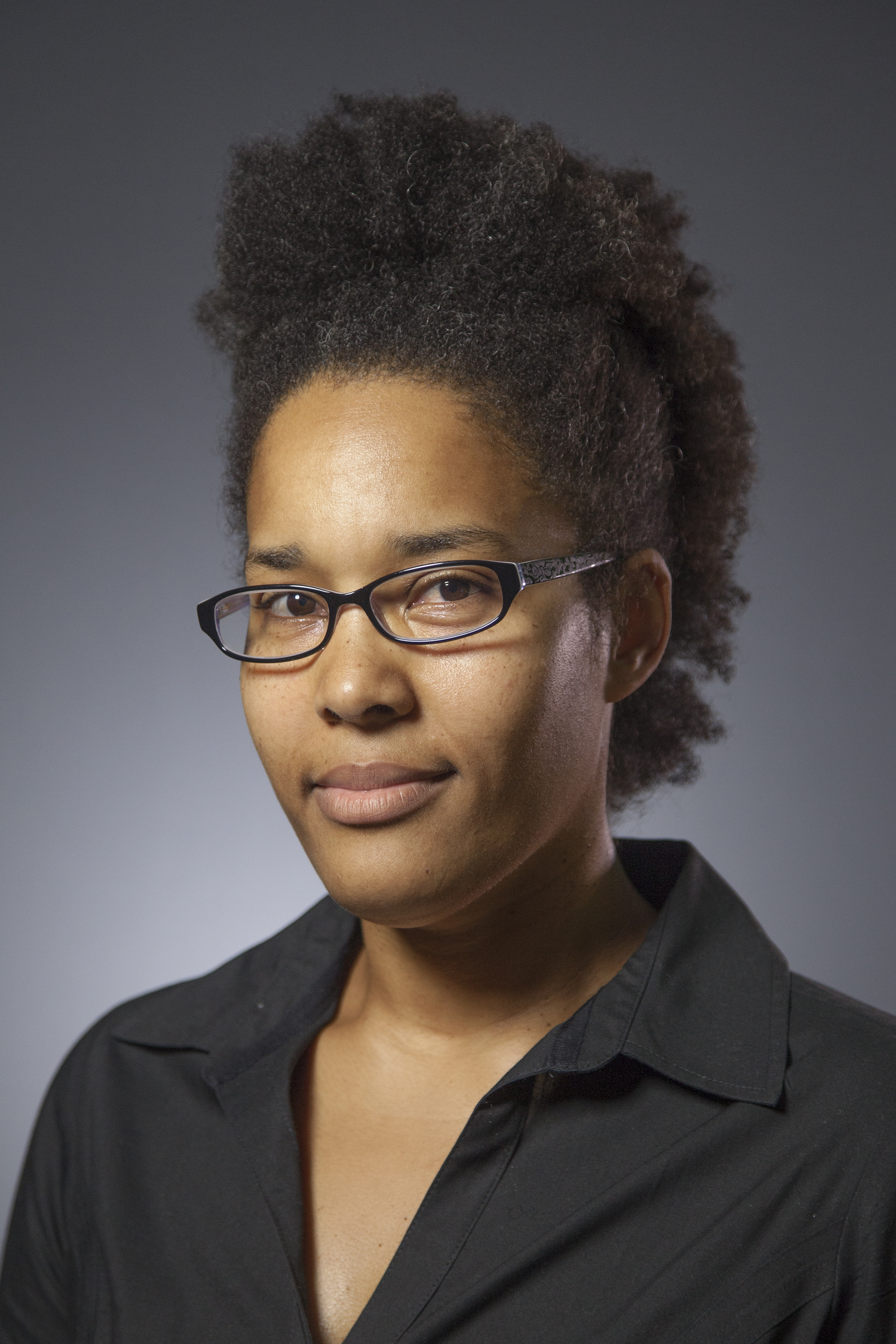
dotson_headshot_02

Kristie Dotson is an Associate Professor of Philosophy at Michigan State University and a Senior Fellow at the Center for Intersectionality and Social Policy Studies at Columbia Law School. She is part of the coalition #WhyWeCantWait that attempts to challenge the way current visions of racial justice are constructed to outlaw open concern for women and girls of color. In her academic work, she researches at the intersections of epistemology and women of color feminism, particularly Black feminism. Dr. Dotson edited a special issue on women of color feminist philosophy for Hypatia: A Journal of Feminist Philosophy entitled, Interstices: Inheriting Women of Color Feminist Philosophy (29:1, 2014) and has published in numerous journals including Hypatia, Comparative Philosophy, The Black Scholar, Transactions of the Charles S. Peirce Society and Social Epistemology. Dr. Dotson is working currently on a monograph entitled, How to Do Things With Knowledge.

Philosophy from the Position of Service

Kristie Dotson

Michigan State University

I found myself in professional philosophy quite by accident. Really, it was all an accident.

I completed undergraduate majors in African American Studies, Business Administration, and English. I never took one philosophy class as an undergraduate.

I, then, went onto complete a Master’s degree in English Literature. I took several “theory” classes in the pursuit of this degree, and not one of them was a philosophy class.

Believe it or not, the Master’s degree in English Literature didn’t garner as much dismay in others as my decision to pursue a PhD in Philosophy. (I imagine that most folks will believe this.)

The folks who knew me best were simply confused by my choice to pursue a career in philosophy. After all, I’d never once mentioned philosophy.

The questions, as you can imagine, were relentless. They all clustered around one particular question, “Why philosophy?”

Everybody who has devoted serious time to studying philosophy has faced a series of questions, essentially asking, “Why philosophy”. The main difference being just this: they probably had better answers for them than I did.

I had no idea how to begin to answer the question of “why philosophy?” I’d never taken a philosophy class before!

My decision to pursue a career in philosophy was the result of advice that if I wanted to have an academic career studying “theory,” then I needed to get out of English and into philosophy. At the time, literary theory jobs were tapering off to nothing.  Philosophy, or so I was told, held more promise.

Yes, reader, you read that correctly. I went into professional philosophy because there were more jobs in philosophy than literary theory (which was true then and is, most likely, true now).

Of course, this momentous decision was helped by the fact that I trusted my advisor and was relatively young. The young part being extremely important here.

I might be wrong, but I imagine that most people do not pursue careers based on relatively uninformed “why not” rationales. Ultimately, my answer to “why philosophy” was essentially an unsophisticated and uninformed version of “why not philosophy.”

Imagine my surprise in my first year of graduate school.

Now, before I say more, let me be clear, I am no stranger to critically analyzing the work of others. I am from literature after all. Most folks are trained to be literary critics of some sort.

No, the fact that we were expected to bring a critical eye to texts didn’t bother me at all. What surprised me was how little recognition there was in the discipline of philosophy that the primary training it offered was best suited for the role of critic. What’s more, it shocked me that there was no corresponding “creative” arm to the field.

English Literature has Creative Writing, right?

Art History and Criticism has, I don’t know, Art, right?

Philosophy has what? No, really, what is a creative arm for philosophy?

My lack of “proper” philosophical indoctrination as an early student made the absence of a notable “creative” field for professional philosophers particularly surprising. What were we studying? Where is it made now? How is it made? Who gets to make it? Is it “made” at all?

Why did this matter?

The institutional positioning of English Literature and Creative Writing helps to create a context where roles and work may be more clearly defined than in disciplines where no such positioning exists. One does not have to know how to define Literature to justify the existence of a critic culture. The relationship between writing and criticism is institutionally inscribed. Regardless of its limits, and it does have limits, this made sense at least. This provided the ability to be creative with those degrees by pointing to skill sets people expect the degrees to have fostered.

As a newbie to philosophy, I never really caught on to what it was a Philosophy PhD was supposed to train you to do. It is, in part, a professional degree after all. It is supposed to lead to some kind of job, right?

Philosophy, it seemed, was a bigger risk than I’d imagined.

I stuck with it though, primarily because my “why not” rationale was hard to kill.

It has been over 10 years since I entered the PhD program in philosophy at the University of Memphis. And I only now feel that I have an answer to the question, “why philosophy?”

Let me tell you what I do: I use philosophy to help support, generate and defend research, advocacy and activism that might change the current plight of Black people in the US, particularly promoting better conditions for Black cis- and trans* women, girls and gender non-conforming people. In other words, I am a Black feminist professional philosopher working in the service of Black feminist agendas.

For me, examining the discipline of philosophy itself could not answer the question, “why philosophy.” Not particularly surprising. The “why” of literary criticism is related to the existence of creative writing, even if it is not only or even primarily about its more pervasive cousin. The same might be said of art criticism and art.

The discipline of philosophy does not have this structure and, quite possibly, rightfully so. It is possible that philosophy is always in the service of something other than itself.

So the answer I have stumbled upon to “why philosophy?” is simple really.

I do philosophy because it can be engaged in and created from the position of service.

This is not a claim to uniqueness, it is simply an explanation of the way I have come to understand myself as a professional philosopher. I do philosophy from the position of service.

When a Black feminist social scientist approaches me with the need for a theoretical framework that facilitates the ability to do research on Black women that does not presume a serial pathology, for example, I engage with them. I try to get a sense of what they need in a theory and whether, from my area of specialization, i.e. epistemology, I can help. If I can, then I write up a theory for them. One that I believe in, but one that first and foremost serves a purpose.

I wrote 5 articles to be used by particular Black feminist social scientists for their theoretical frameworks and, in doing so, furthered Black feminist research in general.[1]

When I realized that a particular epistemological inquiry was developing in such a way as to foreclose the robust development of Black feminist investigations in that inquiry, as was the case of the early development of epistemic injustice, I wrote to make space for such endeavors.

I wrote 3 articles attempting to “hold space” for the possibility of Black feminist interventions in epistemic injustice work.[2]

When advocating for the recognition of the plights facing Black girls in the US, in the #WhyWeCantWait Campaign, I used the way I think about knowledge to identify ways knowledge was being used against us. That is to say, I put my epistemology training to work for the sake of Black feminist activism.

I am currently writing a book, tentatively entitled, How to Do Things with Knowledge. In the end, this book attempts to provide a record for other people with similar questions and interests of what I have learned and continue to learn living and working as a Black feminist, epistemology-based activist. I do this so that they can begin or continue their journeys with more tools prepared and far more work to do.

So “why philosophy?” I suppose the answer is still, “why not philosophy,” but there is a great distance traveled (both in terms of work and privilege) from my first utterance of that phrase to this one.

[1] Kristie Dotson, “Tracking Epistemic Violence, Tracking Practices of Silencing,” Hypatia 26, no. 2 (2011); “Black Feminist Me: Answering the Question ‘Who Do I Think I Am’,” Diogenes: Journal of the International Council for Philosophy and Humanistic Studies 59, no. 1 (2012); Kristie Dotson and Marita Gilbert, “Curious Disappearances: Affectability Imbalances and Process-Based Invisibility,” Hypatia 29, no. 4 (2014); Kristie Dotson, “Conceptualizing Epistemic Oppression,” Social Epistemology (2014). And “A Cautionary Tale: On Limititng Epistemic Oppression,” Frontiers: A Journal of Women Studies 33, no. 1 (2012).

[2] “Knowing in Space: Three Lessons from Black Women’s Social Theory,” Labrys 22(2013). “Theorizing Jane Crow, Theorizing Unknowability” (currently under review) And “A Cautionary Tale: On Limititng Epistemic Oppression.”

Bibliography

Dotson, Kristie. “Black Feminist Me: Answering the Question ‘Who Do I Think I Am’.” Diogenes: Journal of the International Council for Philosophy and Humanistic Studies 59, no. 1 (2012).

———. “A Cautionary Tale: On Limititng Epistemic Oppression.” Frontiers: A Journal of Women Studies 33, no. 1 (2012): 24-47.

———. “Conceptualizing Epistemic Oppression.” Social Epistemology (2014).

———. “Knowing in Space: Three Lessons from Black Women’s Social Theory.” Labrys 22 (2013).

———. “Tracking Epistemic Violence, Tracking Practices of Silencing.” Hypatia 26, no. 2 (2011): 236-57.

Dotson, Kristie, and Marita Gilbert. “Curious Disappearances: Affectability Imbalances and Process-Based Invisibility.” Hypatia 29, no. 4 (2014): 873-88.


Most Impressive Philosophers

Philosophy Bytes put together a 38 minute compilation of responses to the question ‘Who is the most impressive philosopher you’ve met?’ You can find it here.

I enjoyed it very much. All of the philosophers listed are certainly very impressive.  A number of women are interviewed, highlights include Rae Langton, Jenny Saul, Pat Churchland, Jessica Moss, and Liane Younge. And, at least a small number of women are listed as being impressive, including Sally Haslanger, Ruth Marcus, Frances Kamm, and Elizabeth Anscombe. Yes, there should have been more women and other minorities interviewed and listed, but I was happy that at least a few made the cut.

I also found it interesting that there were so many repeat offenders: Derek Parfit, David Lewis, Bernard Williams, Ronald Dworkin, Thomas Nagel, and John Rawls were among them.

Over all, it is worth listening to the podcast. It is an interesting piece in itself, but it is especially so if it is taken as a contribution to the sociology of philosophy.  It is a useful way of marking where we are in terms of our current philosophical preferences and potentially related implicit biases (e.g., currently, there is a strong tendency toward listing white males as being among the most impressive). I hope that as the discipline continues to change and progress that the list of the most impressive philosophers will become more diverse and inclusive.

Featured Philosop-her: Gina Schouten

Gina Schouten

Gina Schouten is Assistant Professor of Philosophy at Illinois State University. Before coming to Illinois State, Gina completed her PhD at the University of Wisconsin-Madison in 2013. Her research interests include political legitimacy, educational justice, gender in the family, and diversity problems within the discipline of philosophy. She is currently working on a paper that extends her previous work on stereotype threat in academic philosophy, in which she argues for the expansion of pre-collegiate philosophy instruction as a possible remedy for the underrepresentation of women in the field. Other projects in progress include a series of papers concerning the legitimacy of political interventions to alter the gendered division of labor.

What do we owe the violinist? Some musings on the ethics and politics of abortion

Gina Schouten

Though abortion is a profoundly controversial ethical issue among the population at large, it seems to be fairly decisively settled among feminists. Feminists who endorse women’s full equality in workplaces, politics, and intimate relationships have generally regarded strong protections for reproductive freedoms as essential to securing that equality. I agree that efforts to achieve women’s social and political equality are likely to be frustrated by restrictions on abortion. My sense is that these facts have been taken by many feminists to settle at least the politics of abortion, if not the ethics as well: Women’s equality is an urgent requirement of justice, and that equality depends upon women having the capacity to decide whether and when to have children. Thus, we must assure women access to the tools necessary to choose freely whether and when to become pregnant; and, at least so long as that capacity cannot perfectly be assured, we must assure their access to the tools necessary to end pregnancies that they do not want.

But the urgency of securing women’s equality, and the fact that abortion restrictions frustrate that goal, do not suffice to settle the ethics or politics of abortion.

There are, of course, many different kinds of people who think of themselves as feminists, and some so called “pro-life feminists” argue that women’s interests are actually furthered by restrictions on abortion.[1] These arguments are unpersuasive. But it seems to me that there are some genuine feminist commitments that challenge the moral permissibility of abortion, and that challenge the impermissibility of policies that aim to restrict it.

I assume that restrictions on abortion frustrate the cause of women’s equality. Even so, I want to suggest, tentatively, that such restrictions may nonetheless be justified, all-things-considered. Judith Thomson’s now iconic defense of abortion asks us to assume that the fetus is a person.[2] Still, she argues, this does not suffice to show that it is impermissible to kill it: If the fetus is a person, then its interest in the use of the woman’s body to sustain its life is a morally relevant interest. But according to Thomson, that interest is, in many cases, decisively outweighed by the interests of the woman whose body it is.

On what grounds is this weighting so decisive?

Some of our most basic feminist commitments entail that, if the fetus becomes a member of the moral community at some point during fetal development, then at that point its interests become morally very weighty indeed. Feminists have powerfully drawn attention to the ubiquity of dependence, and the implications of dependence for our moral and political theorizing. We all rely on the care we receive from others to meet our basic needs and to flourish, and our dependence does not lessen our moral claim to have our interests respected and considered in moral decision-making. Moral theorizing is flawed, for example, insofar as it lacks the resources to secure the status of children, people with disabilities, or other dependents as direct and unambiguous moral subjects. This commitment of feminists also makes vivid the fact that moral obligations can compel us even when those obligations are not voluntarily undertaken. Thus are we owed care during times of dependency even if we have no intimate relations who are intrinsically motivated to provide that care.

Because they have so compellingly drawn attention to these implications of our common need for care, feminists are especially well-positioned to recognize a crucial, if contingent, point about the ethics of abortion: Whether or not fetuses are members of the moral community whose interests must be taken into account, their neediness does not suffice to exclude them from the moral community; nor, if fetuses have morally relevant interests, are those interests rendered less weighty by virtue of the fetuses’ reliance on others to have them met. Presumably, the fetal interest implicated in the abortion debate is something like the interest in receiving the care necessary for survival. That seems, prima facie, to be a strong interest. If that interest is not weakened by the fetus’s dependence, then we have some presumptive reason—conditional on Thomson’s assumption that the fetus’s interests are morally relevant to begin with—to think that interest is morally weighty indeed.

Women have a morally weighty interest in reproductive freedom. But as Thomson rightly points out, very morally weighty interests can be in tension with other very morally weighty interests. Under some conceivable circumstances, then, very morally weighty interests can justifiably be frustrated. If this is right, then the fact that abortion restrictions are very bad for women does not yet suffice to show that those restrictions are unjustified, all-things-considered. I am genuinely unsure whether the fetus’s interests are morally relevant, and if so, at what point during the pregnancy they become so. But contra Thomson, I think that answering these questions is of paramount importance. And if the fetus does have moral status, then one initially appealing strategy for discounting the weight of its claims is ruled out by feminist commitments: Dependency does not lessen one’s moral status.

The slogan “the personal is political” captures another paradigmatic commitment of feminism. The personal is political because intimate relationships can give rise to profound vulnerabilities, and these vulnerabilities can generate claims of justice that are no less urgent in virtue of arising in intimate relationships. On these grounds, feminists have rightly resisted those who would classify the family as a “private” realm and afford families presumptive immunity against political intervention. The vulnerabilities of unpaid caregivers, we argue, generate demands of justice even when those receiving care are intimates whom the caregiver loves, and even when the resulting inequalities occur between intimates, such as between the caregiver and her spouse. Because the personal is political, we endorse political protections to secure women’s equality not only in the workplace but in the home as well.

It is tempting to treat abortion as a personal issue. But the personal becomes political when the choices we make have profound implications regarding others’ lives. I have suggested that even the strongest and most compelling interests—such as the interest in securing women’s bodily integrity through reproductive freedom—can conflict with others that are similarly strong and compelling. If fetuses’ interests are morally relevant, then it is difficult to see how we could avoid classifying reproductive choices as political.

Of course, even assuming that fetuses are members of the moral community whose interests must be accorded weight in moral and political calculations, women’s quite strong interest in exercising control over their bodies may be decisive. The importance of reproductive control in securing women’s most basic equality might render their interest sufficiently strong and fundamental to override any countervailing considerations. But even if women’s reproductive freedom is overridingly important, there are nonetheless reasons to keep track of morally important trade-offs that we make in securing it. The difference between a moral calculus in which the fetus’s interests do not matter and one in which they matter but are outweighed might have relevance for both our rhetoric and our policy endorsements.

If we recognize the fetus’s interests as morally important, though, is it so obvious that they are outweighed, even by the extraordinarily strong interest in protecting rights to reproductive freedom? I worry that we might, after all, have some obligation to stay plugged into the violinist. The needs and vulnerabilities of others generate powerful moral obligations, and feminists have long been banner-carriers in the recognition of those obligations. Moreover, if the vulnerability of the fetus is morally important, then it has many of the hallmarks of the personal and yet still political vulnerabilities that feminists have been particularly adept at theorizing.

In considering this possibility, we must remember that ubiquitous dependency generates ubiquitous moral obligations as well: There are serious costs to doing the socially necessary and morally obligatory work of caregiving. We must develop policies to share the costs of discharging such obligations fairly, and to compensate those who incur costs that cannot be shared. If fetuses are morally significant, then the vulnerabilities of those who care for them are particularly urgent, since the most serious harms are entirely non-transferrable. If fetuses’ interests generate moral imperatives, and if pregnant women are uniquely in a position to provide the care they need, the rest of us have obligations to share the costs of providing care insofar as sharing them is possible, and to take other steps to ease resultant vulnerabilities when sharing is not possible. If sustaining fetuses turns out, under some circumstances, to be morally obligatory care, then feminists should endorse protections and social supports for those who perform it and call for new social and medical technologies to share its costs more broadly.

Thomson was right that the fetus’s having morally relevant interests does not suffice to show that abortion is morally impermissible. But we must also recognize a corresponding—if far less welcome—insight: The moral relevance of women’s very strong interest in reproductive freedom does not suffice to show that abortion is morally permissible, or that restricting it is always illegitimate. If we assume with Thomson that the fetus is a person, then our obligations to care for it are weighty indeed. Even if we acknowledge that restrictions on abortion would frustrate profoundly worthy feminist goals, we should consider whether, after all, the ethics and politics of abortion crucially depend on the moral status of the fetus and the moral weight of its interests.

Because I believe that restrictions on abortion are likely to undermine women’s equality, I want for the ethics of abortion to be settled decisively in favor of the woman’s right to choose, and for the politics of abortion to be settled in favor of strong protections for that right. But when I scrutinize my conviction that abortion is permissible and that robust protections for access to abortion are desirable, I am dismayed to find that conviction in tension with other commitments I have that I take to be distinctly feminist. I welcome any thoughts about whether the tension is genuine or merely apparent, and, if it is genuine, how it is best resolved.

[1] I set aside questions about what views are properly regarded as “feminist.”

[2] Thomson Judith J. (1971). “A Defense of Abortion,” Philosophy and Public Affairs 1(1): 47-66.

Featured Philosop-her: Meghan Sullivan

photo

Meghan Sullivan is the Rev John A O’Brien Assistant Professor of Philosophy at the University of Notre Dame.  She specializes in metaphysics and topics where it overlaps with semantics, logic, epistemology and practical reason.  She’s currently on leave writing a series of papers on issues at the intersection of the metaphysics of time and diachronic rationality, supported by grants from the University of Sydney and UC Riverside. Meghan holds a PhD from Rutgers University and a B.Phil from Oxford, where she studied as a Rhodes Scholar.

Time Biases: An Introduction

Meghan Sullvian

  1. Stop Procrastinating and Write the Entry!

I have to admit, reading the previous Philosop-her entries, I was both deeply impressed with the projects that my colleagues are pursuing and utterly stymied about how to go about writing my own contribution. Even though I knew the deadline was fast approaching, I kept putting off the difficult task of composing the piece. I went on Facebook. I unloaded the dishwasher. I even cleaned out my gutters.

One admittedly simplistic explanation for my procrastination is that I prefer experiences that I think will be unpleasant to occur later rather than sooner. I thought writing the piece would be more onerous than cleaning the gutters, so I scheduled gutters first. I’m near biased about my experiences: I discount potential experiences as they are scheduled further in the future.

Some people I meet think they are far biased: unlike procrastinators, they prefer to wait for good things and prefer to get unpleasant experiences over with. (My correspondents often think this is a virtue.) Here’s a test to see if you might be far biased. Suppose I promise to give you a wonderful gift—maybe I will buy you a new smartphone or take you on a great trip. You can either have the gift this month or five years from now. If you pay some small sum now—say, $5—I’ll delay the gift. Would you pay? If not, you probably are not far biased. I know I wouldn’t pay to delay a good experience. Indeed, I’d happily pay small sum to schedule it earlier. When people think they are far-biased, I think they are instead describing a psychological fact: presently anticipating some kinds of future experiences gives them present pleasure or anguish. I very well might pay something to experience present anticipatory pleasure, but this isn’t the same as being far biased.

What should I make of my near bias? Is it rational? Should I make an effort to try to overcome my procrastinatory ways? Well, one optimistic way of thinking about near bias is it is an extraordinarily useful heuristic for responding to differences in probabilities. We might reasonably suppose that the further some experience is in the future, the less likely it is to occur. And it is perfectly rational to discount potential good or bad experiences based on the subjective probability we assign to the experiences occurring.

This probabilistic explanation might go some of the way toward justifying my near bias, but honestly, I still have the bias even once I’ve taken the probabilities into account. After all, I was very confident I would eventually need to write this blog entry. I’m very confident that my dental pain will only increase if I delay getting a filling.  I’m very confident that I will survive to age sixty five and be upset if I have meager retirement savings. But I still procrastinate, delay appointments and underfund my Roth IRA. I’d have to have very strange subjective probabilities to explain the robustness of my near bias.

Another optimistic take on near bias is that it is justified given a certain picture of personal identity. There are two hypotheses we might have about how persons persist over time:

  • All-or-Nothing: There is always a determinate fact of the matter about whether a person at one time is identical to a person at another time, and this fact is what matters to rational planning. For example, there is a fact of the matter about whether I survive to my sixty-fifth birthday, and what matters to my retirement planning is whether someone then will be identical to me.
  • Gradations: Whatever matters to survival of persons over time comes in degrees. For example, maybe what matters for rational planning is psychological connectedness. If I am deciding whether to care about some future person stage, I might proportion my care to how psychologically connected that stage is to me now. (A view like this was made famous by Parfit 1984.)

If you take the Gradations view, then you might think that as you project into the more distant future, the person who will benefit from your choices is less and less a person you are related to in whichever way matters for rational planning. So suppose I have $100 that I could either spend on a nice dinner tomorrow or add to my Roth IRA, where it would accrue enough interest to buy a jet ski thirty-four years from now. Meghan-tomorrow is much more worthy of my rational concern then Jetski-Granny-Meghan-in-2048. So it makes sense that I favor nearby person stages.

But, I’m not a Parfitian about personal identity. I think persistence is an all-or-nothing matter. And I think we do prioritize numerical identity over other relations when it comes to rational planning. (In fact, my views on persistence are even more extreme. I think objects can persist (in a really thin, but important sense of “persist’’) through absolutely any kind of change. See Sullivan 2012. But that’s a fight for another day.)

I’ve suggested two limited defenses of near bias, but historically philosophers have thought that it is irrational to discount experiences because they are further in the future. In the Protagoras, Plato counsels learning the “art of measurement” so as to overcome irrational drives to discount the distant future. Henry Sidgwick—the godfather of contemporary moral theory—urges in The Methods of Ethics: “The mere difference of priority and posteriority in time is not a reasonable ground for having more regard to the consciousness of one moment than to that of another. ”

The typical philosophical case against near makes two claims: (1) near biased preferences are arbitrary (they aren’t based on distinctions rational agents ought to attend to), and (2) near bias leads to overall deductions in an agent’s well-being. I think the case is pretty good, and it certainly motivates me to try harder to recognize and overcome my near biases.

  1. Should I Care about the Past?

Now here’s a curious thing about time and rational preferences—while many philosophers think it is irrational to discount the distant future compared with the near, almost everyone seems to assume that it is rationally permissible (or even obligatory) to discount the past. What do I mean? Consider a case Derek Parfit proposes. You are in the hospital and you have amnesia. The doctor tells you that there is treatment for your condition, but it involves conscious, painful surgery. You either had the surgery yesterday or are scheduled to have it tomorrow—she’s going to check. If you had it yesterday, it was the longest ever recorded in the hospital, ten hours. But if you have it tomorrow, they anticipate it’ll only be two hours. Which situation do you prefer to be in? Loads of (forgotten) pain yesterday? Or less (will be forgotten) pain tomorrow? If you prefer to have had the surgery yesterday, it’s a good sign you are future biased; you discount experiences because they occurred in the past rather than the present or future.

Future bias should presumably be held to the same standard as near bias. It wouldn’t be rational to discount past experiences if doing so is arbitrary and leads to overall deductions in well-being. Is future-bias subject to these same criticisms?

Whether there are non-arbitrary differences between the past and the future is partly a question for metaphysics. I think there are fundamental differences between the past and future, and one important theme in my research concerns how to understand those metaphysical differences. (See Sullivan 2012 and Sullivan Unpublished). But I’m less certain that any of these metaphysical differences are the kinds of differences that rational agents ought to care about. In fact, at the moment I am writing a paper with an ND PhD student (Peter Finocchiaro) where we examine this very issue.

Could being future biased lead to deductions in overall well-being? One way it might is by influencing our views about death. Suppose you have had a happy and fulfilling life, but you are nearing the end. If you are future biased, you might feel dread and loss at the prospect of missing out on potential future happy experiences and might take little solace in acknowledging all of the happy experiences in your past. But perhaps your attitude toward approaching non-existence would be better if you could overcome your future bias and better value those past experiences.

Existential crises aside, being future biased also interferes with some important ways you might engage in rational planning. In a forthcoming article in Ethics, Preston Greene and I offer some cases.   The details are important and too thorny to get into here, but basically we think it is rationally permissible for agents to make decisions now based on what they anticipate their preferences will be in the future, and to prefer to make decisions that will satisfy all of their future preferences rather than just some of them. But such planning doesn’t work out well for future biased agents, because future biased agents know that at some point their preferences will change. So suppose you are offered the choice between 100 cookies immediately and 10 cookies in an hour. Suppose you are strongly future biased; you know that once the present moment passes, you won’t care about those 100 cookies anymore—you’ll prefer fewer future cookies to more past cookies. Suppose also that you aren’t near-biased (you’ve overcome that rational defect). And suppose you want to make sure your future preferences are satisfied. It seems like your near bias and rational planning will compel you to opt for fewer cookies later. But that’s absurd. Or so Greene and I argue in this paper. Because we think the rational planning principles are reasonable, we think future-bias is where the real trouble lies. We also give a theory or error for why discounting the past seems so intuitive, even if it isn’t rational.

  1. Unsolved Mysteries of Diachronic Rationality

There are other fascinating issues at the intersection of the metaphysics of time and practical reason. In closing, I’ll just mention just three others that I’ve been thinking quite a bit about.

  • When we are comparing options about our future, how should we compare scenarios where we do not exist to scenarios where we do? And what rational principles should you appeal to in deciding whether to prolong your natural life? Or deciding whether you hope to have an afterlife?
  • How should we weigh distant future scenarios that include different populations of individuals? And is there any justification for being morally near biased—preferring to help temporally closer populations rather than temporally distant populations? What insight, if any, does moral near bias offer on the nature of altruism? (I’m particularly engaged with a new book by Samuel Scheffler.)
  • If there is real passage of time (and I think there is), how could our propositional attitudes (belief, assertion, and the like) accurately represent an ephemeral reality? And what does rational investigation and communication look like in a constantly changing world? (See Sullivan 2014)

Maybe I’ll tackle those in another blog entry. Oh and I was wrong, by the way. Working on this piece turned out to be an incredibly fun and philosophically rewarding experience. I look forward to reading the upcoming ones in the series.

  1. Read More…

Greene, Preston and Meghan Sullivan. “Against Time Bias.’’ Ethics. (Forthcoming)

Parfit, Derek. Reasons and Persons. Oxford: Oxford University Press. 1984.

Scheffler, Samuel. Death and the Afterlife. Oxford: Oxford University Press 2013.

Sullivan, Meghan. The Minimal A-Theory. Philosophical Studies . Vol. 158, Issue 2 (2012), pp. 149-174.

—-. Change We Can Believe In (and Assert). Nous , Vol. 48, Issue 3 (Sept 2014), pp. 474-495.

Most-Read Articles in Analysis during October 2014

Analysis has very kindly posted its most-read articles during October 2014.  “Most-read rankings are recalculated at the beginning of the month and are based on full-text and pdf views.”  I think this is really wonderful information to have since it gives us an idea of what people are reading.

This may be neither here nor there, but I wanted to take note of how many of the top 50 articles that are most read in the last month are by women.

Here’s what I found:

Out of 50 articles, 9 are by women (=18%)

Jennifer Saul (article)

E.G.N Borg (article)

Penelope Mackie (article)

Stephanie Rennick (article)

Carolyn Dicey Jennings* (article)

Laura Schroeter (Book Symposium)

Sarah Richmond (article)

Jessica Wilson (article)

Rani Lil Anjum* (article)

It would be interesting to see how these numbers compare to the total number of articles in Analysis (so far) that are authored by women.  Unfortunately, I don’t have these numbers.

Perhaps if we want women’s work to be noticed and cited more often we need to find ways of increasing the amount of most-read articles that are authored by women.

* is a co-author.

Featured Philosop-her: Carolyn Dicey Jennings

Carolyn Jennings


Carolyn Dicey Jennings is Half-British, Half-American and grew up in Texas, Louisiana, and Oklahoma. She went to the University of St Andrews in Scotland for her undergraduate degree in philosophy and Boston University for graduate degrees in philosophy (PhD) and psychology (MA). She worked with Takeo Watanabe’s Vision Lab as a Research Assistant while completing the MA at BU. She then worked with Bence Nanay as a postdoctoral researcher for a year on his Between Perception and Action project in Antwerp, Belgium before taking up an Assistant Professor position at the University of California, Merced. She works at the intersection of philosophy and cognitive science on the topic of attention, especially as it relates to perception, consciousness, action, and responsibility. She is researching issues of bias as part of her project on forms of responsibility outside of attention.


Mine the Gap

Carolyn Dicey Jennings

This is an important week for me. First, the situation in Ferguson and elsewhere has made the issue of bias a pressing one for me. Second, having my parents, all five of my sisters, and their partners (and dogs!) in Merced for Thanksgiving means that I am not getting much sleep. This has made me reflect a little on the attempt to fight harmful biases through self-control and vigilance—if this is our primary method of fighting our own biases, we had better have a strategy for avoiding ‘cognitive sleep’ on the job. But as much as we know about how to avoid sleeping in important meetings, we don’t know much about how to avoid slipping into harmful biases. All of us have oversights. We overlook those who are differently abled, more feminine, more foreign, shorter, less attractive, etc. We do not have the cognitive resources to account for all of these oversights on a regular basis. For those of us who make decisions under cognitive load, who may sometimes slip into something of a cognitive sleep, it might be useful to put aside time to “mine the gap.” That is, to actively explore the space that we may have overlooked for gems. Here are some methods that have worked for me. These methods do not require vigilance, which should be useful at Thanksgiving, or any time you are low on resources, sleep or otherwise.


  • The Take 5 Method

This and the next method come from a post that I originally put up at New APPS exactly two years ago today (November 28th, 2012). I removed that and other posts in December 2012 when I considered leaving the blog (ultimately changing my mind). I am adding the text from that original post here:

“Over at FeministPhilosophers, a post was made on a new call to action: the journal Nature has called for its editors to insert a step into their method of choosing authors, wherein they must try to think of 5 female scientists who could be asked before finalizing their choice. As they put it:

“We believe that in commissioning articles or in thinking about who is doing interesting or relevant work, for all of the social factors already mentioned, and possibly for psychological reasons too, men most readily come to editorial minds. The September paper speculated about an unconscious assumption that women are less competent than men. A moment’s reflection about past and present female colleagues should lead most researchers to correct any such assumption. We therefore believe that there is a need for every editor to work through a conscious loop before proceeding with commissioning: to ask themselves, ‘Who are the five women I could ask?’”

I was inspired by this bold proposal to think of how it might be adapted for use by academic philosophers. If one wanted to follow this proposal, a helpful memory aid could be the lists collected at the APA Status for Women in Philosophy Website, which I recommend using. One limitation of the proposal is that it focuses on biases that harm female scientists, without accounting for the biases that harm, for instance, racial minorities. And so I unveil…”


  • The Extended Mind Method

“Conference organizers, book editors, and award committees, instead of relying on your own memories to come up with the relevant names, why not rely on The Extended Mind? In this case, I am using “The Extended Mind” to refer to the aggregate of publicly available information on working philosophers and their research. One could start by choosing a specific topic and then look at all those papers published (in the last ten years?) on that topic and choose names based on the best of these.

For example, if I wanted to put together an invite-only conference on the topic of attention, I could go to PhilPapers and look at papers by searching for “attention.” Here are the steps I took as an exercise, with optional elements italicized (which I wrote out so that anyone can copy and use them):

Step 1: Search PhilPapers for “Attention” in Advanced Search with the years 2002 to 2012.

Step 2: Select “Published Only” and hit “Apply.”

Step 3: Sort by “Relevance.”

Step 4: Export this page as “Formatted Text” for 200 items.

Step 5: Open a new Excel Workbook.

Step 6: Copy and Paste all text from the formatted text to column A of the Excel spreadsheet.

Step 7: Sort A to Z.

Step 8: Insert a column to the left of A and insert a Find Function: type in A1 “=FIND(“(“, B1″)” and drag to fill all rows.

Step 9: Insert a column to the left of A and insert a Mid Function: type in A1 “=MID(C1, 1, B1-1)” and drag to fill all rows.

Step 10: Insert a column to the left of A and copy column B to A (paste “values only”) and then go to “Data” and “Remove Duplicates” for column A only.

Step 11: Insert a column to the left of A and insert a Count Function: type in A1 “=COUNTIF(C:C, B2)” and drag to fill all rows.

Step 12: Sort (Custom Sort) Column A and B largest to smallest by column A values.

This results in the following list of philosophers with 2 or more publications on the topic together with the number of publications to the left (I am not on this list because my married and maiden names differ, which could be a problem with the method, but let’s forge ahead!):

6 Christopher Mole

5 Sebastian Watzl

4 Wayne Wu

3 Austen Clark

3 Brian Bruya

3 Victor A. F. Lamme

2 A. Charles Catania

2 Axel Seemann

2 Daniel Collerton, Elaine Perry, and Ian McKeath

2 Ingar Brinck

2 J. Campbell

2 Jason Ford

2 John G. Taylor

2 Juan Pascual-Leone

2 Luis Jimenez

2 Naomi M. Eilan

2 Natalie Depraz

2 P. Sven Arvidson

Some of these names are not well known to me, which is why this method should be helpful to bring to mind authors that may otherwise suffer from bias. Of these authors there are 16 men and 4 women, which means that the method yielded, in this case, 20% female authors. This could be improved, but it is a good start.

This approach has the advantage of taking the emphasis off particular people and putting it onto their work. This should help with all kinds of bias, including name bias, racial bias, gender bias, etc.

This approach also has several problems. First, the best available database, PhilPapers, is not complete. Second, PhilPapers is gargantuan, which makes it less likely that the relevant parties will follow the steps I list above for search terms that yield very large numbers of names.”

In the original blog post, I then go on to discuss how one might develop graphics that would improve this method. Instead of discussing that proposal, I want to write about how an application of this method helped me in a recent project: a book review of Wayne Wu’s Attention.


  • The Mixed Method

In reading Wu’s book, I was struck by both the breadth of the literature he cites and the gaps in that literature. Coming from a graduate program with emphases in the history of philosophy and phenomenology, I found these absences most striking. I decided to run some tests to check for other absences. This is how I did it.

First, I went through the text and jotted down every name with multiple mentions. I created a list of these in Excel, tagging the names of women authors. Using a pdf copy of the book, I then used the “find” feature of Adobe Acrobat to determine the number of mentions per name. I found that 14% of the authors mentioned three or more times were women, but that 18% of these citations were of women authors (18%), roughly approximating the proportion of women in full-time positions in academic philosophy (16.6%).

Second, as with the Extended Mind Method, I did a PhilPapers search for “attention,” selecting the first 500 “most relevant” papers. I used the “Find” and “Mid” functions discussed above to isolate author names, and then used the “Consolidate” feature to sum up the number of publications per author. I selected all those authors with at least two such papers and then tagged the names of women authors. There were 16% women authors on this list of 45 authors. I compared this list to the list I created from Wu’s book, and found that roughly half–22 of the 45 authors–had not been mentioned in his book. I then explored the papers of these authors, finding some of them (8 of the 22) clearly relevant to the topics of the book. (I mentioned a few of these names in a footnote of the book review.)

Third, I used Google Scholar to perfom two searches: one for “attention” and “action” in the title and one for “attention” and “phenomenology” in the title. In this process, I discovered 7 highly cited articles clearly relevant to the themes of the book. (I mentioned a few of these names in the same footnote.)

What I noticed in this process is that Wu’s scholarship appears to be gender neutral: he cited women in approximately the same proportion that they publish on this topic. Nonetheless, as with any academic work, the scholarship has noteworthy gaps. Two of those gaps were apparent to me because of my educational background (historical philosophy and phenomenology), but these could have arisen for someone without such a background who used this procedure.

Each of us has our own such gaps. I hope that these and other methods will help to explore these gaps to expand the scope and quality of our research.

Featured Philosop-her: Susanna Siegel

susanna_siegel

Susanna Siegel is Edgar Pierce Professor of Philosophy at Harvard University. She is author of The Contents of Visual Experience (Oxford 2010), a book about perception and intentionality. She has recently published articles about perceptual justification, the influences of hopes, fears, beliefs, and prior knowledge on perception, wishful thinking, and the relationship between affordances and perception. She teaches a course in the General Education program on social protest and political philosophy, and contributes to the program in Mind, Brain, and Behavior.  She is committed to fostering analytic philosophy in Spanish, and together with Diana Acosta and Patricia Marechal, is hosting a series of philosophy workshops in Spanish at Harvard. The second workshop will take place in March of 2015.

The Rationality of Perception

Susanna Siegel

I’d like to thank Meena for starting and hosting PhilosopHer.

For a long time I’ve been interested in perception. Much work in Anglophone philosophy of perception has focused on two kinds of perception: “good” cases where perception puts us in contact with reality, and “bad” cases where we are unwittingly hallucinating or under a visual illusion of some sort. The distinction between good and bad cases is important. It is the start of enduring philosophical problems of skepticism about the external world. And if there were no good cases, both science and common sense would be called into question. Both rely heavily on observation.

I’m interested in a third category of perceptual states. It cross-cuts the good and bad cases, and it can help analyze desire, fear, a range of cultural phenomena. The third category is that sometimes perception is a sham. It purports to present things as they are, but behind the scenes, your own psychological states are stacking the deck, so that the way things appear ends up congruent with what you want, hope, fear, suspect, or already believe.

Here’s an example from Cordelia Fine’s (2010) book Delusions of Gender. She starts Chapter 1 with a quote from Jan Morris, a male-to-female transsexual describing her post-transition experiences in her autobiography Conundrum (1987). Morris writes,

“The more I was treated as a woman, the more woman I became. I adapted willy-nilly. If I was assumed to be incompetent at reversing cars, or opening bottles, oddly incompetent I found myself. If a case was thought too heavy for me, inexplicably I found it so myself.”

How does Morris’s being presumed incompetent by others come to be part of her own outlook on the world? This happens in part by influencing her perception of things in the world. Consider Morris’s perception of heaviness. This perception is a sham. It’s no surprise if the perceived heaviness of a suitcase is a function of how strong you are – even if, from your point of view, you seem to be simply taking in a feature of the suitcase. It’s more surprising if its perceived weight is a function of how strong you think you are – and if that belief can in turn be influenced so fluidly by what hoards of other people presume about you, regardless of your physical strength. What other people presume about you has nothing to do with the heaviness of the suitcase, and everything to do with social relationships.

So suppose Morris finds the suitcase to be heavy when she tries to lift it. Does Morris’s experience of its heaviness make it reasonable for her to believe that the suitcase is heavy? Yes or No? Both answers can seem plausible. No: It is fishy for her to believe that the suitcase is heavy, when what led to her perception of heaviness simply internalizing other people’s ill-founded underestimation of her competence. Her perception of heaviness is akin to a rationalization of the outlook on which she can’t lift it.  But at the same time, Yes: What else is she supposed to think about how heavy the suitcase is? If the suitcase feels heavy, then so long as she isn’t aware of any reason to discount the feeling, isn’t it reasonable for her to believe that it really is heavy? (Perhaps later, on reflection, Morris becomes aware of such reasons, but let’s focus on the moments before she is aware of any such reason.)  The philosophical problem is that both Yes and No answers to this question seem plausible.

This epistemological problem takes many forms. It can arise when the very contents of perceptual experience are influenced by what the subject fears, beliefs, wants, suspects, or knows. Some influences on the contents of experience have come to be called ‘cognitive penetration.’ This label applies widely. It isn’t always exactly what Fodor and Pylyshyn, and Churchland debated in the 1980’s under that label. (I talk a bit about the differences in “Epistemic Evaluability and Perceptual Farce”).

But the same problem can arise from psychological influences on the role of perceptual experience in what the subject goes on to believe.  For all Morris says (“I found it to be heavy…), perhaps the suitcase didn’t feel heavy, but she just thought it did. Morris might be making an introspective error about how heavy the suitcase feels. Or perhaps introspection isn’t involved at all, and Morris is jumping to the conclusion that the suitcase is heavy. Due to her outlook on herself (freshly inherited from those who presume she’s weak or incompetent), she believes that it is heavy, but if she were guided by her experience, she’d find the suitcase easy to lift.  Here, the perverse, ill-founded outlook makes her discount her experiences, preventing them from playing the prized epistemic role of regulating our beliefs.

So there are a number of ways in which perception might be influenced by the view of herself that Morris is gradually internalizing. This view of herself is obstructing her access to the world. And it is doing that, by making Morris perceive the world as the world would be, if the patriarchal presumptions that she encounters were true. If she were weak and incompetent, then the suitcase really would be heavy.

This kind of sham opens the possibility that perceptual experience itself might be epistemically evaluable. Philosophers often distinguish perception from reasoning. We reason from information we have already, whereas perception is a way of taking in new information. But in a perceptual sham, perception is hijacked as a means of apparently confirming the outlook that shapes it.

We’re familiar with the idea that perceptual judgments can be epistemically better or worse (more or less reasonable). In my book The Rationality of Perception (in draft), I argue that even perceptual experiences can be epistemically evaluable, due to the ways they are formed. Not every perceptual experience is epistemically evaluable. But some are. The epistemically evaluable experiences are outgrowths of the rest of our outlook on the world. When that outlook is epistemically ill-founded, so are the experiences they help generate.

If experiences could be epistemically evaluable, that would solve the epistemological problem posed by perceptual sham. Does Morris’s have reason from her experience to believe the suitcase is heavy, if it feels heavy and she can see no reason to doubt her experiences? No. Her experience is an outgrowth of an epistemically poor outlook on the world, according to which is incompetent in various ways. Her experience was formed unreasonably, due to influences of this outlook.  It is like an unjustified belief. It’s unsuitable for transmitting justification to subsequent beliefs about how heavy the suitcase is.

If I had more space, I’d discuss cases where perceptual experiences are outgrowths of well-founded outlooks on the world. Think of all the intelligence involved in the radiologist’s knowing which parts of an X-ray to focus on when she is studying it to see if there’s a tumor.  But here I’ll stick with the putative cases of ill-founded experiences.

If experiences can be epistemically evaluable due to the way they are formed, what exactly is it about the way that they’re formed that makes them epistemically evaluable?

A first answer is that some experiences result from inferences. What kind of inferences? The kind that bear on the rationality or irrationality of the subject. This kind contrasts with many pre-perceptual inferences discussed by psychologists, such as Helmholtz in the 19th century and today’s Bayesian theories of perceptual processing. Those inferences do not bear on the rationality or irrationality of the subject. I think that in addition to resulting from Helmholtzian inferences, experiences can also in principle result from an epistemically more significant kind of inference.

A second idea is that perceptual experiences can be epistemically evaluable by virtue of their relationships to fears or desires (including hopes and preferences). What kind of relationship? It doesn’t have a label, the way inference does. But we might call it ‘elaboration’. Consider experiences that are congruent with what you fear or want. For instance, an acrophobe (someone afraid of heights) on a balcony will typically overestimate its height from the ground.  (Stefanucci, J. K., & Proffitt, D. R. 2009. “The roles of altitude and fear in the perception of height”. Journal of experimental psychology. Human perception and performance, 35(2), 424-38.) Non-acrophobes are also poor at estimating height. But the misestimates of acrophobes are in the direction of exaggerating the distance to the ground. Why? One explanation is that a greater distance from the ground is more congruent with their fear than a smaller distance. If fear makes the chance of falling salient to you, and the greater the height, the more dangerous the fall, then an experience of a higher balcony rationalizes the fear. It makes the fear seem reasonable.

A similar phenomenon is found in desire. An advertiser might try to move you to buy something, by getting you to want it. How do they get you to want it? They present it in a way they think you will find desirable. Tim Scanlon and Peter Railton have emphasized ways in which desires are closely related to representations of the world that are congruent with them. But now consider a case where a desire you have already influences how things appear to you. You’re tired, you want to plop down and rest. You see a bed. It looks fluffy! It might even look as if it is beckoning you to plop down and rest. Here, the way the bed looks to you could be an outgrowth of your desire to rest. The perceptual experience of the bed as fluffy is an outgrowth of your desire. The outgrowth could operate via attention – you attend to features of the bed that it really has. Or it could operate in some other way: your experience exaggerates the fluffiness of the bed.

How could these relationships between fear and experience, or between desire and experience, be epistemically evaluable? If fears can be well-founded or ill-founded, then when the fear is elaborated into an experience, the experience could inherit the ill-founded or well-founded character of the fear. What about desire? It’s a long-standing question in moral philosophy whether desires can be fitting or ill-fitting. In the special case of a preference to maintain a belief, the notion of ill-fittingness is easy to grasp. (This preference is central to the analysis of belief polarization and other forms of motivated cognition).

Here’s a hypothesis. The elaboration of fear or desire into experience is mediated by confidence that things in the world are congruent with the fear. Whether or not fear or desire are independently well-fitting or ill-fitting, the confidence that the world is congruent with the fear or desire is clearly something that can be more or less reasonable.

Where can this analysis say about Morris? Morris ‘adapts willy-nilly’ to the presumption of incompetence that she finds herself subject to. How could other people’s presumptions influence her perception? They could influence it by influencing her confidence in those presumptions. Surrounded by social reality where those presumptions operate, one’s own confidence in those presumptions could easily gravitate upward. That is one kind of social construction in action. And once one’s confidence in such presumptions gravitates upward, it can mediate the influence of fear and preference on perception. The situation is ripe for elaboration and inference – two routes by which perception itself can be drawn into the domain of epistemic norms.