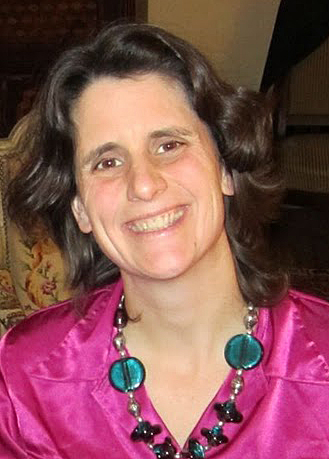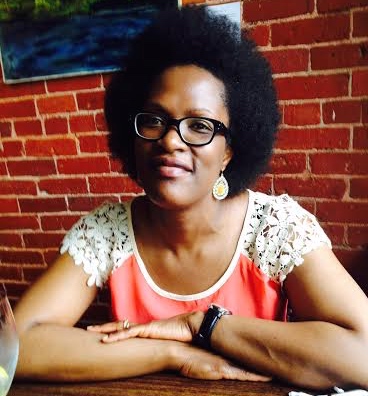
Featured Philosop-her: Subrena Smith

Subrena

Subrena Smith is Assistant Professor of Philosophy at the University of New Hampshire. She works at the intersection of biology and psychology, where she focuses on topics about human behavior; she is especially interested in the ways evolutionary theory is used to explain some aspects of human behavior. Subrena is a Jamaican transplant by way of England, where she caught the philosophy bug. She received her BA in philosophy from Birkbeck College, University of London, and her Ph.D. from Cornell University.

Philosophical Enough

Subrena Smith

Meena, thank you for starting Philosop-her and for inviting me to write for her.

My philosophical interests move between biology and psychology. I am interested in human behavior, and I think about human behavior (very broadly characterized) in the context of biology and psychology. My temperament and approach are empirical, and I privilege methodological approaches (messy as they are) that are our best candidates for acquiring knowledge: namely an innocent brand of empiricism—what counts as knowledge involves evidence of investigations, interpretations of evidence, drawing inferences about postulated entities, and framing theories connecting all of these together.

This philosophical style puts one squarely at odds with the members of two opposed intellectual camps. In one camp are those scientists who are unsettled by a philosopher with no formal training in the physical sciences purporting to call work from their disciplines into question. In another camp are those philosophers who take my approach to be insufficiently philosophical because I place too much emphasis on scientific resources. One group thinks of my approach as too philosophical, and the other thinks of it as not philosophical enough. It is this latter camp, the one occupied by philosophers, that I will be addressing below.

I have been thinking about the charge of scientism for some time now, because it has always struck me as strange. When you are told that your work is marred by scientism, it’s not a compliment. At the extreme it is an insult and at the less extreme it’s a way of dismissing you. You are not thoughtful, you are worshiping at the altar of science, your views about human beings (who we are, what we can do) stink of essentialism—a biological determinism of the worst kind. It’s tempting to just dismiss such talk, but I think that this is an issue that thoughtful people should want to think about.

When I was a graduate student, I once had a conversation with a fellow student during which I declared that a starting-place for my thinking philosophically about issues in the philosophy of mind, epistemology, and ethics is to take seriously that human beings are organisms and all that follows from that (an uncontroversially trivial point, but one that I think is useful to keep in mind when confronted by ideal theorizing about human capabilities). So any analyses of those human capacities (if they are to work) must minimally be consistent with the fact that human beings are organisms. My grad school brother listened and then he responded “Yeah, but that’s scientism!” I attempted to address his dismay by saying something (very clumsily) that was intended to show him that my scientism was the “good” kind, so he should agree with me. It didn’t work.

Since that first discussion, I have seen and heard people respond to some work in philosophy in the same way. So, a part of my motivation for writing about this here is fear. As a new tenure-track philosopher who must publish or perish, I wonder sometimes if I have the “right” kind of approach to doing philosophy, and therefore will perish. True, there are plenty of stellar philosophers working in the areas that I’m interested in who’s work gets published, so there is no reason for me to be fearful because there is a home for me in philosophy. But still….

It’s common to hear talk that “science shows….” or “the scientific method…” when one wishes to confer authority upon some claim. I prefer to say that scientific methods can be relied upon to yield knowledge. I say “the scientific methods” because it is clear from a cursory look at what scientists do that doing science does not involve a univocal method, but that there are various candidate methods. What’s important is that investigations are undertaken in atmospheres in which practitioners are sensitive to evidence, that claims can be revised or rejected in light of that evidence, and that there is a milieu that is generally responsive to such considerations. My point is not to define what science is, but to provide some heuristics that inform my approach.

Assertion: “Your work is scientistic!” is really a roundabout way of saying “I disagree with you!” “Your inferences are wrong!” “That doesn’t make sense!” “That’s too deterministic for my liking!” “Your thinking is too uncritical!,” etc., etc.

If that’s your position, then say so!

I think that my graduate schoolmate had something like the above in mind when he accused me of scientism. I don’t think that he disagreed with my assertion that humans are organisms, but he didn’t think that it had much philosophical significance. Granting this, it’s not clear why he characterized my metaphilosophical stance as “scientism.” My hunch is that he was uncomfortable, philosophically, with what I had said because he was worried that if philosophical questions can be settled by (for example) biology, then there would not be any space left for pure philosophy. I think that amongst philosophers this anxiety explains the tendency to distance oneself from work that is thought to be too empirical. But this position is very strange. I think that it’s difficult to find philosophers who believe that their work does not have some empirical features. Philosophers are interested in the world, and as such I think that the sorts of questions and claims that they make are, for the most part, about the world—including unobservable, but postulated, features of the world. Claims about consciousness are empirical. Claims about the metaphysics of gender are empirical, and so are claims about the nature of moral judgment. Philosophers like myself go to biology and psychology because we believe that the methods used in those domains often enough provide us with explanatory resources which help us to adjudicate the philosophical issues. We do not worship at the altar of science; we embrace those methods that stand the best chance of being knowledge-producing.

So what, then, does my approach look like?

As I mentioned at the top of this post, I am interested in human behavior: how to best explain human behavior at the individual, population, and species levels. I am interested in what counts as a behavior-type among and between disparate peoples. I am interested in what biologists say and why they say what they say. I am interested in psychological research into human behavior and in the interpretations of those results. And I am interested in how biological-scientific claims are used socially and politically. But I am most interested in the ways that evolutionary theory is appropriated to give origin explanations of human behavior. My interests are mostly empirical—these questions can in principle be settled by looking at the world, since there are ways the world is.

No one should disagree with the claim that human behavior is apt for empirical treatment and that particular claims about types of human behavior are empirical. But granting this does not settle important philosophical questions. In my work, I take on board some of what biologists say (for example, that humans evolved rotating shoulder joints, which enables them to hurl projectiles effectively, and that human females evolved concealed estrus). These are settled issues, but important questions remain concerning them. Some of these are questions about adaptation. Is the best explanation for the presence of rotating shoulder joints that they were selected for throwing? It’s not clear that the answer is “yes,” and whether one should conclude it is may be dependent on comparative evidence and whether the adaptationist model best captures the evolutionary situation. A lot hangs on these issues.

Getting down to specifics, here is an example of work that I have done that engages closely with biology. It concerns Ruth Millikan’s treatment of human purposes. In her Varieties of Meaning (2002), she remarks that purposes as ordinarily understood—people’s (intentional) purposes—are made from more basic sub-intentional purposes, by which she means that people’s purposes are knitted together from sub-intentional systems with selected-for purposes to create what one might call real purposes. Millikan argues that “[N]o interesting theoretical line can be drawn between these two kinds of purposes,” because “purposes of the whole person are made up out of intertwined purposes at ‘lower’ or more ‘biological’ levels” (ibid.). I take Millikan’s claim to be an empirical one—there are, she believes, facts about the origin of human purposes. I take it as uncontroversial that human beings have purposes (behave purposefully). I am also sympathetic to the view that there are sub-intentional processes (that are purpose-like) that operate within us. But I disagree with her assertion that because intentional purposes are made up from those sub-intentional processes, no interesting theoretical line can be drawn between them. Now, I take my disagreement with her to be a philosophical bone of contention. It is a philosophical matter what counts as a purpose. My argument is that merely “appearing” like a purpose is not sufficient for something to be a purpose. Purposes, I claim, are the sorts of things that only whole persons can have, and I argue that Millikan’s mistaken analysis comes from her treating sub-intentional processes as purposes. One may disagree with my treatment of Millikan’s view, but it’s not clear to me why this sort of work could, or should, be charged with being too scientistic.

So tell me, how is this not philosophical enough?

Millikan, R. G. (2004). Varieties of Meaning: The 2002 Jean Nicod Lectures. Cambridge, MA: MIT Press.


 

Featured Philosop-her: Hallie Liberto

HallieLiberto

Hallie Liberto is an assistant professor of philosophy at the University of Connecticut. She is spending the 2014-2015 academic year at Princeton University as a Laurance S. Rockefeller visiting fellow. Her work is on moral problems that arise in markets and in interpersonal relationships related to: the transfer of moral rights; promises; exploitation; and sex. Hallie received her PhD from the University of Wisconsin – Madison.

Promising Sex

Hallie Liberto

Consider a promise made by a college student, Jane, to another college student, John, that she will have sex with him tonight after the homecoming game. Call this case Homecoming.

We do not tend to take promises of this kind very seriously. We remind young people that they may change their minds about having sex at any time, no matter what they have said or done in the past, no matter what sort of expectations they have raised in their partners. We say they may change their minds at will, and without reasons. If we are correct when we issue these reminders, then that must mean that promises to have sex are very different from most other types of promises. After all, permissibly breaking a promise ordinarily requires a reason, at the very least – typically a very powerful one. But note that promises to engage in sexual activities are not the only sexual promises we make, nor are they the most common. We often make promises to refrain from having sex with other people. We take these promises not to have sex very seriously.

If our reaction to this second type of sexual promise is appropriate, it shows that a promise does not misfire (fail to be a promise, or fail to generate promissory obligation) just because its content is of a sexual nature. In a current paper-in-progress I argue that both types of sexual promises belong in a special category of promises that can be made, can generate promissory obligation, but ought not to be accepted by a promsiee (the person to whom the promise is made). However, the very first step of this project takes some work to establish, and that is what I’ll do here. Does a promise to have sex generate a moral obligation to have sex? If our advice and reminders to young people are correct, then the answer is: no. But I think we are incorrect.

First, let us assume that Jane’s utterance was accompanied by all of the standard, associated felicity conditions. For instance, Jane’s promise is voluntary. Jane is sincere; Jane intends to do as she promises; and John believes that she intends to do as she promises. Jane intends for her promise to be morally binding. Both John and Jane take it to be the case that Jane now has a moral obligation (conditional on the outcome of the game) to have sex with John. It seems that Jane’s attempted promise does not fail to be a promise in virtue of any of these structural and contextual features of the performance of the promise. (For a discussion of felicity conditions, see: Austin, 1975 [1955]).

Does Jane’s utterance generate the right sort of moral obligation in order for it to count as a promise? Let us (very briefly) examine a variety of the most popular, contemporary accounts of promissory obligation and how they could be applied to Homecoming.

Tim Scanlon grounds promissory obligation in generated expectation. Promises promote a social practice that advances a human interest in knowing and planning for the future (Scanlon, 1998). Judith Thomson grounds promissory obligation in reliance (Thomson, 1990). For Thomson, a promise is an invitation to rely on the promisor (the person who makes the promise). A broken promise is wrong because it frustrates the expectations and/or reliance held by the promisee. A promise gives a promisee a map of some part of his or her future – a map to be used in planning. A broken promise renders that map inaccurate.

Now, Jane has generated an expectation in John that she will have sex with him tonight. If she does not have sex with him, she frustrates this information interest. The sketch of the future that she provided to him for navigating his life is inaccurate. John might even have made choices relying on her word. Perhaps John turned down other activities for the evening after the game – like a Homecoming party, or an alternate date, because he prefers to go home with Jane and have sex instead.

David Owens says that a promise is broken when the promisor fails to allow the promisee to decide whether the promisor performs what is promised. Failing to allow the promisee to exercise this discretion amounts to violating a right held by the promisee. Owens thinks that humans have an authority-interest (as opposed to an information interest) that promise-keeping advances. It is good for humans to be able to have moral authority over one another’s behavior, and to be able to give this moral authority to others (Owens, 2006 and 2012).

Is any such authority interest advanced in Homecoming? Perhaps. Having some moral pull on Jane – being able to appeal to moral reasons in convincing her to have sex with him – gives John standing to get something that he wants. Further, there are various reasons why it might be in Jane’s interest to be able to give John this authority. She might not be able to secure John as her date for the evening if she merely predicted that she would have sex with him. However, putting herself under a moral obligation to him through a promise might be what it takes to win him over – especially if she knows that he knows that she will take this obligation seriously.

So, Jane’s utterance does not fail to be a promise in virtue of failing to generate a moral obligation that can appropriately be called a promissory obligation. Arguably, there is another way that an attempted promise might fail to be a true promise. The content of the attempted promise might cause the promise to misfire. For instance, Seana Shiffrin believes that we cannot make promises to do immoral things (Shiffrin, 2011). On her view, my promise to steal something for you is a promise that misfires. Further, promises regarding only past choices and behavior fail to be promises (e.g. “I promise that I have finished my homework” is not a promise. If the speaker has not done her homework, and the speaker knows it, she has not broken a promise, she has told a lie).

Now consider, why might the content of Jane’s attempted promise prevent it from being an actual promise? The content of Jane’s promise certainly pertains to her future and not to her past behavior. So, we are not mis-categorizing the utterance. Is Jane promising to do something morally wrong? Perhaps she would be gravely hurting her best friend who is in love with John! But let’s stipulate that this is not so. There is no feature of this case that renders the performance of the promise’s content immoral.

Have we exhausted the ways in which the content of a promise can cause it to misfire? Consider that one way in which sex is considered to be different from many other subjects of moral investigation is that some of our moral and legal rights regarding sex are treated differently. We have a legal and a moral right against others having sex with us – a right that we can waive (by giving consent to a particular other). From here on I will refer to this right as our: negative sexual right. In the legal realm (here and in most developed countries), individuals cannot forfeit their negative sexual rights. For instance, we do not inflict legal sexual punishments for criminal behavior. Further, we do not allow people to voluntarily alienate their negative sexual right (that is, voluntarily give up their own power to arbitrate their negative sexual right). When people waive this right through the process of consent, they retain the ability to un-waive the right at any time by withdrawing consent. If our legal treatment of the negative sexual right mirrors our moral negative sexual right, then this moral right is also inalienable. So, perhaps Jane’s promise does misfire in virtue of its content – she is trying to grant John a right that she cannot grant him, an inalienable right.

However, Jane’s promise, even if successful, would not amount to Jane alienating her negative sexual right. I believe that the feature of Jane granting John a right in Homecoming that we find disturbing is that it seems to us that if John has been granted a right, then he may go ahead and have sex with Jane, even if she has changed her mind. However, what John gains is not a right to Jane’s body, but the moral authority to determine an aspect of Jane’s moral “landscape” (as David Owens would say). John determines whether or not Jane will be wronging him if she fails to have sex with him.

This does not mean that John can have sex with Jane against her (present) will. Consider a case in which I promise my ruby ring to Meena. I then change my mind and decide to keep it. I have wronged Meena in breaking my promise. I may even have violated a moral right granted to Meena by the promise – a right against me failing to let her decide whether I will give her the ring. However, Meena is not within her rights to come take my ring from me. She has no right to the ring itself. The same would be true if I promised her something that was not an object. Imagine that I promise I will stay for dinner. However, as dinnertime approaches, I change my mind and decide to leave. I breach my promissory obligation to Meena. However, she is not within her rights to lock me in her house and prevent me from exiting. Her moral right gives her the authority to decide whether I will have wronged her when I leave her house. She is not within her rights to decide whether I leave her house; she still needs me to allow her to decide – something I fail to do in this case. Analogously, if Jane chooses to break her promise in Homecoming, John may not force her to perform the content of her promise. He does not have a moral right to the sex itself.

I think that it is this final point that gets at the heart of what we mean when we tell young people that they may change their minds at any point in a sexual encounter, no matter what they have promised. We do not mean that they do no wrong to their promisees. We mean to tell them that they have bodily rights, moral and legal, that they can always arbitrate. They have a right against others having sex with them. They must always waive that right (through consent) in order for it to be permissible for someone else to have sex with them. A promise to have sex does not involve consent to sex and, even if it did, they can always withdraw their consent, even if they cannot withdraw their promise. We might also be reminding them that the moral disvalue of their sexual discomfort can outweigh a promissory obligation.

In structuring my inquiry into sexual promises around Jane and John, I have made a presentation-related choice with both costs and benefits. Here is a cost: my case, Homecoming, advances a bad stereotype about the degree to which men versus women want sex and pressure their partners into having sex. I treat the man as the character who might choose to compel the woman into sex she does not want. In reality, both men and women sometimes compel their partners into having unwanted sex. Next, here is the benefit of using the cases that I have used: Ordinarily when we tell young people that they may change their minds about having sex at any time, no matter what they have said or what expectations they have raised, we are telling this to young women. Ordinarily when we remind people that their dates do not owe them sex, no matter what has transpired in the evening (e.g. an expensive dinner, sexualized dancing), we are telling this to men. I chose a case in which a young woman promises to have sex with a man (rather than vice versa, or by using a same-sex couple) because I wanted to tap into my reader’s memory of having given this reminder to young people, or having received it, or having heard it be delivered to others. I want my reader to consider whether my analysis rings true, especially when consulting these memories.

References:

Austin, J. L. How To Do Things With Words. 1975 (1955), Edited by J. O. Urmson and Marina Sbisà. London: Oxford University Press, 2nd edition.

Friedrich, Daniel and Nicholas Southwood. “Promises and Trust” ” in Promises and Agreements ed. Sheinman; Hanoch. Oxford University Press: 2011.

Owens, David. 2006. “A Simple Theory of Promising.” Philosophical Review. 115: 51-77.

Scanlon, T.M. 1998 What We Owe to Each Other. Cambridge, MA. Harvard University Press; p. 304.

Shiffrin, Seana (2011) “Immoral, Conflicting, and Redundant Promises’, in J. Wallace, R. Kumar, and S. Freedman (eds.) Reasons and Recognition: Essays on the Philosophy of T. M. Scanlon (Oxford: Oxford University Press), pp. 160-161.

Thomson, Judith Jarvis. The Realm of Rights. Cambridge, MA: Harvard University Press: 1990; Oxford University Press. 2011.

APA Travel Fund for Philosophers of Color

Discussions of the campaign for the APA Travel Fund for Philosophers of Color, at Daily Nous and various Facebook feeds, have been heated. For those who are unfamiliar with the fund, it was proposed by the APA’s Task Force on Inclusion and Diversity, the majority of whose members are philosophers of colour. If created, the fund would support “philosophers of color who would otherwise find it challenging to participate in APA divisional meetings and other APA-sponsored conferences. The fund is supported exclusively by donations.” To get the fund off the ground, the Marc Sanders Foundation, together with Janice Dowell, has issued a challenge. “Professor Dowell, the winner of the 2014 Sanders Prize in Metaethics, has pledged $1,000 of her prize money to the travel assistance fund, and the Marc Sanders Foundation has committed another $2,000 to it—but only if the APA raises $5,000 in additional donations for the travel assistance fund by April 10.”

I would like to thank the APA Task Force on Inclusion and Diversity, Janice Dowell, and the Marc Sanders Foundation for their work to initiate and support the campaign for “the Fund” (as I will call it).

In the comments at Daily Nous, there has been some discussion as to whether the Fund is offensive to people of colour. For some it may sound a bit like a handout (or as one commenter, Manyul Im, said, it may sound “like passing the hat for our poor colleagues of color”), which would only work to further stigmatize people of colour. This is a very important worry.

My own view – as a woman of colour – is that the Fund is not in and of itself offensive or necessarily stigmatizing. As Janice Dowell notes in explaining her own motivation for supporting the Fund, the Fund is meant as and, I would argue, ought to be viewed as a way of rectifying “the barriers philosophers of color face in getting to our meetings as a result of racist institutions.” In other words, the Fund is not a handout. It is a corrective mechanism, a mechanism of restorative justice. It is but a small step toward making up for the persistent and continued exclusion of philosophers of colour from philosophy. Presenting at the APA is hailed as an important professional milestone. Indeed, in some circles, presenting at a symposium at the APA carries almost as much weight as a decent publication. To the extent that philosophers of colour are, because of the racism that is still present in philosophy, more likely to have positions at universities or colleges that do not provide travel funds, philosophers of colour are more likely than others to be excluded from this professional milestone and the accolades attached to it. This is an injustice that ought to be remedied. I commend Janice, the Marc Sanders Foundation, and the APA Task Force for taking some small steps toward doing so.

If you are interested in contributing to the Fund, you can do so here.

Featured Philosop-her: Serena Olsaretti

Serena Olsaretti

Serena Olsaretti is an ICREA Research Professor at the Universitat Pompeu Fabra. Before moving to Barcelona, she was a Senior Lecturer in the Faculty of Philosophy at the University of Cambridge, and Fellow of St. John’s College. Prior to that, she had been a Research Fellow at Emmanuel College in Cambridge, where she arrived after having spent several years at the St. John’s College of the University of Oxford, where she obtained an B.A., an M.Phil. and a D.Phil. in political philosophy. She has worked on questions regarding the ethics of markets, egalitarianism, and well-being. She is currently editing The Oxford Handbook of Distributive Justice and working on issues concerning justice and the family.

Justice and the costs of children: The centrality of parental justice

Serena Olsaretti

My current work takes as a point of departure three observations. First, the existence and maintenance of any society, including a just society, depend on people’s having and rearing children. Second, having and rearing children are activities that create benefits and costs for parents, children, and society at large. Third, since these costs and benefits are substantial, their distribution gives rise to questions of justice.

In light of these observations, it is apparent that we need principles for the fair distribution of the costs and benefits of procreation and parenthood among contemporaries and across generations. We can refer to these as the costs and benefits of children, for short, and to the principles specifying their fair distribution, among parents and non-parents and across generations, as principles of parental justice.

The costs and benefits of children include the monetary and non-monetary costs and benefits involved in raising children: focusing on the costs side, these refer to the time, energy and material resources needed to bring up children from needy infants into increasingly less dependent and more autonomous persons. But the costs of children also include what I call the costs of added adult members, that is, the costs involved in meeting whatever claims of justice the new persons will make as adults, which, depending on our conception of justice, might include, for example, their claims to an equal share of (the value of) of natural resources, or their claims to a basic minimum, or to an equal share of the fruits of social cooperation.

We currently do not have well-worked out principles of parental justice since most political philosophers to date have developed theories of justice for societies of fully formed adults whose numbers, creation and care are taken as given. By proceeding this way, most political philosophers have bracketed off questions of parental justice, but these questions lie at the very heart of the “problem of distributive justice”. This, in John Rawls’ terms, is: “(…) how are the institutions of the basic structure to be regulated (…) so that a fair, efficient, and productive system of social cooperation can be maintained over time, from one generation to the next?” (Rawls 2001: 50; emphasis added). Since procreation and parenthood are necessary to maintain a system of social cooperation over time, from one generation to the next, questions concerning the fair distribution of the costs and benefits of procreation and parenthood in fact occupy a central place in a theory of justice.

More specifically, as I argue in my current work, a theory of justice that does not provide principles of parental justice is incomplete in three different ways.

First, it is incomplete in the sense that it does not provide an examination of the full range of cases to which its principles apply: without an answer to the question of how the costs and benefits of children should be distributed, we do not know how principles which regulate the distribution of benefits and burdens apply to one particular type of cost and benefit, i.e. the costs and benefits of children.

Moreover, when we keep in mind the costs of adult added members, too, we realise that theories that do not address the question of justice are also incomplete in a second, more fundamental, way: without an answer to this question, a theory fails to specify fully what its principles require about any particular case, since we do not know who has to pay for any of the benefits that our theory of justice says people are entitled to. In this sense, questions of justice that surround the creation of new persons constitute a special case. The creation of persons is an activity that creates costs the distribution of which raises questions of justice. But it creates (some of) those costs by creating the bearers of any and all justice-based claims. So an answer to the question of parental justice is an integral part of the question of who, as a matter of justice, owes what to whom.

Third, a theory of justice that does not answer questions of parental justice cannot settle some crucial questions of intergenerational justice, including some questions of what the members of present generations owe to members of non-overlapping future generations. Certain views of intergenerational justice entail a certain view of parental justice, and vice versa. For example, a commitment to intergenerational equality understood as requiring that every individual, regardless of what generation she belongs to, receive an equal share of resources, entails that parents may not externalise the costs of any and all children they choose to have, as doing so could result in equality between members of different generations being disrupted. Since questions of parental justice and questions of intergenerational justice are so closely connected, theories of justice which do not address questions of parental justice cannot settle questions of intergenerational justice; insofar as they do offer an account of intergenerational justice without addressing questions of parental justice, they risk being internally inconsistent.

Addressing questions of parental justice is then a central and pressing task for political philosophers concerned with distributive justice. It is also, in my view, something we should take interest in for two further reasons.

The first is that an analysis of parental justice can complement the work done by those feminist scholars who have long emphasised that, in order to become the adults who inhabit just societies, individuals, born as infants and children for many years, require prolonged and demanding care whose crucial value is overlooked by theorists of justice. An affirmative answer to questions of parental justice would give us a further reason for condemning arrangements that penalise parents, who are typically women. Being able to appeal to such a reason would allow us to bypass thorny debates about the conditions under which true equality of opportunity for men and women is satisfied, as women would, qua parents, be entitled to assistance.

The second reason why addressing questions of parental justice promises to be fruitful is that they provide an interesting test case for theories of justice that hold individuals responsible for the consequences of their choices, and which eschew appeal to comprehensive views of the good. It is interesting that among the few political philosophers who have paid attention to parental justice in the last few decades (these include Bruce Ackerman, Anne Alstott, Paula Casal, Matthew Clayton, Eric Rakowski, Peter Vallentyne, Andrew Williams; more recently, Richard Arneson, Paul Bou-Habib, Hillel Steiner, and Patrick Tomlin), most have argued in favour of asking parents to internalise many or most of the costs of children. They have often done so in the name of the ideal of responsibility, insofar as, at least under certain idealised conditions, parents choose voluntarily to have children and/or identify with their desire to have them. The conclusion that in a just society parents ought to internalise the costs of children may furthermore seem hard to resist once we exclude appeal to comprehensive conceptions of the good which might be invoked in support of sharing the costs of children, such as religious or nationalist views on which we ought to be fruitful and multiply, or a perfectionist ideal on which the project of parenting is deemed to be uniquely valuable.

If it were true that a non-perfectionist, responsibility-sensitive theory of justice required parents to bear most or all of the costs of children, the theory in question may be less attractive as a result. To take it seriously would require that we revise deep-seated convictions. Although many people are ready to consider an imprudent motorcyclist liable for the medical costs of his dangerous hobby, few find the choice of parenting a justification for thinking that parents should pick up all the costs that arise as a result of deciding to create new persons. Whether responsibility-sensitive theories of justice can resist this implication is a question that needs addressing.

This is an exciting time to be working on questions that relate to the family. As Samantha Brennan notes in her post on this blog, there is now lively interest in the family among ethicists – and increasingly among political philosophers. Theorists of justice must follow suit.

References

Rawls, J. 2001. Justice as Fairness. A Restatement. Cambridge, Mass.: The Belknap Press of Harvard University Press.

Featured Philosop-her: Cecil Fabre

Author Photo Jan 2012

Cecile Fabre is Senior Research Fellow at All Souls’ College, Oxford. She obtained her BA in History from La Sorbonne, before moving to Britain where she obtained a MA in Political Philosophy from the University of York and a D.Phil. in Politics from the University of Oxford. Prior to taking up her current position, she taught at the LSE, the University of Edinburgh, and Lincoln College, Oxford. She has written on welfare rights, democracy, the rights we have over our own body and, in the last few years, on the ethics of war. She is currently finishing a monograph on the ethics of peace after war.


Forgiveness, Trust and Empathy after Conflict

Cecile Fabre

Anger, hatred and bitterness are some of the biggest obstacles to reconciling communities torn apart by war or mass atrocities. Having chaired the South African TRC after decades of indefatigable fight against the Apartheid, Archbishop Desmond Tutu famously wrote that there is ‘no future without forgiveness’.[1] I respectfully disagree.

When one says that forgiveness is necessary for reconciliation after war, one might have in mind either personal forgiveness, whereby victims must personally forgive perpetrators, or political forgiveness, whereby the act of forgiving is undertaken by political actors on behalf of victims. But even if interpersonal forgiveness is necessary to reconciliation when perpetrators and victims have to live together, it is far less likely to be so of other post-conflict situations where they are not intermingled to the same extent. As for the political variant, it raises one of the most difficult issues in the ethics of forgiveness, to wit, that of vicarious forgiveness. Simon Wiesenthal puts the point better than anyone I know in his often-mentioned book The Sunflower. One day, while working in a labor camp for mostly Jewish detainees, he was taken to the deathbed of a SS soldier who wished to confess to a Jew – any Jew – his participation in an earlier horrific crime against Jewish civilians. The dying SS asked Wiesenthal for his forgiveness on behalf of his victims, without which, he claimed, he could not die in peace. Wiesenthal walked away, not having said a word throughout the encounter, and ends the story, in the book, with the question: ‘What would you have done?’[2]

In vicarious forgiveness, the forgiver forgives a wrongdoer for acts which the latter committed against others, with no stipulation that those victims have, either explicitly or tacitly, authorised the forgiver so to act. Did Wiesenthal have the standing vicariously to forgive the SS? Whilst he had the standing to forgive the SS for the fact that, had he (Wiesenthal) been present on that day and in that place, he would have been killed alongside the others, he lacked the standing to forgive the SS on behalf of the latter’s primary and secondary victims. To claim otherwise is to deny respectful treatment to those who were themselves wronged. For who are we to forgive (e.g.) genocidaires, serial rapists, willful and lethal aggressors on behalf of their victims, and particularly when those victims themselves appropriately refuse to forgive them? By implication, there can be no official granting of forgiveness by, e.g. political actors, on behalf of the victims of war: the then-President of the World Jewish Congress had no greater standing than Wiesenthal to forgive the SS. In so far as political forgiveness inevitably involves some degree of vicarious forgiveness, and in so far as vicarious forgiveness is impossible, political forgiveness cannot be instrumental to reconciliation. Yet, reconciliation there must be – and so we must look elsewhere for its moral-psychological basis.

It seems to me that the refusal to reconcile or to see oneself as partners in relationship stems from the fact that wrongdoings of that magnitude destroy trust between victims and perpetrators when there was trust to begin with (which there might not have been), or render the building of trust de novo extremely unlikely. And yet, trust is precisely what is needed above all.

To trust someone to do x is to have the expectation that when doing x, she will be motivated to do so out of respect and concern for us. Trust differs from reliance, for in reliance, it matters not what my reasons are for thinking that she will do x: for example, it might be that doing x is in her interest, and I believe that she will act on the basis of her interest, so I rely on the fact that she will do x.

Reconciliation requires trust: reliance is not enough, for to conceive of my enemy as a partner in peace, I need to know that he genuinely sees me as such a partner as well. In the aftermath of mass violence, it requires, for example, that victims trust that state officials will treat them with concern and respect out of recognition of and commitment to the fact both that they are worthy of such treatment and that they rely on such treatment; it also requires of them that they trust their neighbours, who were complicitous in mass atrocities, not to attack them at the first sign of discord; it requires of erstwhile enemy leaders that they trust each other not to violate the terms of the peace agreement at the first opportunity; and so on.

What does it take, then, to (re)build trust after conflict? War violence consists in a denial of fundamental equality. For trust to exist, victims must be given evidence that perpetrators do now see them in that way; this in turn requires that perpetrators be able so to see their victims. When they have all been locked in cycles of mutual attritional violence, it requires that victims not just see themselves as victims but as worthy of equal respect and that perpetrators be able to trust victims not to attack them in revenge. Finally, for trust to emerge, particularly in the aftermath of mass atrocities, which dehumanise both perpetrators and victims, all must learn to recognise their shared humanity.

They cannot do that, it seems to me, unless they have it in themselves to be minimally empathetic towards one another. Empathy is one of the new(ish) buzzwords of moral psychology, though analyses of it as a moral sentiment can be traced back to David Hume and Adam Smith, even if they both tended to use the word ‘sympathy’ instead. The empathetic person is someone who on the one hand imagines what it is like for the other person and on the other hand imagines what it would be like for him were he in the other person’s shoes. Empathy is an imaginative process which is both self- and other- focused – in Darwall’s vocabulary, which takes both the first-person and the second-person’s standpoint.[3] Having imaginatively taken both standpoints, the empathetic person is furnished with reasons to do something for the other person.

Importantly, being empathetic towards some agent X and taking on X’s standpoint is not tantamount to having the desire to help X, to the point that one wants for X what X wants for himself. It is possible to empathise with a war criminal in the sense that it is possible to see that, had we ourselves been presented with the very same set of options, we might have acted in the same way, and would have felt the same mixture of terror at what would have befallen us and anguish for what we were about to do (first-person). It is also possible to empathise with him in the sense that we can imagine what it was like for him (second-person perspective.) Crucially, it is possible to think and feel all of that, without prescinding from the judgment that he ought to have been punished – as we ourselves ought to have been punished under the same circumstances.

At this juncture, some readers might worry that with grievous wrongdoings one simply cannot imagine what it was like. However, even if, with the best will in the world, one simply cannot imagine doing what they did, it might not be impossible to put oneself in the shoes of genuinely repentant wrongdoers of that kind. For if a repentant wrongdoer is someone who is as repulsed by what he actually did as we ourselves are repulsed by it to the point of not being able to imagine doing it, it does not strain the bounds of imagination beyond breaking point to begin to imagine what it must be like to live with oneself while having committed those crimes. In the sheer gut-like reaction (‘I could not do it, it would be totally against all I believe and all I can psychologically contemplate doing’ to the commission of the deed’), lies a sense of the disintegration of the moral self and its attendant suffering which characterise the repentant serious wrongdoers.

Moreover, there is a weaker, less affectively demanding view of empathy which allays the concern raised above. On that more modest account, minimal empathy is the ability to begin to imagine and feel, as distinct from imagining and feeling tout court, what it may have been like from the other person’s point of view at the time of the commission of the crimes, or what it is like now to be a remorseful perpetrator. Those imaginings and feelings in turn may give facilitate the emergence of trust. A victim can be empathetic in that sense without erasing the fact that she was not, as a matter of fact, in the perpetrator’s shoes. Further, she is more likely to be empathetic in that sense if the perpetrator himself is able and willing to be empathetic to her plight. Empathy is likely to be effective for political reconciliation only if it is reciprocal and if its reciprocal character does not occlude the asymmetry between victims and perpetrators. Finally, one can expect of a victim who was herself, at one point, a perpetrator, to be empathetic to other perpetrators – precisely because she herself knows, and does not simply imagine and feel, what it was like. The point is particularly important in the context of post-war political reconciliation since atrocities are likely to have been committed and suffered by agents on both sides of the conflict, and quite often by the very same agents at various times.

So construed, empathy might help victims find their own humanity in perpetrators, and perpetrators (re) discover their own humanity in their victims. The hope is that they reconcile themselves to the fact that they cannot but cooperate with perpetrators towards the establishment of a durable peace, and, further, build trust in perpetrators to work towards such a peace. Trust and empathy, rather than forgiveness, pave the way for the future.


[1] D. Tutu, No Future Without Forgiveness (London: Rider Books, 1999).

[2] S. Wiesenthal, The Sunflower (London: W. H. Allen, 1970).

[3] S. Darwall, The Second Person Standpoint (Cambridge, Mass.: Harvard University Press: 2006).

Gender and Creative Agenda-Setting Philosophy: What is the Way Forward?

Almost everyone has had the chance to read the new Healy data on the citation of women. As another female philosopher has stated, a central take home point is that “women are cited. But they are only allowed to chip in to the debates–they are not allowed to be the agenda-setters.”

The question now is, what should we do about this? Increasing the diversity of those who participate in philosophy will not in and of itself change things unless we also find mechanisms to allow a more diverse range of people to “create” philosophy or to “set agendas” in philosophy, in Healy’s terms. Though it might mean some small progress, focusing on improving the citation of women’s work (for example, through a gendered-citation-campaign) will not fundamentally change things. Even if the citations of women’s work were to increase, women may still be prohibited from engaging in creative or agenda-setting philosophy.

There are likely a number of solutions that are worth of considering.  Here are a few beginning thoughts:

1. Journals could implement a soft or hard quota in favour of publishing work by women that is “creative” or “agenda-setting”. (For an earlier discussion of quotas more broadly and a rejection of the most common objections to quotas see this discussion and a draft of my paper on this topic.)

2. Journals could broaden their conception of acceptable philosophical topics and methods. Women may have a greater tendency to write about non-mainstream topics. If journals opened up what they count as interesting and important work – if they included more interdisciplinary work, more work grounded in practice and experience, more work off the beaten path, for example – then more creative pieces by women may be published.

3. Journals could increase the number of women on their Editorial boards. Perhaps women are more likely to be in favour of publishing creative philosophy that is by women or to notice when work isn’t properly citing the (creative) work that has already been done by women.

I am confident that these are just a few of the many solutions that could be implemented.  I hope that others will join the discussion by suggesting their own options or by clarifying which options among those discussed are the best and why this might be the case.

Summer School on Mathematical Philosophy for Female Students 2015

The Munich Center for Mathematical Philosophy (MCMP) is organizing the second Summer School on Mathematical Philosophy for Female Students, which will be held from July 26 to August 1, 2015 in Munich, Germany. The summer school is open to excellent female students who want to specialize in mathematical philosophy.

Since women are significantly underrepresented in philosophy generally and in formal philosophy in particular, this summer school is aimed at encouraging women to engage with mathematical methods and apply them to philosophical problems. The summer school will provide an infrastructure for developing expertise in some of the main formal approaches used in mathematical philosophy, including theories of individual and collective decision-making, agent-based modeling, and epistemic logic. Furthermore, it offers study in an informal setting, lively debate, and a chance to strengthen mathematical self-confidence and independence for female students. Finally, being located at the MCMP, the summer school will also provide a stimulating and interdisciplinary environment for meeting like-minded philosophers.

For more information about the application process click here.

Featured Philosopher: Ruth Chang

headshotfinalcolorbeige027_pp1 copy


Ruth Chang is Professor of Philosophy at Rutgers University, New Brunswick, New Jersey. She received her D.Phil. from Balliol College, Oxford and her J.D. from Harvard Law. She has worked as a lawyer on a death penalty case and several product liability and medical malpractice cases. Her current research concerns the grounding of normativity and the nature of rational agency. The layperson’s upshots of her research are outlined in two invited media outlets, a TED talk she gave in June of 2014 and a New York Times op-ed piece over the new year. The transcript of the TED talk is reproduced below.

How to Make Hard Choices

Ruth Chang

***

The following is a transcript of a talk Ruth Chang gave at a TED conference which was published in June, 2014. The talk can be found at http://www.ted.com/talks/ruth_chang_how_to_make_hard_choices. The talk here puts in layperson’s terms some of the key ideas of her work on practical normativity, comparisons, and the nature of rational agency.

 ***

Think of a hard choice you’ll face in the near future. It might be between two careers — artist and accountant — or places to live — the city or the country — or even between two people to marry — you could marry Betty or you could marry Lolita. Or it might be a choice about whether to have children, to have an ailing parent move in with you, to raise your child in a religion that your partner lives by but leaves you cold. Or whether to donate your life savings to charity.

Chances are, the hard choice you thought of was something big, something momentous, something that matters to you. Hard choices seem to be occasions for agonizing, hand-wringing, the gnashing of teeth. But I think we’ve misunderstood hard choices and the role they play in our lives. Understanding hard choices uncovers a hidden power each of us possesses.

What makes a choice hard is the way the alternatives relate. In any easy choice, one alternative is better than the other. In a hard choice, one alternative is better in some ways, the other alternative is better in other ways, and neither is better than the other overall. You agonize over whether to stay in your current job in the city or uproot your life for more challenging work in the country because staying is better in some ways, moving is better in others, and neither is better than the other overall.

We shouldn’t think that all hard choices are big. Let’s say you’re deciding what to have for breakfast. You could have high fiber bran cereal or a chocolate donut. Suppose what matters in the choice is tastiness and healthfulness. The cereal is better for you, the donut tastes way better, but neither is better than the other overall, a hard choice. Realizing that small choices can also be hard may make big hard choices seem less intractable. After all, we manage to figure out what to have for breakfast, so maybe we can figure out whether to stay in the city or uproot for the new job in the country.

We also shouldn’t think that hard choices are hard because we are stupid. When I graduated from college, I couldn’t decide between two careers, philosophy and law. I really loved philosophy. There are amazing things you can learn as a philosopher, and all from the comfort of an armchair. But I came from a modest immigrant family where my idea of luxury was having a pork tongue and jelly sandwich in my school lunchbox, so the thought of spending my whole life sitting around in armchairs just thinking, well, that struck me as the height of extravagance and frivolity. So I got out my yellow pad, I drew a line down the middle, and I tried my best to think of the reasons for and against each alternative. I remember thinking to myself, if only I knew what my life in each career would be like. If only God or Netflix would send me a DVD of my two possible future careers, I’d be set. I’d compare them side by side, I’d see that one was better, and the choice would be easy.

But I got no DVD, and because I couldn’t figure out which was better, I did what many of us do in hard choices: I took the safest option. Fear of being an unemployed philosopher led me to become a lawyer, and as I discovered, lawyering didn’t quite fit. It wasn’t who I was. So now I’m a philosopher, and I study hard choices, and I can tell you that fear of the unknown, while a common motivational default in dealing with hard choices, rests on a misconception of them. It’s a mistake to think that in hard choices, one alternative really is better than the other, but we’re too stupid to know which, and since we don’t know which, we might as well take the least risky option. Even taking two alternatives side by side with full information, a choice can still be hard. Hard choices are hard not because of us or our ignorance; they’re hard because there is no best option.

Now, if there’s no best option, if the scales don’t tip in favor of one alternative over another, then surely the alternatives must be equally good. So maybe the right thing to say in hard choices is that they’re between equally good options. But that can’t be right. If alternatives are equally good, you should just flip a coin between them, and it seems a mistake to think, here’s how you should decide between careers, places to live, people to marry: Flip a coin.

There’s another reason for thinking that hard choices aren’t choices between equally good options. Suppose you have a choice between two jobs: you could be an investment banker or a graphic artist. There are a variety of things that matter in such a choice, like the excitement of the work, achieving financial security, having time to raise a family, and so on. Maybe the artist’s career puts you on the cutting edge of new forms of pictorial expression. Maybe the banking career puts you on the cutting edge of new forms of financial manipulation. Imagine the two jobs however you like so that neither is better than the other.

Now suppose we improve one of them a bit. Suppose the bank, wooing you, adds 500 dollars a month to your salary. Does the extra money now make the banking job better than the artist one? Not necessarily. A higher salary makes the banking job better than it was before, but it might not be enough to make being a banker better than being an artist. But if an improvement in one of the jobs doesn’t make it better than the other, then the two original jobs could not have been equally good. If you start with two things that are equally good, and you improve one of them, it now must be better than the other. That’s not the case with options in hard choices.

So now we’ve got a puzzle. We’ve got two jobs. Neither is better than the other, nor are they equally good. So how are we supposed to choose? Something seems to have gone wrong here. Maybe the choice itself is problematic and comparison is impossible. But that can’t be right. It’s not like we’re trying to choose between two things that can’t be compared. We’re weighing the merits of two jobs, after all, not the merits of the number nine and a plate of fried eggs. A comparison of the overall merits of two jobs is something we can make, and one we often do make.

I think the puzzle arises because of an unreflective assumption we make about value. We unwittingly assume that values like justice, beauty, kindness, are akin to scientific quantities, like length, mass and weight. Take any comparative question not involving value, such as which of two suitcases is heavier. There are only three possibilities. The weight of one is greater, lesser or equal to the weight of the other. Properties like weight can be represented by real numbers — one, two, three and so on — and there are only three possible comparisons between any two real numbers. One number is greater, lesser, or equal to the other. Not so with values. As post-Enlightenment creatures, we tend to assume that scientific thinking holds the key to everything of importance in our world, but the world of value is different from the world of science. The stuff of the one world can be quantified by real numbers. The stuff of the other world can’t. We shouldn’t assume that the world of is, of lengths and weights, has the same structure as the world of ought, of what we should do.

So if what matters to us — a child’s delight, the love you have for your partner — can’t be represented by real numbers, then there’s no reason to believe that in choice, there are only three possibilities — that one alternative is better, worse or equal to the other. We need to introduce a new, fourth relation beyond being better, worse or equal, that describes what’s going on in hard choices. I like to say that the alternatives are “on a par.” When alternatives are on a par, it may matter very much which you choose, but one alternative isn’t better than the other. Rather, the alternatives are in the same neighborhood of value, in the same league of value, while at the same time being very different in kind of value. That’s why the choice is hard.

9:48 Understanding hard choices in this way uncovers something about ourselves we didn’t know. Each of us has the power to create reasons. Imagine a world in which every choice you face is an easy choice, that is, there’s always a best alternative. If there’s a best alternative, then that’s the one you should choose, because part of being rational is doing the better thing rather than the worse thing, choosing what you have most reason to choose. In such a world, we’d have most reason to wear black socks instead of pink socks, to eat cereal instead of donuts, to live in the city rather than the country, to marry Betty instead of Lolita. A world full of only easy choices would enslave us to reasons.

When you think about it, it’s nuts to believe that the reasons given to you dictated that you had most reason to pursue the exact hobbies you do, to live in the exact house you do, to work at the exact job you do. Instead, you faced alternatives that were on a par — hard choices — and you made reasons for yourself to choose that hobby, that house and that job. When alternatives are on a par, the reasons given to us, the ones that determine whether we’re making a mistake, are silent as to what to do. It’s here, in the space of hard choices, that we get to exercise our normative power, the power to create reasons for yourself, to make yourself into the kind of person for whom country living is preferable to the urban life.

When we choose between options that are on a par, we can do something really rather remarkable. We can put our very selves behind an option. Here’s where I stand. Here’s who I am. I am for banking. I am for chocolate donuts. This response in hard choices is a rational response, but it’s not dictated by reasons given to us. Rather, it’s supported by reasons created by us. When we create reasons for ourselves to become this kind of person rather than that, we wholeheartedly become the people that we are. You might say that we become the authors of our own lives.

So when we face hard choices, we shouldn’t beat our head against a wall trying to figure out which alternative is better. There is no best alternative. Instead of looking for reasons out there, we should be looking for reasons in here: Who am I to be? You might decide to be a pink sock-wearing, cereal-loving, country-living banker, and I might decide to be a black sock-wearing, urban, donut-loving artist. What we do in hard choices is very much up to each of us.

Now, people who don’t exercise their normative powers in hard choices are drifters. We all know people like that. I drifted into being a lawyer. I didn’t put my agency behind lawyering. I wasn’t for lawyering. Drifters allow the world to write the story of their lives. They let mechanisms of reward and punishment — pats on the head, fear, the easiness of an option — to determine what they do. So the lesson of hard choices: reflect on what you can put your agency behind, on what you can be for, and through hard choices, become that person.

Far from being sources of agony and dread, hard choices are precious opportunities for us to celebrate what is special about the human condition, that the reasons that govern our choices as correct or incorrect sometimes run out, and it is here, in the space of hard choices, that we have the power to create reasons for ourselves to become the distinctive people that we are. And that’s why hard choices are not a curse but a godsend.


Featured Philosop-her: Cara Nine

Nine_Oslo_2011

Cara Nine is a Lecturer at University College Cork. She received her BA in Philosophy from Carleton College and PhD in Philosophy from the University of Arizona. Her work takes up questions in pre-institutional political and moral philosophy—she tries to ask questions about the foundational assumptions of contemporary value theory. And so ends up asking things like: what is a state border? And, why is it inappropriate to morally blame the weather for causing harm? Her book Global Justice and Territory (OUP: 2012) won the APA Book Prize and Brian Farrell Book Prize from the Political Studies Association of Ireland. Since 2009, she has co-directed a research network on Territory and Justice.

A Theory of Compromise and Original Acquisition

Cara Nine

In 2007, Russia planted a flag on the ocean floor at the North Pole. Countering Russia’s move, countries such as Denmark, the US, and Canada desire to push their territorial boundaries out into the High Seas Arctic.

As a philosopher studying resource rights, I find these moves fascinating. Does a flag equal a claim? How far can territorial rights be extended, and on what grounds?

Up until now, political philosophy has explained the acquisition of natural resources, in one way or another, through the terms of human settlement. An agent acquires natural resources by moving into the area that contains that resource. Even claims to the ocean floor depend on settlement—they must be adjacent to settled land.   Settlement claims then can be extended (?) over areas that are not settled.

Several factors seem to make the adjacency, or settlement, criterion insufficient for understanding how an agent could originally acquire Arctic resources. First, technology and climate change have made it possible to control and extract resources from extremely remote, uninhabitable areas, leading states to extend their oceanic claims as far from their shores as politically possible. Second, claims to the North Pole include such a large amount of uninhabitable area that reasons linking the justification of a claim to settled territory is spurious. Alaska’s northern-most point is 1,291 miles from the North Pole; a smaller distance separates France from Russia. At some distance, adjacency claims must become arbitrary. Finally, even if adjacency is relevant, it, at least theoretically, could be overridden by other important considerations.

I suggest that resource rights in the deep sea may be created, alternatively, through acts of compromise.

Compromise. A compromise is identified by its process and outcome. The process involves mutual respect and acknowledgment of the other as an autonomous, moral agent with her own point of view. The outcome of a compromise is defined by mutual concession and mutual benefit.

Compromise requires each party to feel that she has given up something of value. This characterization alone is not yet able to distinguish compromise from other kinds of transactions. For example, a buyer values her money and yet she gives up a sum to obtain something she values more when she buys something in a shop. A compromise distinguished from a mere transaction usually involves the sacrifice of something more deeply felt, such as failing to act on a normative principle. A precondition for compromise is that all parties sincerely agree to sacrifice something of personal moral value through negotiation with the other parties. The complexity of the divergent reasons motivating the parties requires that each listens to and considers the other’s perspective, beliefs, and reasons.[i]

Suppose two farmers live on either side of an unclaimed field. (It’s not too much of a stretch to imagine the Farmers as opposing Arctic countries.) Both desire to expand their farms into that field. Farmer A believes that she morally deserves the entire vacant field because she worked hard to be successful the previous season, making it possible for her to expand. She believes that her neighbour is lazy and merely benefits from good luck, not hard work. Farmer B, she estimates, deserves no part of the field. Farmer B, conversely, believes that gaining the entire vacant lot is the only way to honour his father’s memory, and he feels a strong moral duty to do so. Farmers A and B cannot both act on their personal moral principles. If they compromise and divide the field, they will have failed to act morally, from each personal perspective. A compromise is a personal loss, a non-fungible negation that remains after the receipt of benefits.[ii]

Original Acquisition. Original acquisition is often described in Lockean terms—under which the process of acquisition involves a person and an unowned object. When the person labours on the object, she may acquire a set of claims to that object. In cases like the Arctic, however, we might want to consider methods of dividing rights that don’t depend upon previous interactions. For, first, rushing out into the Arctic could be interpreted as a sign of aggression and incite conflict. Second, requiring labour prior to acquisition is inefficient, especially in the case of resources under the seabed. In these cases, millions of hours and dollars have to be invested before labour can even be pursued.

On a theory of compromise, if parties make a compromise over unowned goods, then the result of their compromise can result in legitimate rights over those goods.

Here’s the interesting thing about compromise and original acquisition: compromise has two stages. In the first stage of negotiation, the parties bargain towards a mutually acceptable resolution. To be possible, the group must have the authority to determine rights over the disputed object of the compromise. In other words, the group has exclusive powers to determine rights over the object, and external parties have an obligation to refrain from interfering in the group’s authority. As this stage establishes the original exclusive claim, it is the initial point of exclusion. This means that the parties to the compromise already have exclusive powers over the goods, even though they have not yet come to any agreement.

In the second stage, the compromise is complete. The parties to the compromise leave the negotiation table with a set of rights over object(s) determined in the outcome of negotiation.

The main philosophical task is to explain how the first stage of compromise can give rise to external duties of non-interference.

I propose that a compromise is a mechanism of removal that itself is objectively valuable, and could give rise to external duties of non-interference, even without knowing the outcome of the agreement. Here are a few reasons to think compromise is objectively valuable:

  1. Compromise necessarily creates value for the persons making the compromise, from their perspectives. It includes an internal test, that a collection of agents (the parties) consider the outcome reciprocally valuable, on the validity of their conceptions of value, and thus, in a minimal sense, creates a shared value.
  2. Because compromise includes negotiation to secure an overall benefit, it creates a pareto improvement in each party’s situation from her perspective. This ensures that the value of fairness between parties will be promoted through the compromise.
  3. Often compromise is the only way to resolve conflict. Its procedures demand genuine mutual recognition and respect between parties. In themselves, these features diffuse tension and temper the escalation of hostilities. Further, compromise gains valuable outcomes without requiring jointly shared concepts or values.
  4. Beyond these features, a compromise regarding an original division of natural resources not only involves an agreement about the primary outcome, but also about the moral principles that support the reasons behind the division. The compromise over principles is valuable in that it sets the conditions for what is a just division of goods, from the perspective of the parties to the compromise. Suppose that only China and Norway each desire a large claim of the Arctic seabed. Both endorse the claim that property rights should be governed by a stable system of rights and rights enforcement. That is, they realize that any claim they make is only as good as the system of rights that is enforcing that claim. Since there is no system of rights governing property within the Arctic (or there is the possibility of massive reform of this system), the parties must also negotiate the terms of a minimal system of rights that will secure their property claims.   This requires that they agree to a minimal set of principles governing the terms of resource rights within the Arctic. A compromise over the rules of the system of rights engages the parties in a deeper discussion of political values. This negotiation sets the conditions of a just system of rights, in the sense that it creates a system of rights that is consented to by both parties.

On the basis of creation of shared value, then, a compromise to acquire natural resources involves the creation of value along several dimensions, and there are sufficient initial grounds for accepting the terms of the compromise as creating rights over goods.

A final note. A compromise can only be objectively valuable if it occurs within the context of appropriate inclusivity and exclusivity. These constraints include criteria regarding who cannot be permissibly excluded and who must be excluded from the compromise. For instance, to be permitted, agents must actually intend to act in accordance with the agreement and have the capacity to perform this action in accordance with a large set of contextual moral rules. (This condition disallows things like you and I legitimately dividing the moon between us, since neither of us (or at least I) don’t have any capacity to physically interact with the moon.) It also demands that parties are capable of taking responsibility for their intended actions—of cleaning up their messes, so to speak.

To quickly summarize—a theory of compromise could provide a means for agents to acquire original rights over remote objects. A lot more needs to be said, here, but I think it’s a promising avenue for framing a new discussion about how to establish rights over the Earth’s remaining unclaimed resources. (Not to mention future mining rights on the moon!) A theory of compromise could also help to untangle difficult questions regarding collective rights to resources. In particular, in cases of secession, previous collective compromises over shared resources have to be deconstructed and remade. Understanding how compromise gives rise to collective obligations over resources could provide a framework for understanding how rights and duties are both created and undone.

[i] Goodin, Robert and Geoffrey Brennan. “Bargaining over Beliefs” Ethics 111, no. 2 (2001).

[ii] Lepora, Chiara. “On Compromise and Being Compromised” The Journal of Political Philosophy 20, no. 1 (2012).

Featured Philosop-her: Sara Bernstein

SaraBernstein

Sara Bernstein is an Assistant Professor of Philosophy at Duke University. She works mainly on the metaphysics of causation, and on topics at the intersection of causation and ethics. She also has interests in the metaphysics of time and time travel. She was the 2013-2014 Andrew W. Mellon Assistant Professor of Philosophy. She is also an at-large member of the Board of Officers of the American Philosophical Association. She received her Ph.D in 2010 from the University of Arizona.

What Might Have Been: Causation and Possibility

Sara Bernstein

***

Thank you, Meena, for this excellent series and for inviting me to post.

For a long time I’ve been interested in “weird” types of causation—overdetermination and causation by omission, for example—and what they teach us about causation more generally. I’m also interested in how these topics intersect with ethics and moral responsibility.

***

Billy and Suzy are assassins. But Suzy is no ordinary one: having received a huge NSF grant for advanced weaponry, she’s recently developed a “Smart Bullet”[1] whose properties are the following: it will bring about the demise of its target should another bullet not do so first. (Lest you think this is a farfetched metaphysics example, check this out.) Consider the Smart Bullet in action:

Smart Bullet. Billy has a normal bullet while Suzy has a satellite-guided “smart” bullet poised to kill Victim if Billy’s bullet doesn’t do the job. Suppose that Billy shoots the gun containing his normal bullet and Suzy shoots the gun containing her “smart” bullet. Billy’s bullet kills Victim whereas Suzy’s bullet merely hovers near Victim, but is not called into   action. Had Billy’s bullet not killed Victim, Suzy’s bullet would have killed Victim at exactly the same time and in exactly the same way.

There is an intuitive sense in which Billy’s bullet is the cause of Victim’s death and Suzy’s isn’t. But what, exactly, is the relationship between Suzy’s bullet and Victim’s death? A natural answer is that Suzy’s smart bullet makes no actual causal contribution to Victim’s death: it is a mere would-be or “possible” cause of Victim’s death, and thus, it is not a cause of Victim’s death at all.

My current research challenges this assumption—namely, the assumption that “actual causation” is the only kind of causation. I think there are good theoretical reasons to view the relationship between merely possible causes and outcomes—for example, the relationship between Suzy’s Smart Bullet and Victim’s death — to be a type of causation.

In recent years, causation theorists have struggled in various ways to deal with merely possible causes. One goal of causal theories has been to cordon off actual from merely possible causes—in our case, to explain what makes the relationship between Billy’s bullet and Victim’s death different from that between Suzy’s (backup) bullet and Victim’s death.

Unfortunately, maintaining the distinction between actual and possible causes has proven supremely difficult. Cases of preemption like the one involving Suzy and Billy have plagued accounts of causation according to which the outcome depends on a particular cause for its occurrence. An event can raise the chance that an outcome will occur without causing the outcome, which has proven problematic for probability-raising accounts of causation. Energy transfer accounts of causation cannot countenance causation by omission involving would-be events, since there is no actual event to or from which energy can be transferred. These theories resort to complicated emendations to maintain or model the distinction between actual and possible causes.

Rather than complicate a theory of causation in order to distinguish between actual and possible causes, I think we should stop trying to distinguish between them altogether. We should broaden the category of causation to include actual and would-be or “possible” causes. Doing so bypasses the many well-known problems that have afflicted theories of causation.

My recent and current work develops the view that actual and possible causation are both species of a common genus of causation: what I call causal relevance. Consider an event c, such as Suzy’s shooting a Smart Bullet at Victim, and an effect e, such as Victim’s death. C is causally relevant to e if c brings about e in a nearby possible world. (For c to bring about e in a world W is for c to be counterfactually sufficient for e in W.) There is such a world: one in which Billy did not fire. As such, causal relevance is a continuum reflected by distance from actuality: The most causally relevant event is the cause of the outcome in the actual world (Billy’s firing), followed by events that, in increasingly distant possible worlds, bring about the outcome. Should we so choose, we can then draw the traditional distinction between actual and possible causes: the actual cause is simply the most causally relevant c. The rest are merely possible causes, but are causes nonetheless.

One techie upshot of this view is that cases normally thought to be preemption—in which one cause brings about the outcome whereas another “backup” cause does not—actually come out as special instances of overdetermination, or cases involving multiple sufficient causes. For if Smart Bullet is considered a cause of Victim’s death in addition to the normal bullet, then there are multiple sufficient causes of Victim’s death.

Now, you might still want to hold fast to a distinction between actual and possible causation. But even skeptics should be swayed by the famous “Thirsty Traveler” case:

Thirsty Traveler. Billy and Suzy are each assassins targeting Thirsty Traveler. Thirsty Traveler has a canteen full of water that she needs to drink for her survival. In an attempt to kill Thirsty Traveler, Billy fills the canteen with poison that kills by dehydration. Suzy, unaware of Billy’s assassination attempt, drains the canteen. Victim tries to drink water from her canteen, but the canteen is empty, and she dies of dehydration.

In this example, neither assassin’s individual actual causal contribution causes Victim’s demise. And yet each assassin’s individual causal contribution is counterfactually sufficient to bring about desert-dweller’s death—a possible cause, but a cause nonetheless. Possible causation provides the best explanation of this case.

Removing a sharp distinction between actual and possible causation has more general consequences. In my paper “A Closer Look at Trumping” (2014), I argue that trumping preemption, often thought to be a distinctive kind of preemption, is actually a case of overdetermination. Here is one such case:

Trumping Preemption. It is a rule of a remote-controlled time-lock safe that at midnight it responds to the first lock command of the day. At 6am, Billy commands the safe to lock. At noon, Suzy commands the safe to lock. At midnight, the safe locks.

Consider another sort of familiar case taken from the free will literature:

Frankfurt Case. Billy is an assassin and Suzy is an evil neuroscientist. A chip Suzy has installed in Billy’s brain will make him shoot and kill Victim at time t if Billy doesn’t do it of his own volition. Billy shoots and kills Victim of his own volition at time t.

Smart Bullet, Trumping Preemption, and Frankfurt case are united by a common structure: in each of these cases, there is a merely possible or “backup” cause that is sufficient to bring about the outcome in exactly the way that it occurs. I hold that these backup causes are causes simpliciter of each outcome, and that each is a special kind of overdetermination. Moreover, Thirsty Traveler is also a special kind of overdetermination: overdetermination in which multiple causes are counterfactually sufficient to bring about an outcome.

Holding that possible causes are causes is a radical thesis. But there are several reasons to support this expansion of the category of causation. First, I don’t think that anything metaphysically significant undergirds the distinction between actual and possible causation. Some causal theorists hold that causation is an “oomph” or transfer of energy from cause to effect. According to this view, what distinguishes Billy’s bullet from Suzy’s Smart Bullet is that Billy’s bullet transfers some sort of physical force to Victim, whereas Suzy’s Smart Bullet does not. But this is an overly simplistic picture of causation—one that often doesn’t capture cases of causation that are intuitively so. For example, it is easy to imagine a magical spell-casting weapon that impacts its Victim without any physical forces. A less outré example involves particles subject to quantum entanglement, such that spinning one particle up at one end of the universe causes the other half to spin down at the other end of the universe—an intuitive case of causation, but without transfer of physical force. Rejecting “oomph” or physical force causation enables us to view actual and possible causation on on a metaphysical par.

Second, there are many cases in which possible causes play similar roles to actual causes in explanation, prediction, and moral evaluation. This is particularly so in cases of causation by omission. Consider the recent example of the Air France pilot who failed to increase the airplane’s speed, thus causing the plane to crash. Intuitively, the pilot’s failure to increase the airplane’s speed caused the plane to go down. In my recent papers “Omissions as Possibilities” (2014) and “Omission Impossible” (forthcoming), I argue that the best way to understand such omissions is as possibilities: an omission is, partly, a merely possible event. The omitted increase in airspeed refers to an event at a world in which the pilot does increase his airspeed. With this idea in mind, consider the following pair of cases:

Button Pressing. If the airline pilot presses a particular button, the plane will malfunction and crash. The pilot presses the button, and the plane crashes.

Omitted Button Pressing. If the airline pilot fails to press a particular button, the plane will malfunction and crash. The pilot fails to press the button, and the plane crashes.

In these cases, the button-pressing and the failure to press the button respectively ensure that the plane crashes; both the button-pressing and the failure to press the button explain the plane’s crash; and the pilot is equally morally blameworthy for the outcome in both cases. These cases suggest that, in cases of causation by omission, would-be events are very cause-like. I hold that we should just go whole-hog and call them causes.

Accepting that possible causation is a type of causation has all kinds of interesting connections to other topics, including topics in ethics. Here are some that I have been thinking about.

*          Does abandoning the distinction between actual and possible causation require a rejection of the existence of moral luck? Cases of moral luck are those in which luck makes a difference to an agent’s moral responsibility for an outcome. Paradigmatic examples of moral luck involve different outcomes: the shooter who hits Victim versus the shooter whose bullet was intercepted by a bird. This case is one of resultant luck, or luck involving how things turn out. In traditional cases of resultant luck, moral differentiation between agents rests on causal differentiation between agents: one agent causes a particular bad outcome, such as Victim’s death, and the other agent does not.

But holding that possible causes are causes seems to eliminate moral luck. For even the morally lucky agent—for example, Suzy in Smart Bullet—is causally responsible for Victim’s death. Assuming a relationship between causation and moral responsibility, Suzy is thus morally responsible for Victim’s death as well. (Note that she is not merely blameworthy for the attempt. She is morally responsible for the outcome itself.)

*          Here is a puzzle brought out by the following pair of cases:[2]

Victim. Two independently employed assassins, unaware of each other, are dispatched to eliminate Victim. Being struck by one bullet is sufficient to kill Victim. Each assassin shoots, and Victim dies.

Colliding Bullets. Two independently employed assassins, each unaware of the other, are dispatched to eliminate Victim. Each assassin shoots. Discharged alone, either bullet would have been sufficient to kill Victim. But the bullets collide midstream and weaken their trajectory such that both bullets are necessary for Victim’s death. Victim dies from the wound.[3]

The cases differ causally insofar Victim is a case of causal overdetermination, in which there are multiple sufficient causes for an outcome, whereas Hardy Victim is normally viewed as a case of joint causation, in which there are multiple necessary causes for an outcome. Another way of formulating this difference is to say that the actual causal contributions of the assassins in (Victim) quantitatively differ from the actual causal contributions of the assassins in (Colliding Bullets).

But the Possible Causation view makes distinguishing between these cases tricky. For according to the Possible Causation view, (Colliding Bullets) is also a kind of causal overdetermination: overdetermination involving the counterfactual causal contribution of each assassin. If what we care about is the fact that each assassin in (Colliding Bullets) would have been individually sufficient to bring about Victim’s death were it not for the other assassin, then both assassins in that case bear full causal responsibility for the outcome—that is, responsibility equal to that of the assassins in (Victim).

The puzzle gets even trickier when we consider whether the assassins in each case differ in terms of moral responsibility. That is: does each assassin’s proportion of moral responsibility for victim’s death quantitatively differ between Victim and Colliding Bullets? I discuss this and other puzzles at length in my “Proportionality Luck” (ms).

[1] This example is modified from Yablo’s “smart rock” case.

[2] Carolina Sartorio has been thinking about something similar. See here: http://peasoup.typepad.com/peasoup/2013/04/sartorios-intuition-pumps-about-responsibility.html

[3] This example comes from Carolina Sartorio’s “Two Wrongs Don’t Make a Right”. Legal Theory 18 (4):473-490 (2012).