Featured Philosop-her: Susanna Schellenberg

Susanna Schellenberg

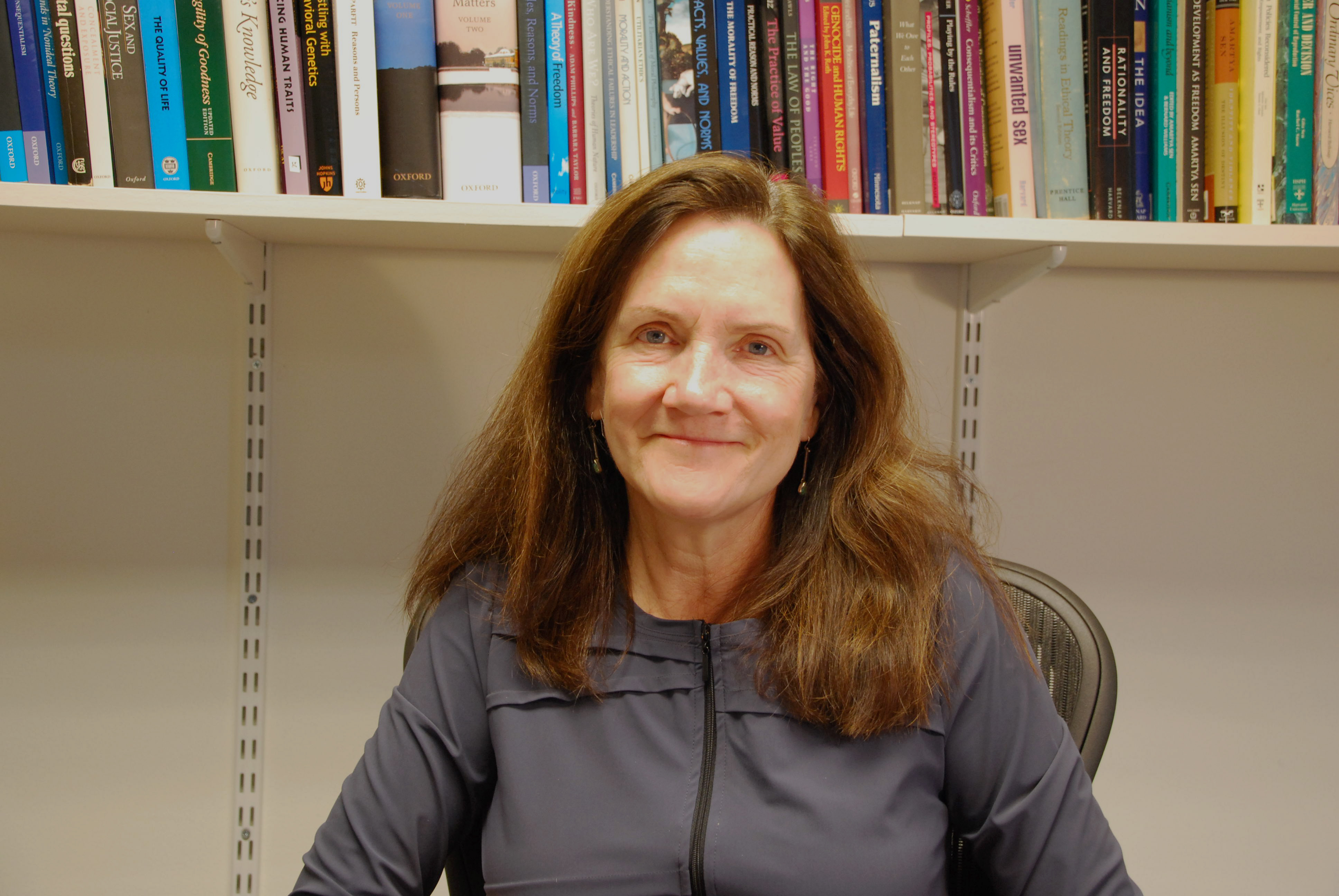
Susanna Schellenberg is an Associate Professor at Rutgers University. She has published articles on perceptual experience, evidence, capacities, Fregean sense, action, mental content, and imagination. Her work has been published in journals such as The Journal of Philosophy, Mind, Noûs, and Philosophy and Phenomenological Research. Before moving to Rutgers, she was at the Australian National University, where she was the first woman to be hired in a permanent position in the School of Philosophy at the ANU’s Research School of Social Sciences. 

Perceptual Experience is Fundamentally a Matter of Employing Perceptual Capacities

A big thanks to Meena for initiating and running this excellent blog. And thanks also for inviting me to contribute a post.

Perceptual experience plays at least three different roles in our lives. It justifies our beliefs about our environment. It brings about conscious mental states. It converts informational input, such as light and sound waves, into representations of features that we attribute to the world. Corresponding to these three roles, there are at least three fundamental questions that have motivated the study of perceptual experience.

Epistemology-question: How does perceptual experience justify our beliefs and yield knowledge of our environment given that perceptual experience can be misleading (we may be subject to illusion or hallucination)?

Mind-question: How does perceptual experience bring about conscious mental states in which our environment appears or seems a certain way to us (irrespective of the way our environment actually is)?

Information-question: How does a sensory system accomplish the feat of converting varying informational input into mental representations of invariant features that we attribute to the world?

The last decade has seen an explosion of work in philosophy of mind and cognitive science addressing the mind- and information-questions. While there has been fruitful interaction between work on perception in philosophy of mind and cognitive science, there has been much less attempt to integrate this work with issues in epistemology. Theories that are motivated by the mind- and information-questions have to a large extent been developed independently of concerns about how perception provides us with evidence and knowledge of our environment. For the same reason, theories of perceptual experience that are motivated by the epistemology-question have been developed largely independently of concerns about how perceptual experience brings about conscious mental states. To be sure, most accounts of perceptual justification rely heavily on the idea that perception yields sensory states, which justify beliefs. However, such accounts typically take as a given that such sensory states provide evidence and immediately proceed to addressing the question of what the relationship is between the evidence provided and relevant beliefs.

There is an increasing recognition that this split has hindered a good understanding of perceptual experience. Questions in philosophy of mind are intimately connected with questions in epistemology in particular with regard to perceptual experience: arguably the role of experience in yielding sensory states is not independent of its role in justifying our beliefs and yielding knowledge. If this is right, then perceptual experience should be studied in an integrated manner.

I am currently working on a book project in which I develop a unified account of the epistemological and phenomenological role of perceptual experience. In a series of papers, I have developed a representationalist view of perceptual experience and perceptual particularity that lays the groundwork for this view. One of the key ideas in developing this account is that perceptual experience is a matter of employing perceptual capacities.

I argue that experience provides us with evidence in virtue of its metaphysical structure. More specifically, I argue that sensory states are yielded by employing perceptual capacities that function to single out particulars in our environment. So there is primacy of the employment of perceptual capacities in perception over their employment in hallucination and illusion. Due to this primacy, sensory states provide us with evidence. This view of evidence is externalist while avoiding the pitfalls of reliabilist accounts. Moreover, it provides for an evidential answer to how and why we are in a better epistemic position when we perceive than when we hallucinate (Mind 2013 and Philosophical Studies 2014, 2015). The more general project is to ground intentional states in the employment of mental capacities and to explain the epistemic force of the intentional states in virtue of properties of the capacities employed.

This view of the epistemic force of perceptual experience is grounded in a representationalist view of perceptual experience. I have defended a detailed account of the nature of perceptual content that advances a new way of understanding singular modes of presentations. I argue that experience is fundamentally both relational and representational (Philosophical Studies 2010, Noûs 2011). This view of content has interesting implications for the sensory character of experience. It provides for a way of understanding sensory character in terms of a mental activity, more specifically, in terms of employing perceptual capacities (Philosophy and Phenomenological Research 2011).  The idea is that in hallucination, we employ the very same perceptual capacities that in a subjectively indistinguishable perceptual experience are employed as a consequence of being related to external, mind-independent objects or property-instances. Employing perceptual capacities yields a mental state with content. This representational account of sensory character is an alternative to the orthodox approach on which sensory character is analyzed in terms of awareness relations to abstract entities, such as properties, sense-data, or other peculiar entities. By arguing that we employ the very same perceptual capacities in subjectively indistinguishable perceptions, hallucinations, and illusions, I provide a metaphysically substantive way of understanding the common factor between these experiences.

Other focuses of my research has been space perception (Mind 2007), the situation-dependency of perception (Journal of Philosophy 2008), and the relationship between belief and desire in imagination (Journal of Philosophy 2013).

Selected Publications:

“Phenomenal Evidence and Factive Evidence”. Symposium with comments by Matt McGrath, Ram Neta, and Adam Pautz, Philosophical Studies.

“The Epistemic Force of Perceptual Experience”. With a response by Alex Byrne, Philosophical Studies 170 (1), 2014, pp. 87-100.

“Belief and Desire in Imagination and Immersion”, Journal of Philosophy, 110 (9), Sept. 2013, pp. 497-517.

“Perceptual Content Defended”, Noûs, 45 (4), Dec. 2011, pp. 714-50.

“Ontological Minimalism about Phenomenology”, Philosophy and Phenomenological Research, 83 (1), July 2011, pp. 1-40.

“The Situation-Dependency of Perception”, Journal of Philosophy, 105 (2), Feb. 2008, pp. 55-84.

“Action and Self-Location in Perception”, Mind, 116 (463), July 2007, pp. 603-32.



Featured Philosop-her: Denise James

DeniseJames


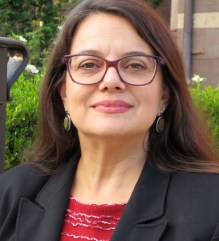
Denise James is assistant professor of philosophy at the University of Dayton where she facilitates the Diversity Across the Curriculum program. She teaches courses in contemporary social and political philosophy. She is currently working on a monograph about urban divestment and the possibility of justice in U.S. cities in a post-industrial age from a pragmatist perspective. She has published on the intersections of classical American pragmatism and black feminist philosophy. One of her latest projects is on the radical habits of Angela Davis and John Dewey.

Dying Cities and Useful Doctors

Denise James

Thank you, Meena, for the invitation and for maintaining such a great series. As I’ve followed along, I’ve been really enthralled with how people are describing how they came to their current projects. With that I mind, I hope my conversational contribution here is both appropriate to the invitation and interesting to the readers of the blog.

August 5, 2008

August 5th is my birthday and on that day in 2008 I was a brand new resident of the city of Dayton. I’d move to the city to begin my job at the University of Dayton and knew next to nothing about the town or the university. I woke up to happy birthday wishes from friends and family far away from my loft in downtown Dayton on social media. Everyone wanted to wish me good luck on my move and new job. One great friend also left a link with her well wishes. Forbes magazine had posted an article about “America’s Fastest Dying Cities,” my new city had made the list, along with three other cities in Ohio.[1] In the days that followed new colleagues posted the local response to the Forbes article and old friends wrote, called, and messaged to inquire about the viability of my new city.

Was Dayton dying? Could a city die? What did that mean for the people who lived there?

As a black feminist pragmatist philosopher interested in questions of social justice, political geography, and subjectivity, the dying city posed a series of problems for me that I could not get away from as hard as I tried to that warm August birthday the month before my first job post grad school was set to begin. I spent that day reading at the picturesque Riverscape Park that I was just a few blocks from where I lived and made plans to hang out with new friends at a local night spot. During a friendly tour of one of the city’s historic neighborhoods and over watery drinks at the club, the pending death of Dayton was the choice topic of conversation.

Friends I’d met in my building, most of whom were black and had grown up in the city, seemed to agree, the city was dying. Downtown, where we lived, had not become the great mecca of urban professionals the developers of our loft building had hoped. There was no close grocery store to us and in spite of some swank restaurants and the beloved minor league baseball team’s stadium being in walking distance, downtown had suffered the losses in population and industry as hard as the rest of the city. Vacant housing and businesses were the norm not the exception. Unemployment and homelessness were high. We talked about failing school districts and the paring down of government services.

Friends associated with the university were almost univocally convinced that the city, although it was experiencing population decline and had lost most of its major manufacturing employers, was not dying. They pointed out that local health networks, the U.S. Air Force base, and our employer, the private Catholic university, were all thriving. There were plans! The city would be restored.

In the coming months and years I would sit in audiences and attend meetings where members of the city council and university related officials would talk about all of the ways Dayton was not dead or dying, all of the ways it would be restored to full health. Local news, radio, and print media ran stories about efforts citizens and businesses were making to rethink what Dayton would be as a city. And all the while I wondered, sometimes aloud, if perhaps the city was being remade with the needs and aspirations of the current residents in mind. It seemed a lot of the efforts, both rhetorical and strategic, focused on attracting new residents to the city and not necessarily on how those efforts would affect those inner city, poor and working class, people who lived there. It seemed lots of people were just assuming that the influx of new residents would have a helpful, trickle-down effect on the old.

I started thinking about how many of these conversations posited as ideal, types of citizens who lead types of lives that didn’t seem to match the people who I knew and encountered every day in Dayton. Many of these people were not the newly unemployed but had experienced job loss decades before. Generational poverty, inadequate housing, and a city with a history of segregation that still marks the sides of town as white and black are the context of many peoples’ lives in this city and many others. Plans to open the city to new migrants and revitalize by being a mecca for small manufacturing seemed like good ideas but I kept worrying about those folks whose identities weren’t stereotypically prized for the industriousness or whose pedigrees wouldn’t land them jobs at tech startups. As a black feminist pragmatist, issues of race, class, gender and the real problems of how to support people in a city with the problems like we face in Dayton nagged me daily. What would it mean to take as our starting point, not the college educated professional as who we are reviving the city for, but the young Appalachian or Black mother who must find work and build a life in our city? What sort of recommendations about the use of space, transportation, the responsibilities and benefits of city life would we come up with if her lived experience was the check of our efforts to enliven the city? These are normative, philosophical questions. They cross the disciplinary borders of geography, political science, legal theory, and ethics. They require us to articulate problems, posit solutions, and perhaps most importantly, these questions seem to stretch our imaginations about what a real future could look like in our post-industrial era.

April 2015

Without getting into too much of a discussion about what academics in general, and philosophers, in particular, think they are doing or can do, when it comes to public issues and problems, I’ve had the occasion to think about why I might be a good person to write a book about social justice and the dying city – because of two four year olds asking the same question, at two different times. Recently, upon hearing my title, my own daughter and the daughter of a colleague in philosophy, each wondered aloud, “What’s the use of being a doctor if you can’t help anybody?” Both girls were referring to the fact that I’m not a medical doctor. I have the title but do things that seem to be of little use or import to the worlds of four year olds, no matter how much I might want to claim what I do is important!

Academic books and articles are read by academics – if they are read at all or so some studies are currently reporting. Why ought anyone care that I wrote a book that used Dayton as a case study for my articulation of views about just cities and participatory geography? What I know is something about power that 4 year olds may not yet have figured out. One of my great sadnesses and responsibilities as a newly tenured professor at the University of Dayton is that I realize how much more social capital and volume my voice on these vital issues potentially has in this place and in this moment than that of lots of other people. With more time and space, I could tell you the stories of how many times discovering I was a UD professor totally changed the attitudes of the person I was talking to because in this moment, in this place, the university that employs me is one of the great hopes of life for the city that some think is dying. Many of my friends and colleagues are doing hard work in the city to make it a place to live that can support the people who need it. In part, my efforts, the writing of a book about these issues, is the least of those efforts. But if the city planners never read my book, if the university officials never once track down my sources and consider their merits, what they will do is pay attention – even if only for a fleeting moment – to the fact that Dr. James has something to say about it (and didn’t she write a book about it?). With that platform, it is my responsibility to the trouble the water a bit for our grand plans of revitalization. I hope, perhaps naively, to be a useful doctor in my still too quiet attempts, to amplify the voices of residents who don’t fit our models, who are working every day to live in a city where the living is hard.


[1] http://www.forbes.com/2008/08/04/economy-ohio-michigan-biz_cx_jz_0805dying.html

Featured Philosop-her: Teresa Blankmeyer Burke

Blankmeyer Burke

Teresa Blankmeyer Burke is assistant professor of philosophy at Gallaudet University, the world’s only liberal arts college for deaf and hard of hearing people. She completed her Ph.D. in 2011 at the University of New Mexico. Burke’s research for the most part resides in deaf philosophy, the space where philosophy intersects with Deaf studies. (The use of uppercase Deaf designates the cultural community of signed language users; lower case deaf designates audiological status). Topics she has published on include moral justification regarding the use of genetic technology to bear deaf children (specifically, the question of signing Deaf potential parents considering this option) and signed language interpreting ethics. Burke has interests in virtue ethics, and is using the professional virtues of signed language interpreters, such as (glossed in ASL) DEAF-HEART and ATTITUDE, as a testbed for philosophical accounts of the virtues. Another project uses the notion of deaf gain (contra hearing loss) to work through conceptions of intrinsic and instrumental value. Her newest endeavor explores questions related to deaf well-being; works in progress include papers on deaf liberty and full access to language as a good.

Doing Philosophy in American Sign Language: Creating a Philosophical Lexicon

Teresa Blankmeyer Burke

April 8 marked a significant anniversary in the education of the deaf — the founding of the Columbia Institution of Instruction for the Deaf and Dumb and the Blind one hundred and fifty-one years ago. This was the first institution of higher education to offer instruction in American Sign Language (ASL); from the very start it included a few courses situated within the domain of philosophical inquiry. Of course, this does not mark the first instance of philosophical discourse in signs, which is unknown, but examples of this occurring in the famed salons of eighteenth century Paris are documented by the deaf man Pierre DesLoges.

As a Deaf[1] philosopher who works at a university where the language of classroom philosophical discourse is ASL, I have been thinking about something I’ve been calling DEAF PHILOSOPHY[2] for a long time. There are two primary strands of inquiry in this project: the first involves questions about language and language modality of philosophy when it is done in a signed language; the second considers ways that one might approach philosophical questions through a Deaf lens. I will focus on the first strand in this essay.

The number of philosophers working in signed languages has always been very small: this is unlikely to change in the near future. Given the small number of people who use signed languages as a primary language, perhaps this is not surprising. Add to that the absence of philosophical texts in signed languages, the lack of exposure to philosophy in deaf education, the absence of a philosophical lexicon in signed languages, and it is remarkable that there are signing deaf philosophers at all.[3]

When canonical works of philosophy are translated, they are translated into written forms of spoken languages. Is there a difference for signed languages? Possibly. For one, there are no standardized and widely accepted forms of written signed language — most translations into signed language are captured through film or video documentation. Even once a method of preserving a signed translation of a philosophical work is determined, other questions remain. What does philosophy look like when it is done through a signed language modality? How are philosophical moves marked in a spatial language? How does one set up an argument in signed space? And how does one do this without a proper philosophical lexicon in that signed language?

I’ve been working on the construction of a personal philosophical lexicon in American Sign Language since I was a graduate student at the University of New Mexico, and my interpreters started peppering me with questions: what is modus ponens? Is there a name sign for Socrates? How do you want me to sign deductive?

The conventional way to handle specialized vocabulary in American Sign Language is to spell it out using the one-handed manual alphabet, so ‘coherentism’ becomes ‘C-O-H-E-R-E-N-T-I-S-M’, and ‘akrasia’ turns into A-K-R-A-S-I-A, this last being contingent on whether the interpreter has heard ‘akrasia‘ pronounced in that fashion before and knows how to spell it. But there is a huge disadvantage to fingerspelling technical philosophical discourse, which is that it amplifies the lag time for interpreted philosophical discourse.

How ought one to go about creating a philosophical lexicon in a signed language in the first place? This is not just a question of linguistics, but ethics. Historically, educators of the deaf have not always treated signed languages (and those who use them) with respect. In addition to the minority language suppression that can occur in educational settings with a program of dominant language assimilation, what sets signed languages apart is that these were not regarded as full natural languages. As a consequence, hearing educators of the deaf developed signed systems that borrowed words from natural signed languages in hopes that this would make it easier for deaf children to learn the dominant spoken language of the local community.

What did this look like? As an analogy, imagine teaching a Navajo speaker English using the following method. First, alter Navajo words in ways that violate the linguistic conventions of that language, but that make them sound somewhat more English-like. Next, take those neologisms and arrange them in English word order. Finally, forbid people to use the natural language of Navajo because it will interfere with the acquisition of English through this system.

Because roughly ninety percent of deaf children do not learn signed language at home from their parents, one effect of these signed systems developed by educators of the deaf was that many children never acquired full access to a natural language. Many people in the signing deaf community today are not fluent in a signed language or a spoken language, having only developed broken English and broken ASL. This legacy of harm generated by the proliferation of signed systems in deaf education is the backdrop for anyone who wishes to create a lexicon in a signed language, and especially educators.

Generating philosophical signs in ASL requires knowledge of both ASL and philosophy. As an example, when considering how to sign the English neologism ‘alief’ in ASL, I thought it was important to not only develop a sign that was linguistically appropriate, but that captured the nod to ‘belief’ that is suggested in the English word. This is also helpful for pedagogical purposes, for both students and interpreters. So the sign I created for ‘alief’ looks very much like the ASL word BELIEF, adding a subtle change in handshape that creates a portmanteau of BELIEF and HABIT. As a purely incidental feature, the ASL word HABIT uses two hands in the shape of the manual alphabet letter ‘A’ — this reinforces the ‘A’ in the English word ‘alief’.[4]

One might wonder whether there is a significant difference between what I have just described above and the process used for developing new words for signed systems. I believe there is such a difference. In the case of signed systems, existing words for concepts are altered to satisfy the rules, constraints and objectives of the signed system, even if this means breaking the conventions of the natural language. In the example above, the ASL word for ‘alief’ is generated using existing ASL words, and the conventions of the language are respected, including handshape, orientation, movement, and placement in space.

Another way to add to the philosophical lexicon in ASL is through namesigns. A name sign is a unique sign that is used to designate a particular person. A person’s name can be fingerspelled using the manual alphabet, but namesigns are often used, especially when the person’s name is longer than 3-4 letters. There are conventions that govern a person’s name sign – these include permitted locations on the body, association with one’s family (if one’s family uses ASL), and sometimes identification of a particular characteristic.

ASL does not have name signs for Plato or Aristotle, but Greek Sign Language does! One way that I determined the name signs of philosophers was to ask deaf academics I met at international conferences whether philosophers from their country had name signs in their native signed language. Naming conventions differ among signed languages just as they do with spoken languages, but it is acceptable to use namesigns from another signed language, even when they do not conform to the norms of one’s own signed language. The Greek Sign Language sign for SOCRATES is an example of this.

I believe that the development of a philosophical lexicon in ASL must acknowledge this history and have buy-in from the signing Deaf community, in addition to respecting the linguistic conventions of ASL if it is to have any chance of succeeding.

To this end, I’m very excited to announce a grant project to develop a web resource for a philosophical lexicon in ASL sponsored by the Rochester Institute of Technology. The team includes signed language interpreters, ASL Masters, and hearing philosophers and a Deaf philosopher working together to develop and refine the lexicon. The aim of this project is to provide a resource for deaf philosophy students who are taking introductory level philosophy courses, and for the interpreters who are interpreting these courses for the students. The focus in this first phase is to build the lexicon for the following courses: Introduction to Ethics, Reasoning and Critical Thinking, and Introduction to Philosophy.

[1] The upper case ‘Deaf’ is used in Deaf Studies convention to indicate a person who is a member of a signed language sociolinguistic community. The lower case ‘deaf’ marks audiological status.

[2] Upper case letters are used to denote American Sign Language gloss. I haven’t yet settled on a satisfactory English translation.

[3] The Gallaudet University Philosophy Department has identified just two signing deaf people who have received doctorates in philosophy; James E. Haynes was the first to do so at the University of Maryland in 1999.

[4] I am grateful to Tamar Gendler for our discussion of this topic.

Featured Philosop-her: Sarah Conly

sarahconly

Sarah Conly is an Associate Professor of Philosophy at Bowdoin College.  She is the author of Against Autonomy:  Justifying Coercive Paternalism, Cambridge University Press, 2013, and One Child:  Do We Have a Right to More?  forthcoming (publication expected in November, 2015),  Oxford University Press.

Overpopulation and the Right to Childbearing

Sarah Conly

My most recent work has been on whether or not we have a right to have more than one child. The claim is that if growth in population seems sufficiently likely to harm the environment in a way that will cause present and future people to suffer greatly, we don’t have a right to have more than one child.

This will strike people as controversial, of course, since we generally think that childbearing is and should be a personal issue, one up to the parents to decide. Insofar as we do see moral constraints on childbearing, it is generally in reference to the particular welfare of the child who will be born—if we foresee that a child will have a miserable life, and the parents have the ability to avoid having that child, we may feel it is wrong to have that child. Even there, though, most people seem to think the parents have the right to have the child, even if morally they shouldn’t—no one is justified in stopping them. In my new book, One Child: Do We Have a Right to More? (Oxford University Press, forthcoming, 2015) I argue that the moral constraints on childbearing are broader than this picture suggests. Even if the child itself will be happy, there are occasions when parents do not have a right to have a child, and this means that the state can legitimately sanction them (in appropriate ways) for having one. Population pressure that threatens the welfare of others is one reason a state may legitimately interfere in what we normally think of as the personal choice as to how many children to have.

Rights are commonly believed to be grounded in either of two ways. (There are other theories of rights, but I think these two are the most widely accepted.) On the first view, rights may be grounded in interests. If we absolutely need something to have a decent life, many believe we then have a right to it. This kind of thinking lies behind the claims that we have a right to food, or to health care. I argue that even if we accept great need as a foundation for rights, childbearing doesn’t fit this picture. We can live very well, even if not exactly as we would wish, without children, as many people do. Having a child is not necessary to living a good life. However, since we do want the human race to continue, and since there is not reason to restrict childbearing to one group rather than another, we can say that equality gives us a claim to have one child–but no more.

A second theory of rights grounds them in our status as autonomous beings. Insofar as we have the capacity to reason and choose, and insofar as that capacity is what gives us (on this view) the value we have, our choices should be respected.   Thus, we have a right to live in accordance with our own choices. My choices may not necessarily promote my interests, on this view, but they should still be respected as an expression of autonomy. However, even if we accept this reasoning, we know it has limits: our autonomy doesn’t give us the right to greatly harm others. This is generally accepted: we say we have the right to free speech, for example, but that we do not have a right to yell “Fire!” in a crowded theater. On this view, it is not that we have to promote others’ welfare, but that a certain degree of harm to others is beyond what we have a right to do. If we are in danger of overpopulation that will severely harm others, we don’t have a right to have more than one child.

Are we in such a dangerous situation at present? It’ s hard to say. If the population will otherwise continue to rise as it has, then yes, the danger is certain.   If enough people refrain from having children, or from having more than one child, then perhaps it will not be harmful for others to have more than one (although one might argue that they are then free riders on others’ restraint, and there is certainly a question whether they have a right to that.) I argue, though, that even when the danger is not certain, if there is sufficiently probability of great harm occurring through unrestrained childbirth we have no right to subject others to that risk.

It’s true that part of the problem is consumption—it’s not just our numbers, but the way some of us live that is so destructive. We have been extremely resistant to cutting back on consumption, though, while fertility rates are relatively responsive to economic and cultural pressure. And, if even if we did cut back on consumption, a sufficient rise in population would still have devastating consequences. In any case, even if population is not uniquely the cause of the environment destruction we are witnessing, that doesn’t mean it can be ignored. Your lighted match by itself may not burn the house down, but if you know that the house has been doused with gasoline, and you still toss in your match, you are responsible, even though you were not the sole causal factor in the conflagration.

Saying that you have no right to have a second child, though, does not mean any and all sanctions are legitimate. You don’t have the right to steal, but that doesn’t mean it’s okay to torture you if you do. Forced abortions or sterilizations go beyond the legitimate means a state can take to discourage people from childbearing.   The most palatable means we could take would be increasing costs of childbearing, by financial disincentives like extra tax burdens or fines. We know that at present costs play a role in how many children people have, and thus we have reason to think that this would be sufficiently effective. A sliding scale could avoid differential impacts on people of different income levels.

There are a number of issues in this policy that are controversial. The most significant of these, of course, is that it implies that we do not have an absolute right to control our bodies, including our reproductive capacities. We are familiar with the long struggle to obtain the legal right to abortion, and aware of the fact that much of the argument for that right rested on the fact that a woman should be able to control her own body. Since I am arguing that in fact you don’t have the right to do things with your body that significantly hurt other people, I undercut that general argument for control.

I don’t think my argument weakens the argument for abortion, though, or at least not in any foreseeable real-world situation. I think the strongest argument for abortion is that the fetus is not a person. Since the fetus is not a person it has no claim on us, and we do no one grave harm when we have an abortion. So, I don’t think abortion in the world we know violates rights or is wrong in any way. However, I have to admit that on my account it is at least imaginable that there could be circumstances in which a particular abortion would be morally wrong, so wrong that we would have no right to it. For example, we can imagine that a given pregnancy will result in a baby that we, in some impossible way, know will bring about enduring World Peace, and we also know that this peace won’t otherwise come about. I don’t think the woman in this case (typically) has the right to have an abortion. So, it does follow from what I say that the right to abortion is not absolute—there are situations in which other claims can override it. I don’t see, however, that there will be many, if any, such situations in the real world.

This is a controversial topic, for this and for other reasons discussed in the book. We don’t like giving up what we think of as rights, and particularly not in such a personal realm as childbearing. However, we need to remember that what might once have been harmless can, in the modern world, be extremely harmful. My goal is not so much to bring about state prohibitions of childbearing, which after all is pretty unlikely, as to promote the idea that when a population is the size that our is, and places the pressure on the environment that ours does, childbearing is no longer a private matter. What you do in terms of children has a great and lasting effect on other people. Sometimes people put this as a question of justice to future generations, but that is sadly over-optimistic: the effects of environmental degradation are being felt now, by present people, and will be felt even more by those who are now young as they age in a world in which population and consumption combine to destroy much of what makes the planet livable. We just don’t have a right to be that destructive.

An Uncolored Conference Campaign (UCC) ?

Feminist Philosophers points to a conference on “Equality, Diversity And The Ethics Of Philosophy” which will focus on recent discussions of issues of gender diversity in professional philosophy. The conference looks amazing! However – and this is emphatically not meant as bashing of the conference, the organizers, or participants – one must wonder, where are the philosophers of colour? As Anon says in the comments, “White women are not the only ‘philosophers who have contributed to recent discussions of issues of gender diversity in professional philosophy.'” Anon goes on to suggest that the time has come to consider an “Uncolored Conference Campaign (UCC)” — which would be closely modelled on the Gendered Conference Campaign.

“The [Uncolored] Conference Campaign aims to raise awareness of the prevalence of all-[white]* conferences…, of the harm that they do. We make no claims whatsoever about the causes of such conferences: our focus is on their existence and effects. We are therefore not in the business of blaming conference organisers, and not interested (here, anyway) in discussions of blameworthiness. Instead, we are interested in drawing attention to this systematic phenomenon….”

I have been talking to people about starting something like this for a while. I am now wondering, what do others think? What are the problems with this approach? What are the benefits? Is this the right time to start something like this?  I would like to have an open and honest discussion about the possibility of pursing a UCC.  Thanks in advance for your thoughts.